What This Document Is
This is a past midterm examination from LAST 170, Introduction to Latin America, offered at the University of Illinois at Urbana-Champaign. It’s designed to assess student understanding of core concepts and themes covered in the course up to October 2011. The exam focuses on critical analysis and application of course material related to the history, society, and politics of Latin America. It’s a valuable resource for understanding the expected level of detail and the types of questions asked in this course.
Why This Document Matters
Students currently enrolled in or preparing for LAST 170 will find this particularly useful. It provides insight into the professor’s testing style, the breadth of topics emphasized, and the expected format of answers. Reviewing a prior exam can help you identify areas where you need to focus your studying and practice formulating concise, well-supported responses. It’s best utilized *after* you’ve engaged with the course readings and lectures, as a way to gauge your comprehension and prepare strategically.
Common Limitations or Challenges
Please be aware that while this is a representative sample of a past exam, the specific content and questions will likely differ in future assessments. Course content evolves, and instructors may adjust their focus. This document does *not* provide answers or solutions to the questions posed. It’s intended as a study aid to understand the *type* of thinking and knowledge required, not to offer a shortcut to success.
What This Document Provides
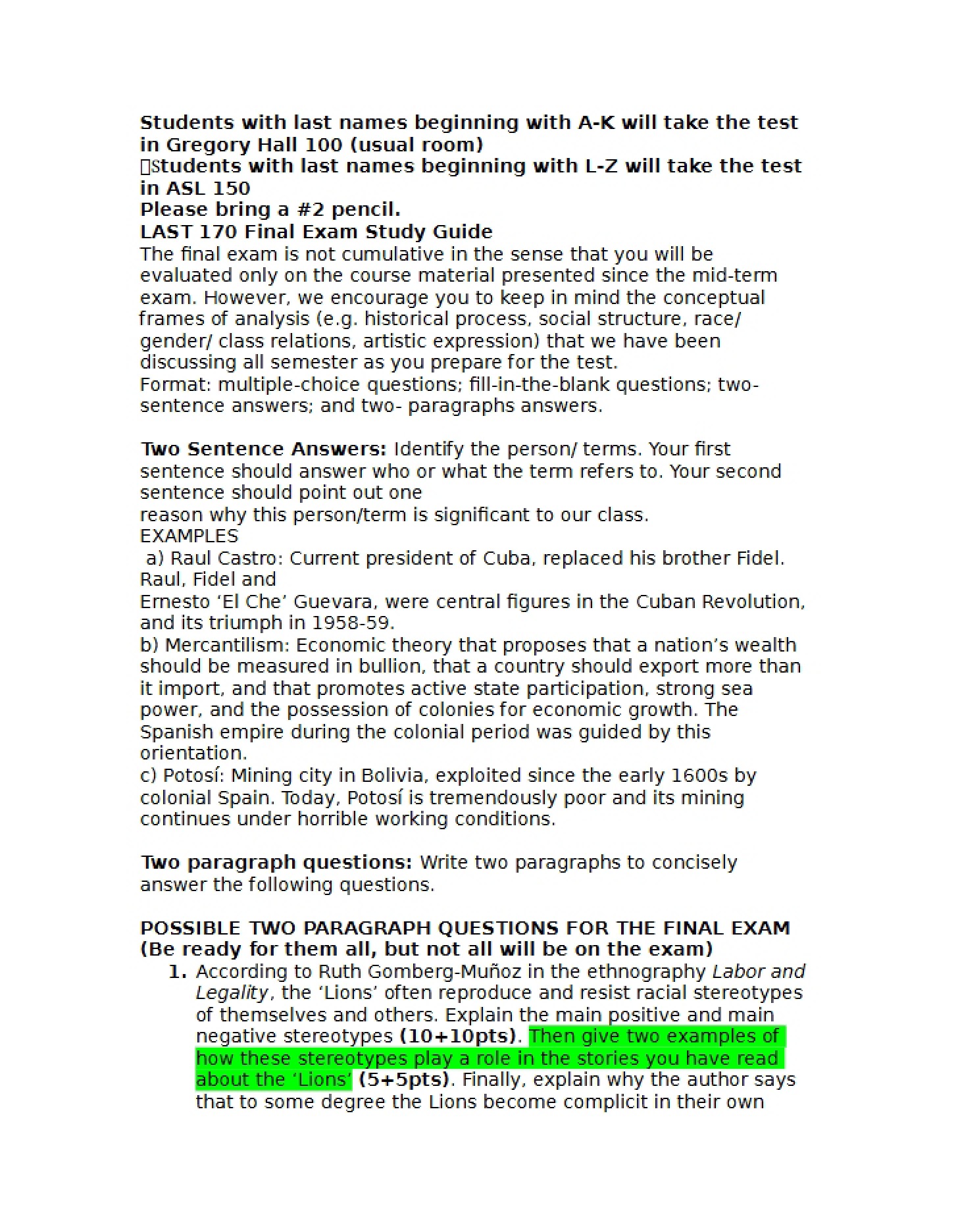
* A clear outline of the exam’s structure, including the different question types (multiple-choice, fill-in-the-blank, short answer, and extended response).
* Information regarding logistical details such as testing locations based on last name.
* A list of potential broad themes and topics that were covered in the course at the time of the exam, offering clues to key areas of focus.
* Sample prompts for the longer, two-paragraph answer questions, indicating the expected depth of analysis and the need to integrate material from various course readings.
* An indication of the types of sources (readings, lectures, documentaries) that were central to the course curriculum.