What This Document Is
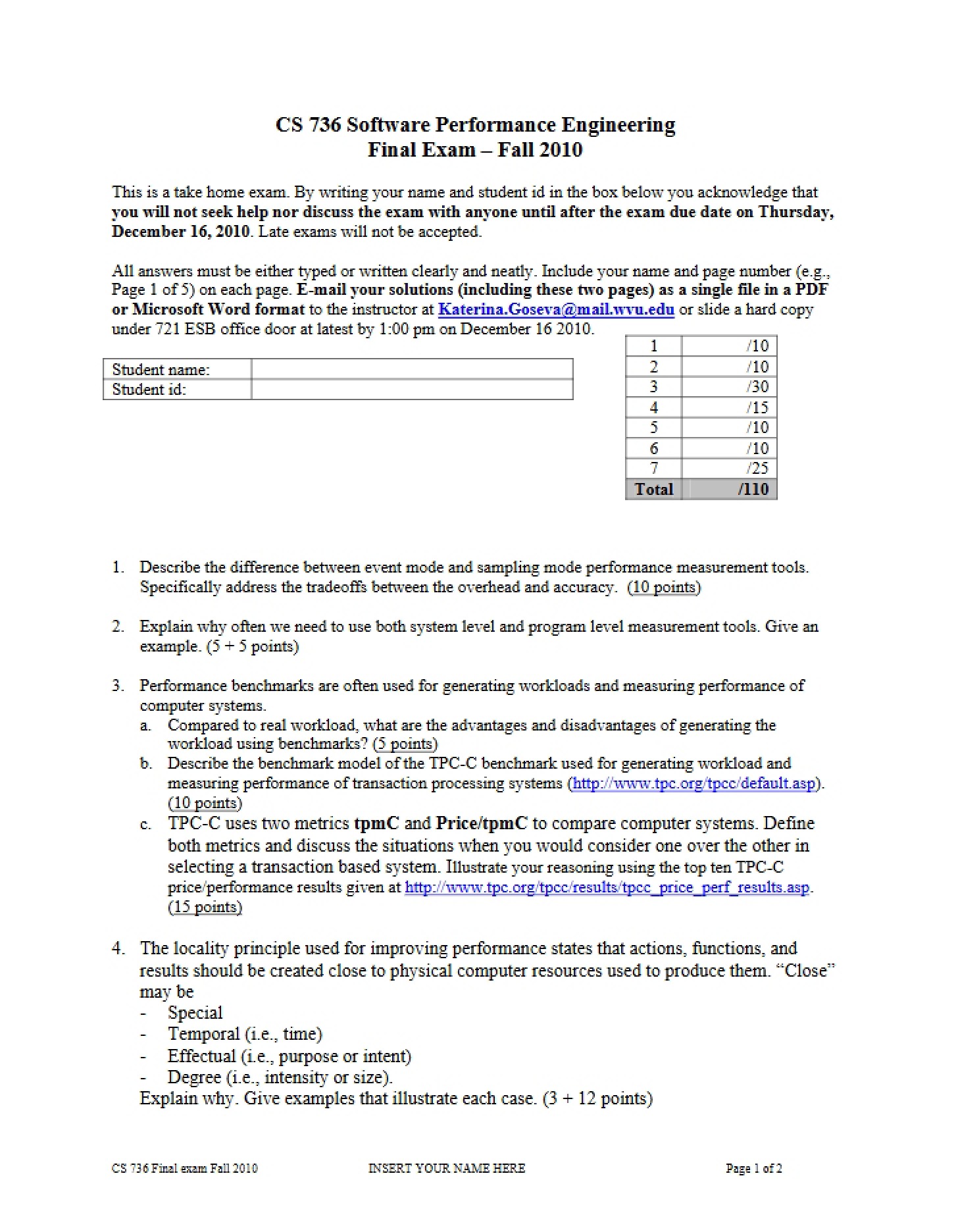
This is a midterm examination for CS 736: Software Performance Engineering, offered at West Virginia University. It’s designed to assess a student’s understanding of core concepts related to analyzing and optimizing software system performance. The exam focuses on applying theoretical knowledge to a practical, real-world scenario involving a complex, multi-tiered application. It requires students to demonstrate their ability to model system behavior and identify potential performance bottlenecks.
Why This Document Matters
This resource is invaluable for students currently enrolled in a Software Performance Engineering course, or those preparing for similar assessments. It’s particularly useful for solidifying understanding *after* studying key concepts like queuing theory, system modeling, and resource contention. Working through practice problems – like the one presented here – is crucial for developing the skills needed to predict and improve the performance of software systems in a professional setting. It’s best utilized as a self-assessment tool to gauge preparedness for a formal evaluation.
Common Limitations or Challenges
This document presents a single examination; it does not offer comprehensive course notes, lecture summaries, or detailed explanations of underlying principles. It assumes a foundational understanding of performance engineering concepts. Furthermore, it represents a specific assessment from Fall 2010 and may not perfectly reflect the current course curriculum or exam format. It does not include solutions or worked examples.
What This Document Provides
* A complex scenario involving an e-commerce application with multiple interacting services.
* Questions requiring the creation of UML sequence diagrams to visualize system interactions.
* Tasks focused on building and analyzing software execution graphs.
* Problems designed to identify system bottlenecks and estimate maximum throughput.
* A framework for applying resource requirement estimations to performance modeling.