What This Document Is
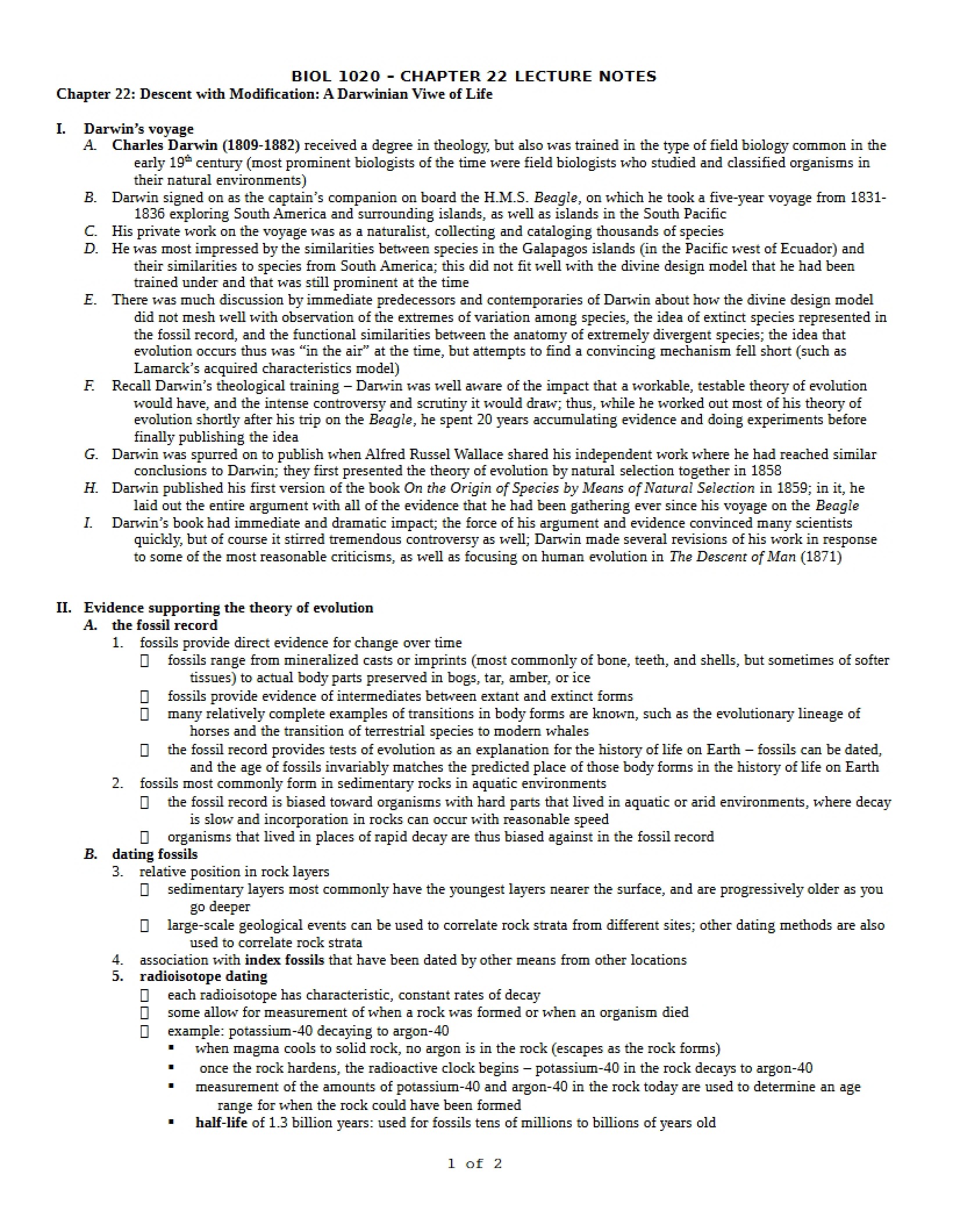
This is a comprehensive study guide created by a student, Min Zhong, to prepare for the final exam in Auburn University’s Introduction to Biology (BIOL 1020) course, Fall 2012. It consolidates key concepts from multiple chapters covered throughout the semester, aiming to provide a focused review of core biological principles.
Why This Document Matters
This study guide is valuable for students enrolled in or having recently completed an introductory biology course, particularly those seeking a condensed review of essential topics before an exam. It’s most useful as a supplement to lecture notes and textbooks, helping to identify areas needing further study. The guide reflects a student’s understanding of the material, offering a peer perspective on important concepts.
Common Limitations or Challenges
This study guide is a student-created resource and should not be considered a replacement for official course materials or instructor guidance. The content reflects the specific focus of the Fall 2012 BIOL 1020 course at Auburn University and may vary from other iterations or institutions. It’s a review tool, not a comprehensive textbook.
What This Document Provides
The full study guide includes concise summaries of:
* The scientific method, contrasting inductive and deductive reasoning.
* Atomic structure, including isotopes, molecules, and compounds.
* The properties of water and its importance to life, including cohesion, adhesion, and pH.
* Fundamental concepts in organic chemistry, such as isomers and functional groups.
* Biological macromolecules – carbohydrates, lipids, proteins, and nucleic acids – and how they are formed and broken down.
This preview *does not* include detailed explanations, practice questions, diagrams, or complete coverage of all topics. It is a high-level overview of the guide’s scope.