What This Document Is
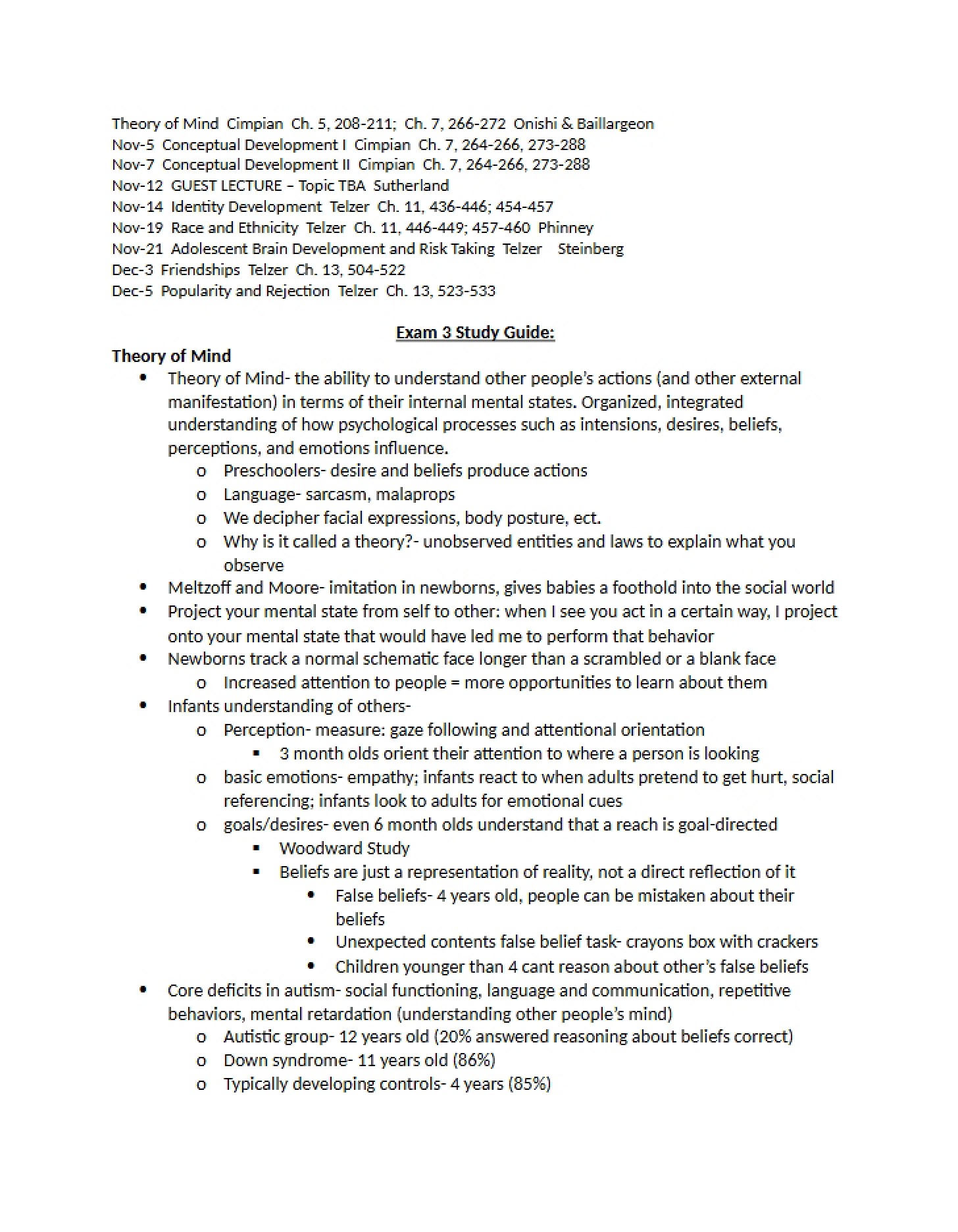
This resource is a focused exploration of Theory of Mind (ToM), a critical concept within the field of child psychology. It delves into the foundational ideas surrounding how humans develop the ability to attribute mental states – beliefs, intents, desires, emotions, and knowledge – to themselves and others. This isn’t simply a definition; it’s an investigation into the cognitive processes underpinning social understanding, and how these processes emerge during development. The material originates from a PSYC 216 course at the University of Illinois at Urbana-Champaign, indicating a university-level treatment of the subject.
Why This Document Matters
Students enrolled in child development, cognitive psychology, or related fields will find this particularly valuable. It’s ideal for those seeking a deeper understanding of the theoretical underpinnings of social cognition and the challenges researchers face when studying these complex mental processes. This would be a helpful resource when preparing for coursework involving social-emotional development, or when needing to grasp the core principles behind understanding behavior. It’s especially useful for students wanting to move beyond basic definitions and explore the *why* behind how we understand others.
Common Limitations or Challenges
This material focuses on the conceptual framework of Theory of Mind. It does *not* provide a comprehensive overview of all related research, nor does it offer practical applications for intervention or therapy. It also doesn’t include detailed experimental methodologies or statistical analyses. The resource is designed to build foundational knowledge, and further research may be needed for a complete understanding of the topic. It won’t provide ready-made answers for assignments, but rather the conceptual tools to approach them.
What This Document Provides
* An examination of the core definition and rationale behind the concept of “Theory of Mind.”
* Discussion of the relationship between ToM and various cognitive abilities, including language and perception.
* Exploration of early developmental precursors to Theory of Mind, including observations of infant behavior.
* Overview of classic experimental paradigms used to assess Theory of Mind development.
* Consideration of potential factors influencing performance on Theory of Mind tasks.