What This Document Is
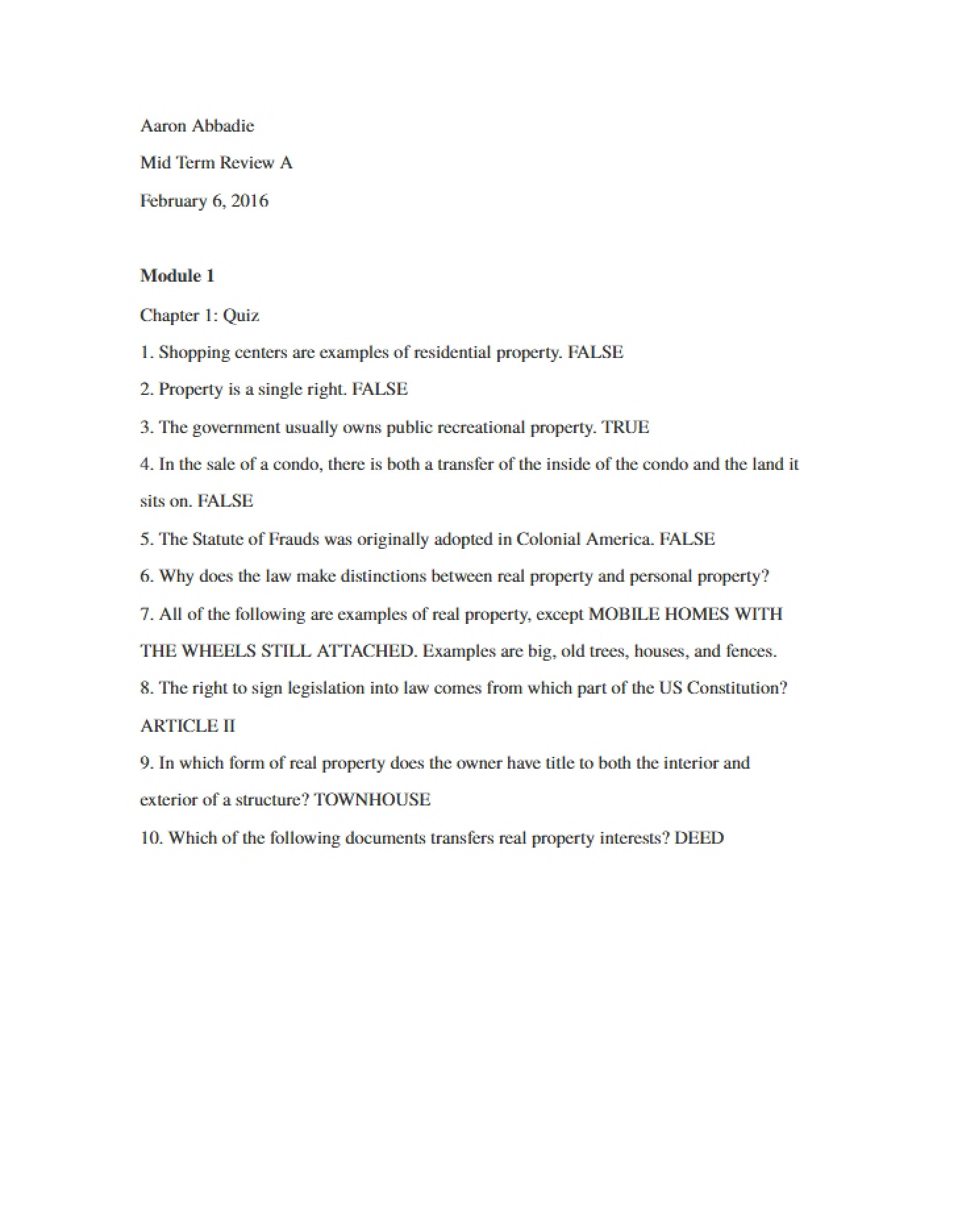
This document represents Module 1 of PLA 3615, Property and Real Estate Law, at the University of Central Florida. It serves as foundational material, introducing core concepts essential to understanding the legal landscape surrounding property ownership and transactions. This module establishes a base understanding of the distinctions between different types of property and the regulatory frameworks governing them. It’s designed to be a starting point for more complex legal analysis within the course.
Why This Document Matters
This module is crucial for students beginning their study of property law, paralegals seeking a solid grounding in real estate principles, and anyone preparing for a career involving land use, development, or real estate transactions. It’s particularly helpful at the outset of a property law course to build a shared vocabulary and conceptual framework. Understanding these fundamental principles will be vital as you progress through more nuanced topics later in the semester.
Topics Covered
* The fundamental differences between real and personal property.
* The unique characteristics of land as a commodity and its implications for taxation.
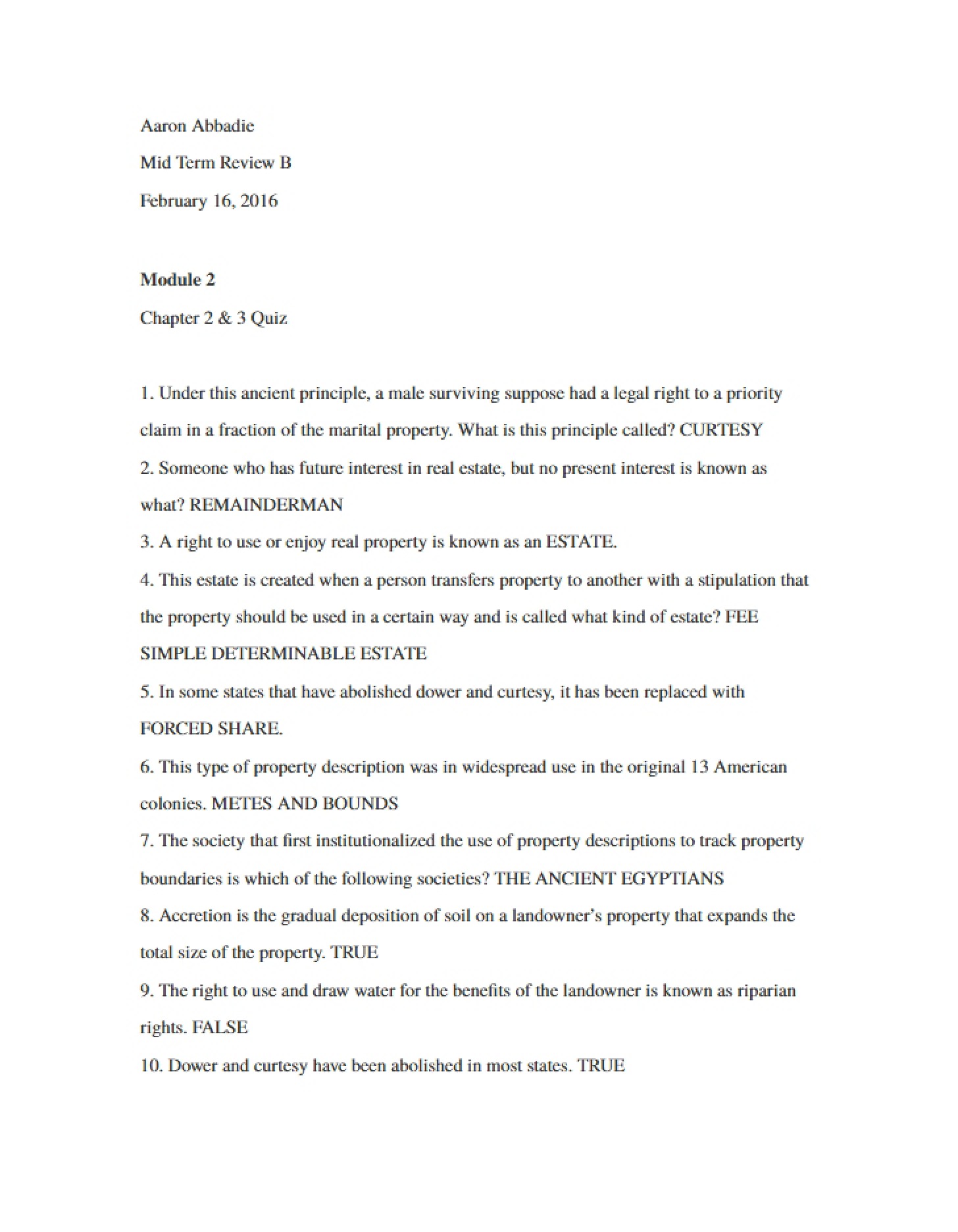
* The influence of jurisdiction and local ordinances on real estate transactions.
* An overview of the real estate market and its connection to the broader economy.
* Classifications of different types of property – residential, commercial, industrial, agricultural, and recreational.
* Distinctions between various housing types, including apartments, condominiums, and townhouses.
* The concept of equity in property ownership.
What This Document Provides
* A clear delineation of key terminology used in property law.
* An exploration of the historical and economic significance of land ownership.
* A broad overview of the various participants involved in real estate transactions.
* A foundational understanding of how different property types are defined and utilized.
* An introduction to the factors influencing property value and investment potential.