What This Document Is
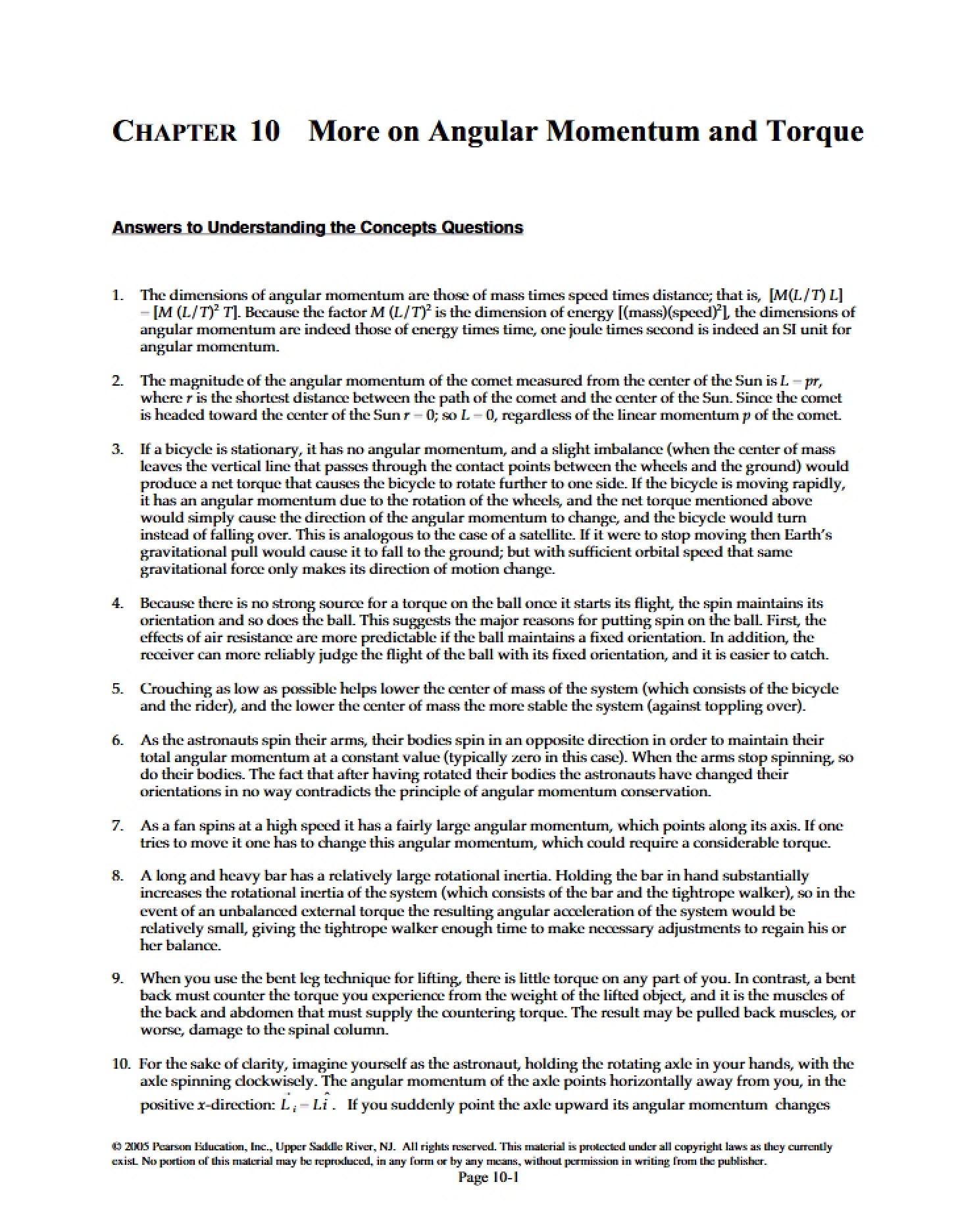
This is a detailed exploration of momentum, specifically focusing on its angular form, intended for students in an introductory physics course for science and engineering. It builds upon foundational concepts of linear momentum to introduce the related, but distinct, idea of angular momentum. The material progresses from analyzing the angular momentum of single particles to examining systems of particles and ultimately, rigid bodies in rotation. It also introduces the concept of torque and its relationship to changes in angular momentum.
Why This Document Matters
This resource is invaluable for students grappling with the complexities of rotational motion. It’s particularly helpful for those who need a deeper understanding of how angular momentum applies to real-world scenarios, going beyond simple calculations. Students preparing for exams, working through problem sets, or seeking to solidify their grasp of fundamental physics principles will find this a useful study aid. It’s designed to be a companion to lectures and textbook readings, offering a more in-depth look at these core concepts.
Common Limitations or Challenges
This material focuses on the theoretical underpinnings and conceptual understanding of angular momentum. It does *not* provide step-by-step solutions to practice problems, nor does it offer a substitute for attending lectures or completing assigned coursework. It assumes a basic familiarity with vector algebra and introductory mechanics. While it touches upon applications, it doesn’t delve into highly specialized or advanced topics within rotational dynamics.
What This Document Provides
* A detailed examination of angular momentum for point masses and systems.
* An exploration of the relationship between angular momentum and torque.
* Discussion of how angular momentum changes over time.
* Analysis of angular momentum in rotating rigid bodies.
* Consideration of reference frames (center of mass and fixed point) and their impact on calculations.
* An introduction to the application of these concepts to physical systems.