What This Document Is
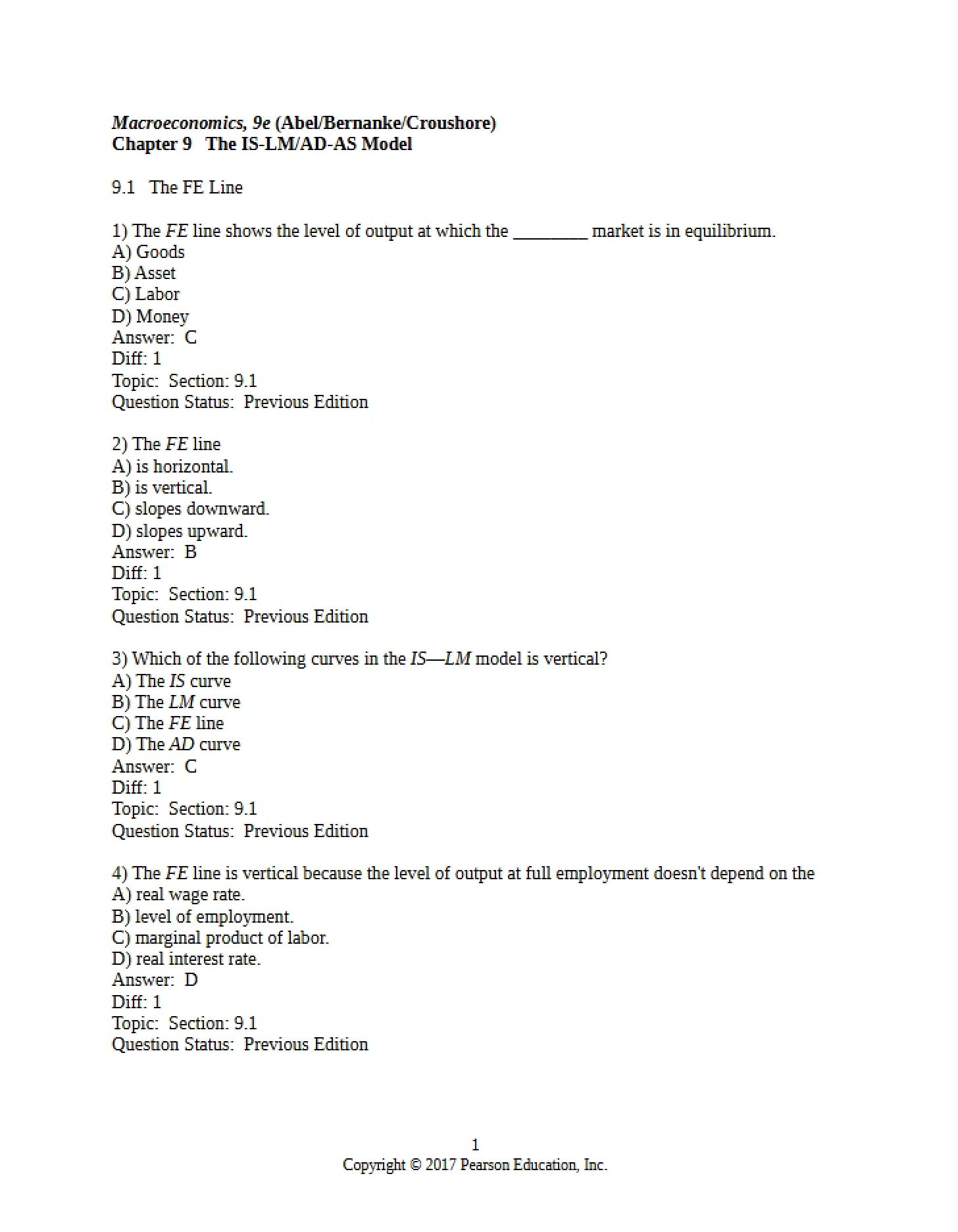
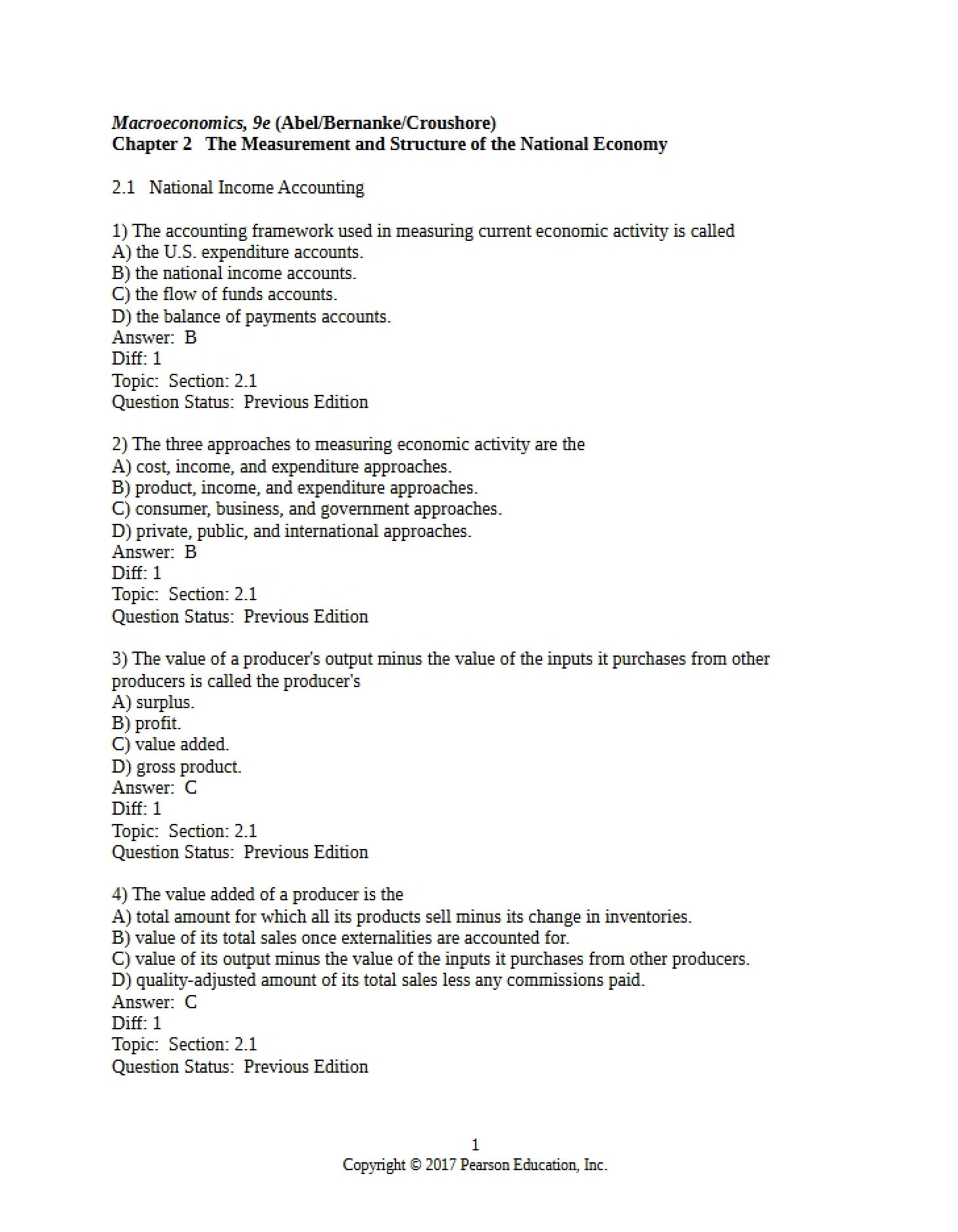
This resource is a focused examination of core principles related to money, pricing mechanisms, and the function of asset markets within a macroeconomic framework. Specifically, it delves into Chapter 7 of the Abel/Bernanke/Croushore macroeconomics textbook, as used in the BUAD 351 Economic Analysis for Business Decisions course at the University of Southern California. It’s structured as a series of questions designed to test understanding of fundamental concepts.
Why This Document Matters
Students enrolled in BUAD 351 will find this particularly useful when preparing for quizzes and exams covering the role of money in an economy. It’s ideal for self-assessment, identifying knowledge gaps, and reinforcing key definitions and relationships. Business students aiming to understand how monetary policy impacts market dynamics and firm-level decisions will also benefit from reviewing these concepts. This is best used *after* initial engagement with the textbook material and lecture notes, as a tool for active recall and application.
Common Limitations or Challenges
This material is designed to *test* understanding, not to *teach* the concepts from scratch. It assumes prior knowledge of basic economic principles. While it covers a range of topics within the chapter, it does not offer detailed explanations, real-world case studies, or extended analyses. It also doesn’t include broader contextualization beyond the scope of the chapter itself. Access to the full resource is required for complete explanations and solutions.
What This Document Provides
* A series of questions exploring the definition and functions of money.
* Examination of the advantages of using money versus a barter system.
* Concepts related to money as a unit of account and store of value.
* Exploration of the relationship between inflation and the use of currency.
* Questions designed to assess understanding of commodity money.
* Focus on the importance of liquidity in financial decisions.
* Assessment of the role of money in facilitating future transactions.
* Questions relating to the practical application of monetary concepts.