What This Document Is
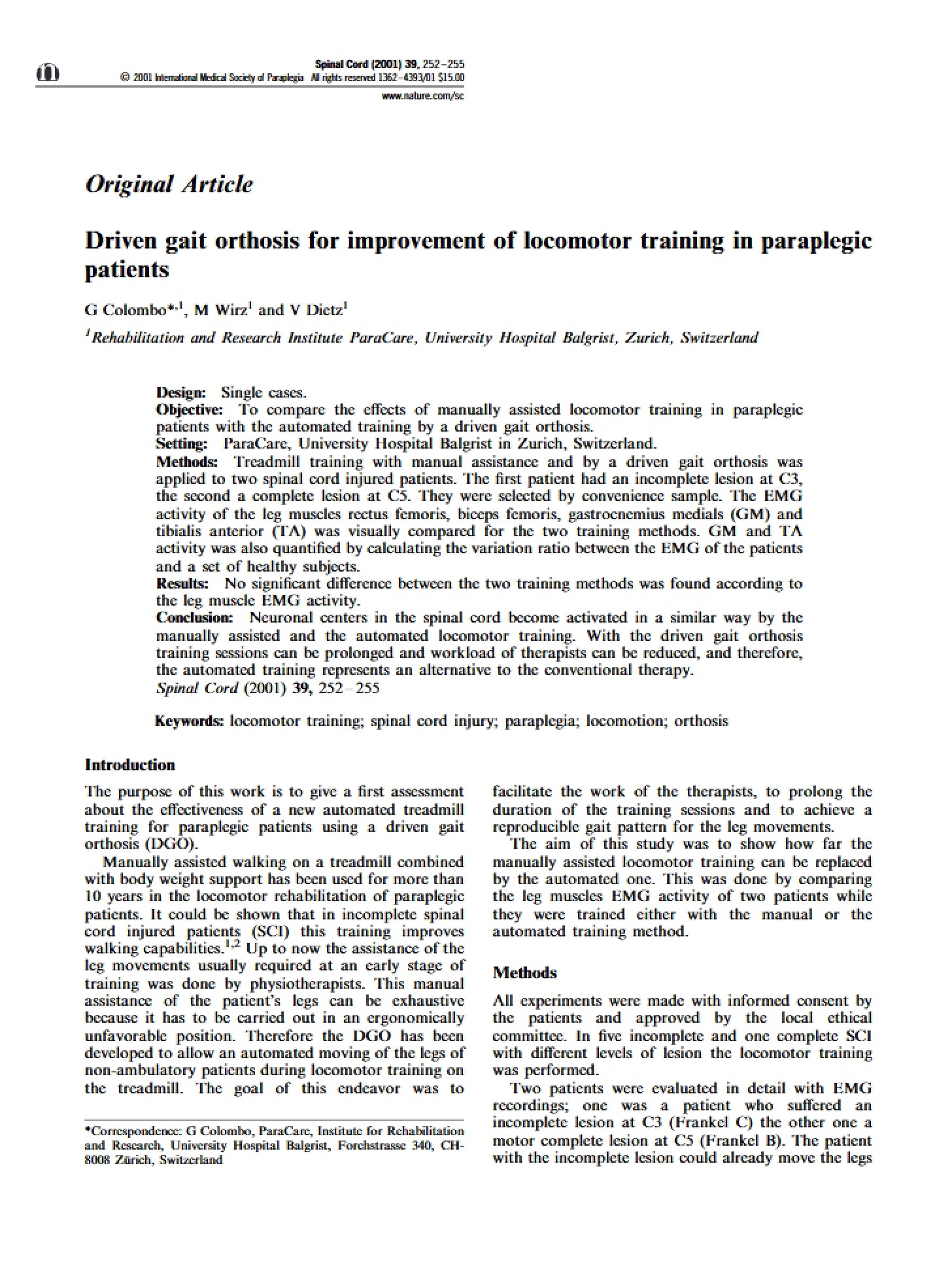
This document presents a detailed study focusing on the design and evaluation of a specialized assistive device. It’s a research manuscript detailing the development of a motor-powered orthosis intended to aid individuals with spinal cord injuries in regaining mobility. The work explores the integration of actuator technology with existing orthotic systems to reduce the physical demands associated with walking. It’s a technical report outlining a specific engineering project and its experimental validation.
Why This Document Matters
This study is valuable for students and professionals in fields such as mechanical engineering, biomedical engineering, rehabilitation engineering, and related healthcare disciplines. It’s particularly relevant for those interested in the practical application of robotics and automation to improve the quality of life for individuals with mobility impairments. Researchers investigating gait analysis, assistive technology, and human-machine interfaces will find this a useful resource. Understanding the challenges and solutions presented here can inform future designs and advancements in the field.
Topics Covered
* Assistive technology for spinal cord injury
* Design and implementation of powered orthoses
* Gait analysis and biomechanics
* Actuator technology (specifically, direct current motors)
* Experimental methods for evaluating orthotic devices
* Impact of assistive devices on gait parameters (speed, step length)
* Compensatory motions and energy expenditure during assisted walking
* Integration of robotic components with existing orthotic systems
What This Document Provides
* A detailed description of a two-degree-of-freedom motor-powered gait orthosis.
* An account of experimental testing conducted with a cohort of individuals with spinal cord injuries.
* Analysis of gait parameters and compensatory movements during orthotic walking.
* Discussion of the potential benefits of actuator assistance in reducing walking effort.
* A comprehensive list of references to related research in the field.
* Technical specifications and design considerations for the developed orthosis.
* Insights into the challenges and opportunities in developing effective gait rehabilitation solutions.