What This Document Is
This study guide provides a comprehensive overview of multimedia and storage concepts as they relate to personal computers. Developed for students in CMPE 003 at the University of California, Santa Cruz, it delves into the fundamental principles behind how computers store and utilize information, and how multimedia elements are integrated into the computing experience. It’s designed to build a strong foundational understanding of these critical components of modern technology.
Why This Document Matters
This resource is ideal for students seeking to solidify their grasp of computer hardware and software fundamentals. It’s particularly useful for those preparing for coursework, reviewing key concepts, or needing a reference guide to understand how data is managed within a computer system. Anyone interested in understanding the ‘behind-the-scenes’ workings of their personal computer will find this guide valuable. It’s best utilized alongside lectures and hands-on practice to maximize learning.
Topics Covered
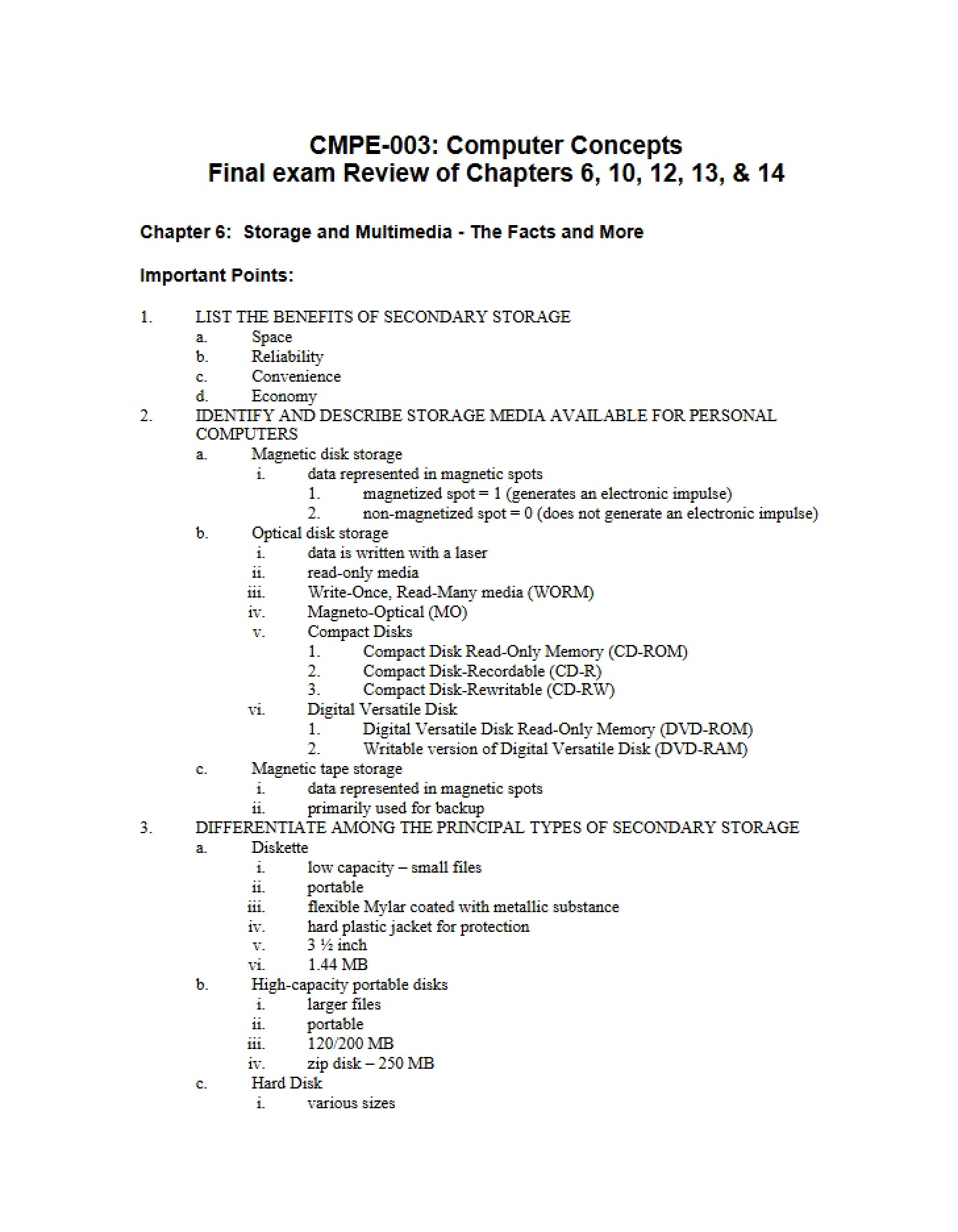
* The benefits and importance of secondary storage.
* Different types of storage media available for personal computers.
* The principles of magnetic disk storage, including diskettes and hard disks.
* Data organization methods on storage devices (tracks, sectors, clusters, cylinders).
* Advanced storage techniques like RAID configurations.
* The advantages and applications of multimedia in computing.
* Reliability, convenience, and economic considerations related to data storage.
What This Document Provides
* Detailed explanations of core storage concepts.
* Comparative analysis of various storage technologies.
* Illustrative descriptions of how data is physically stored and accessed.
* An exploration of the relationship between storage capacity and performance.
* Insights into the advantages of utilizing redundant storage systems.
* A foundational understanding of data organization principles within computer systems.