What This Document Is
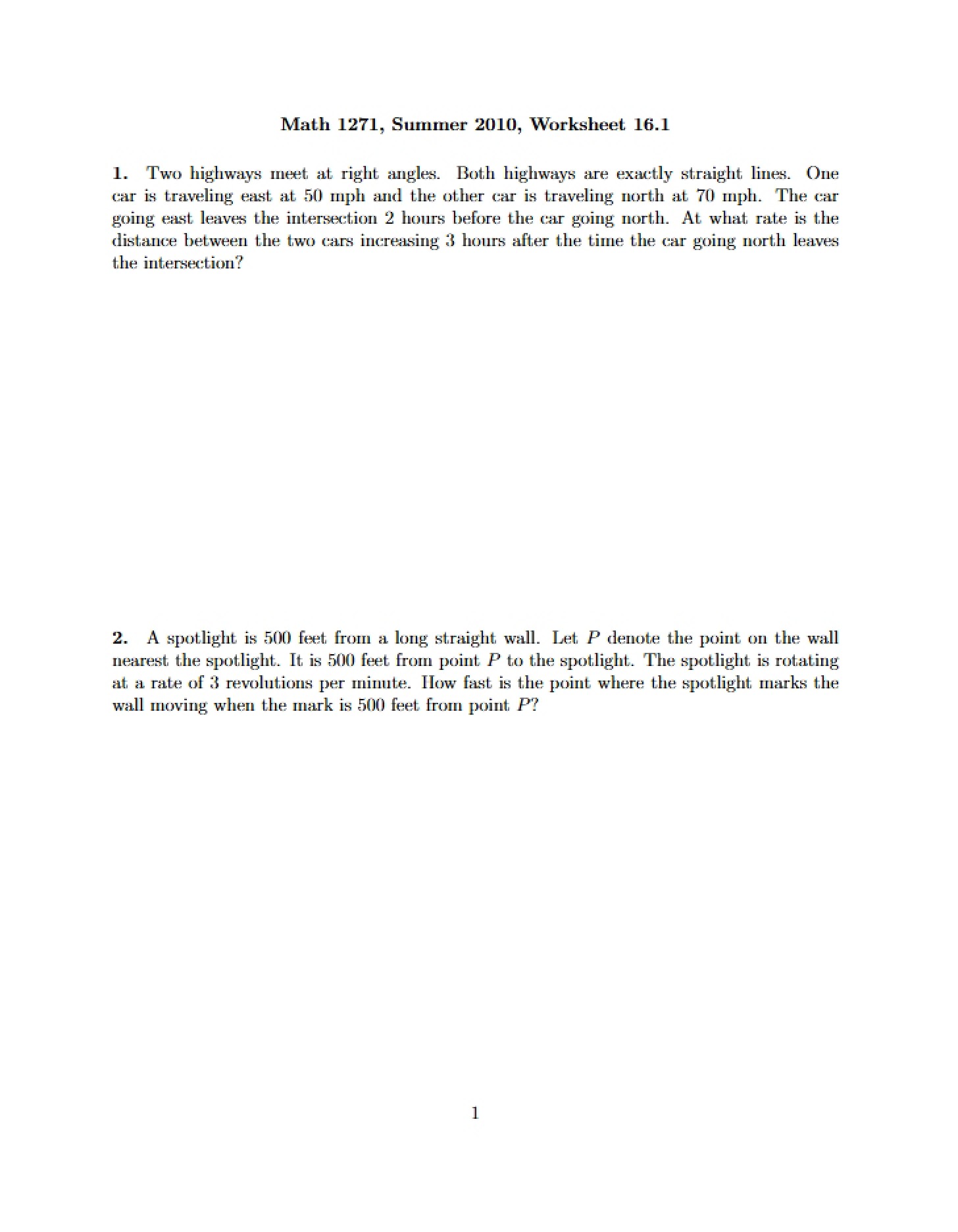
This resource is a focused exploration of the Integral Mean Value Theorem within a Calculus I course. It delves into the theoretical underpinnings of this important theorem and its practical applications in determining average values of functions and relating function values to definite integrals. The material builds upon foundational concepts of integral calculus, assuming a working knowledge of definite integrals and function evaluation.
Why This Document Matters
Calculus I students at the University of Minnesota Twin Cities will find this particularly helpful when tackling problems involving average function values over specified intervals. It’s ideal for students preparing for quizzes and exams where demonstrating an understanding of the Integral Mean Value Theorem is crucial. This resource is also beneficial for those seeking a deeper conceptual grasp of the relationship between differentiation and integration, and how this theorem bridges those concepts. It’s best used *after* initial lectures on integral calculus and the Mean Value Theorem for derivatives, serving as a focused study aid to solidify understanding.
Common Limitations or Challenges
This resource concentrates specifically on the Integral Mean Value Theorem and its direct applications. It does *not* provide a comprehensive review of basic integration techniques, the Fundamental Theorem of Calculus, or the Mean Value Theorem for derivatives – those are assumed prerequisites. It also doesn’t offer step-by-step solutions to practice problems; rather, it focuses on the theorem itself and setting up the framework for applying it. It won’t cover more advanced integration methods or applications beyond those directly related to the theorem.
What This Document Provides
* A clear presentation of the Integral Mean Value Theorem.
* Illustrative scenarios involving the calculation of average function values.
* Exploration of how the theorem connects to the concept of definite integrals.
* Problematic situations involving continuous functions and their guaranteed values within an interval.
* Applications relating to average density and distance calculations involving particle motion.
* Opportunities to consider the implications of the theorem in various contexts.