What This Document Is
This study guide delves into the critical areas of negotiation and conflict management, essential components of effective leadership and organizational success. Developed for students in Foundations of Management and Human Resources (BUSMHR 3100) at The Ohio State University, it provides a focused exploration of the dynamics at play when differing interests collide. It builds a framework for understanding how conflict arises, how it impacts teams and organizations, and strategies for navigating these challenges constructively.
Why This Document Matters
This resource is ideal for students seeking a deeper understanding of interpersonal and group dynamics within a professional setting. It’s particularly valuable when preparing for coursework, reviewing key concepts before assessments, or seeking to apply theoretical knowledge to real-world scenarios. Anyone aiming to improve their ability to resolve disputes, foster collaboration, and build stronger working relationships will find this guide beneficial. It’s designed to supplement course materials and enhance your overall comprehension of these vital management skills.
Topics Covered
* The fundamental nature of conflict – distinguishing between different types.
* Factors that contribute to the emergence of conflict within organizations.
* Strategies for proactively addressing and resolving conflict situations.
* The role of interpersonal relationships and personality in conflict escalation.
* Methods for fostering constructive dialogue and debate.
* Approaches to dispute resolution beyond traditional methods.
* Understanding group dynamics and potential sources of intergroup conflict.
* The impact of conflict on organizational performance and team cohesion.
What This Document Provides
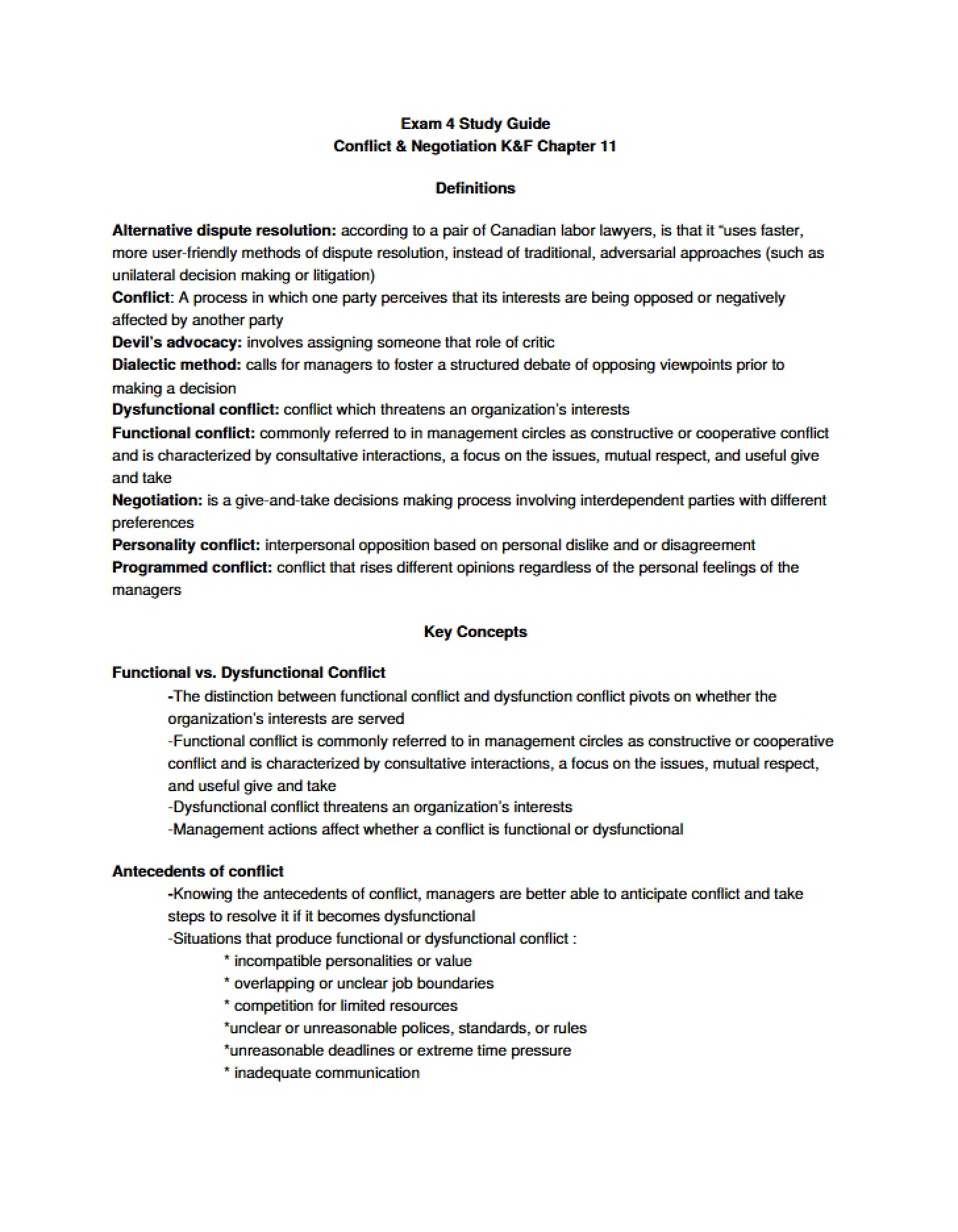
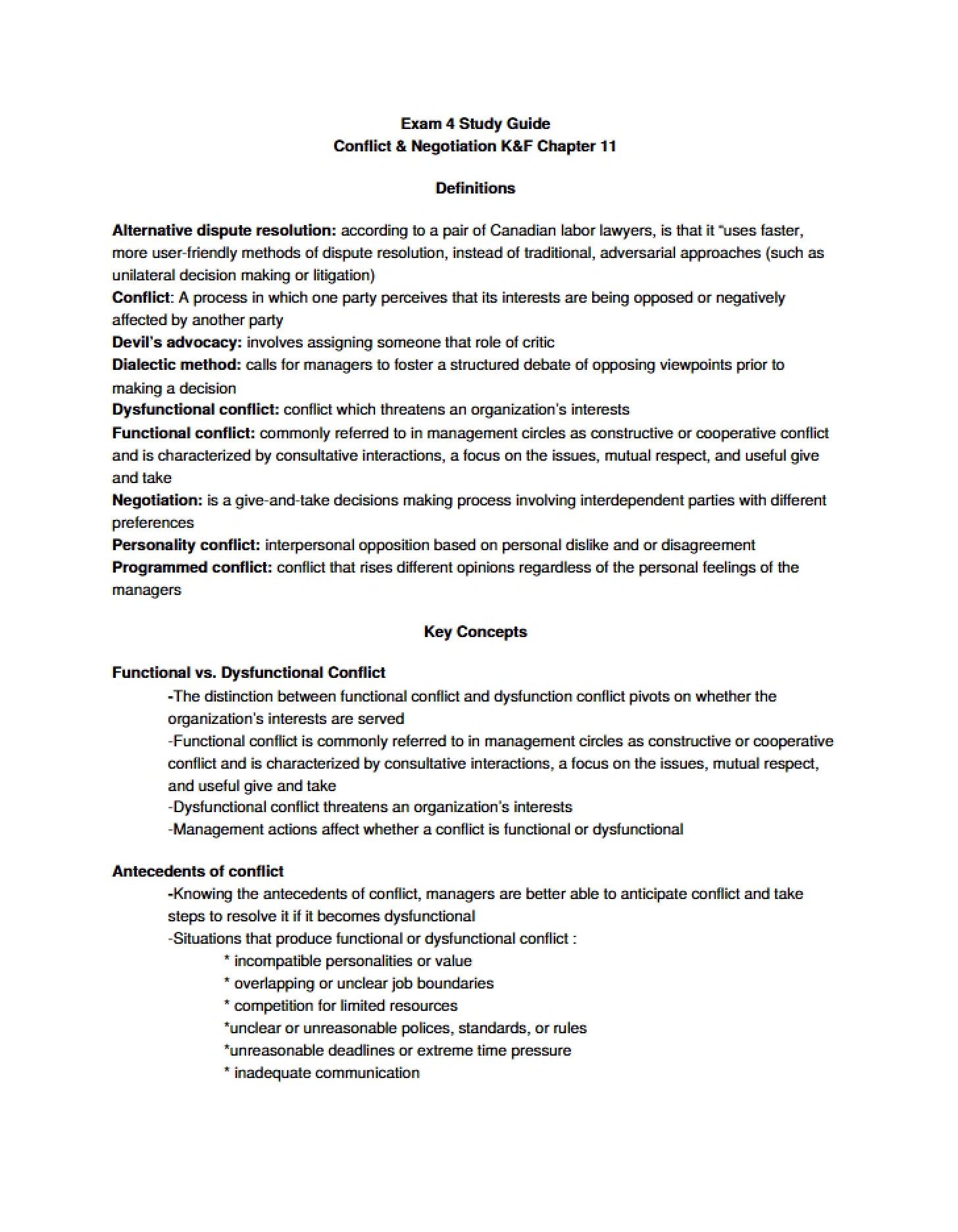
* A clear distinction between functional and dysfunctional conflict and their respective outcomes.
* An examination of the underlying reasons why individuals and groups may avoid conflict.
* Insights into desired outcomes of conflict resolution, focusing on agreement, relationships, and learning.
* Exploration of workplace behaviors that can contribute to conflict.
* A framework for understanding and mitigating intergroup conflict, including potential pitfalls.
* Key concepts and terminology related to negotiation and conflict management.