What This Document Is
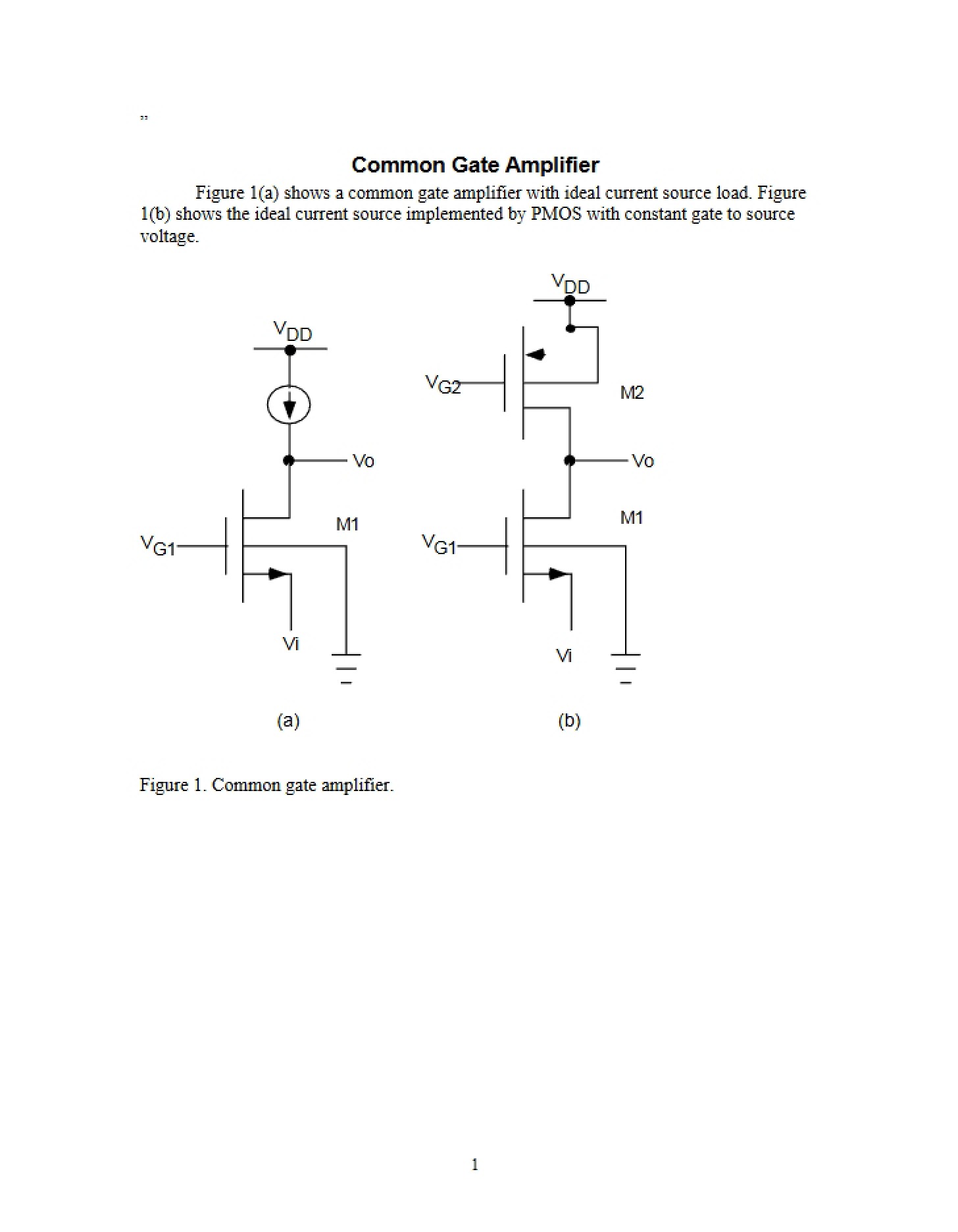
This is a detailed exploration of the common source amplifier configuration, specifically focusing on an NMOS inverter amplifier utilizing a PMOS current load. It delves into the theoretical underpinnings of this circuit, examining its behavior as an amplifier through the lens of small-signal analysis. The material builds upon fundamental transistor characteristics and applies them to a practical amplifier design. It utilizes circuit diagrams and mathematical representations to illustrate key concepts.
Why This Document Matters
This resource is invaluable for electrical engineering students, particularly those enrolled in courses on analog circuit design, solid-state devices, or sensor technology. It’s most beneficial when you’re seeking a deeper understanding of amplifier operation beyond basic introductory concepts. Professionals needing a refresher on common source amplifier analysis or those involved in low-power circuit design will also find it useful. It’s designed to supplement coursework and provide a solid foundation for more advanced topics.
Common Limitations or Challenges
This material focuses on the *analysis* of the circuit, assuming a foundational understanding of MOSFET physics and circuit analysis techniques. It does not provide a step-by-step guide to building or physically testing the circuit. Furthermore, it concentrates on low-frequency behavior and doesn’t extensively cover high-frequency effects or advanced compensation techniques. Practical considerations like process variations and temperature effects are also not a primary focus.
What This Document Provides
* A detailed examination of the common source amplifier with a PMOS current load.
* Analysis of the low-frequency small-signal equivalent circuit.
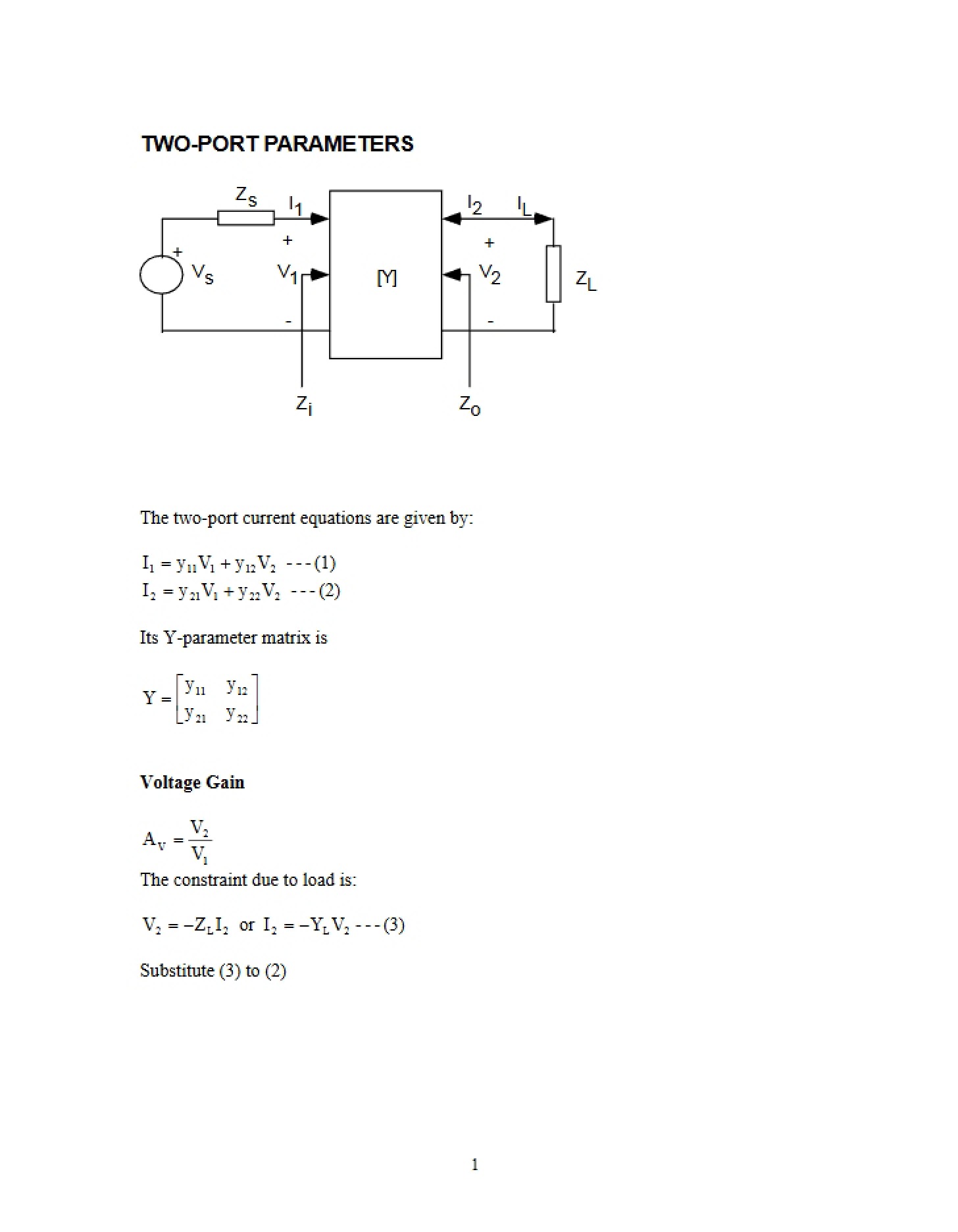
* Derivation of Y-parameters for circuit characterization.
* Calculations related to input and output impedance.
* An exploration of the static characteristics of the NMOS inverter amplifier.
* Identification of transistor operating regions (cutoff, saturation, ohmic) for both NMOS and PMOS devices.
* Discussion of the relationship between transistor currents and voltages.
* References to simulation tools (PSpice) for verification of theoretical results.