What This Document Is
These are class notes from an introductory Survey of Accounting (ACCT 2000) course at Louisiana State University, specifically covering Chapter 4. The notes focus on the fundamental principles of accrual accounting and the necessary adjustments made to financial records to ensure accuracy. It explores the differences between accrual and cash basis accounting, and introduces the concepts of deferrals and accruals.
Why This Document Matters
These notes are essential for students in ACCT 2000 who need a concise overview of key accounting concepts. They are particularly useful when preparing for quizzes and exams related to the timing of revenue and expense recognition. Understanding these principles is foundational for more advanced accounting coursework and real-world financial analysis. The notes bridge the gap between basic accounting equations and the practical application of those principles in financial reporting.
Common Limitations or Challenges
This document provides a summarized overview of the chapter’s content. It does *not* offer in-depth practice problems or detailed explanations of complex scenarios. It’s a study aid, not a replacement for the textbook or classroom instruction. Users will still need to engage with the full chapter material and potentially seek additional resources to fully master the concepts.
What This Document Provides
This preview includes:
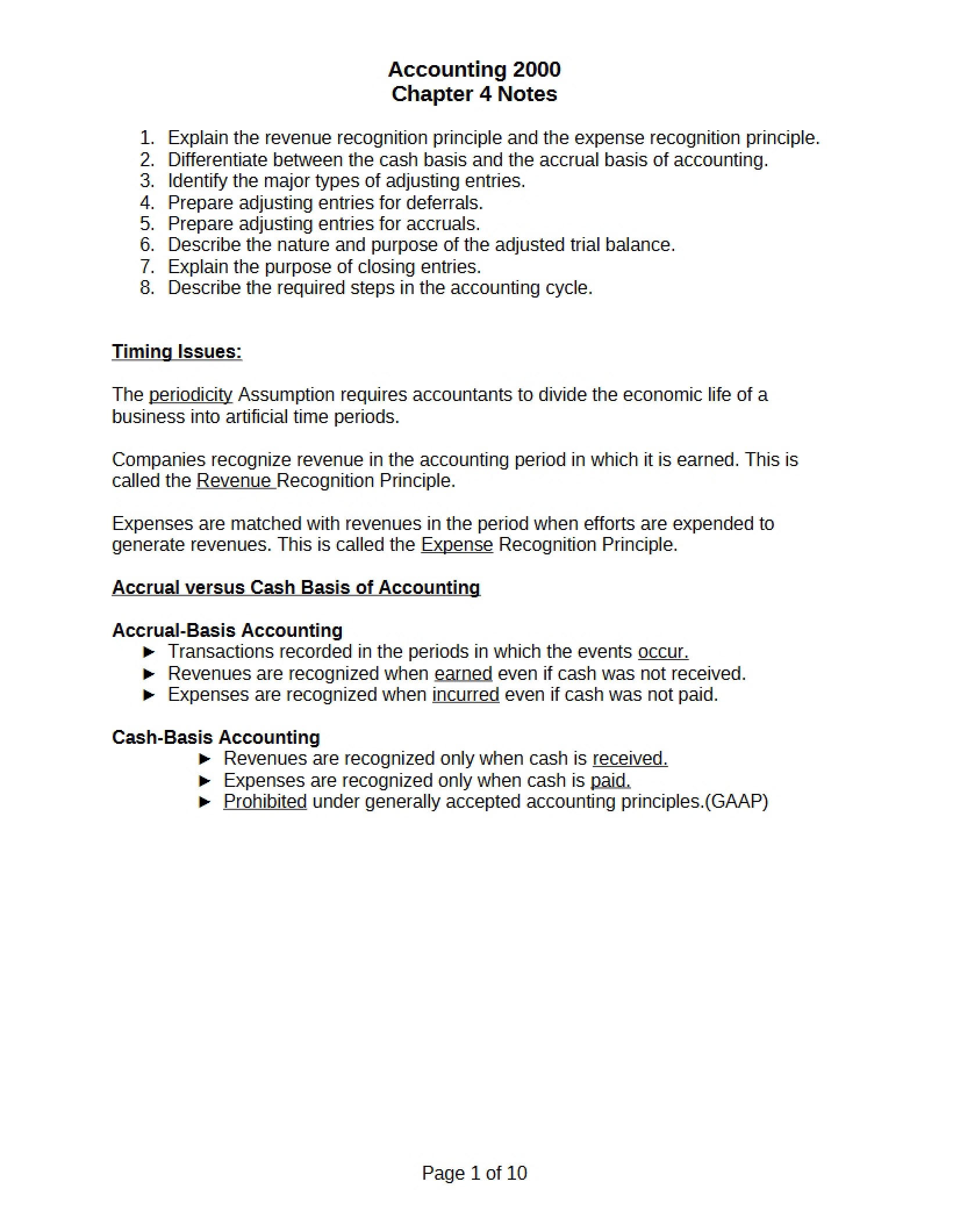
* An explanation of the periodicity assumption and its impact on accounting.
* A comparison of accrual and cash basis accounting, highlighting the core differences.
* An illustrative example demonstrating the impact of timing differences on income statements.
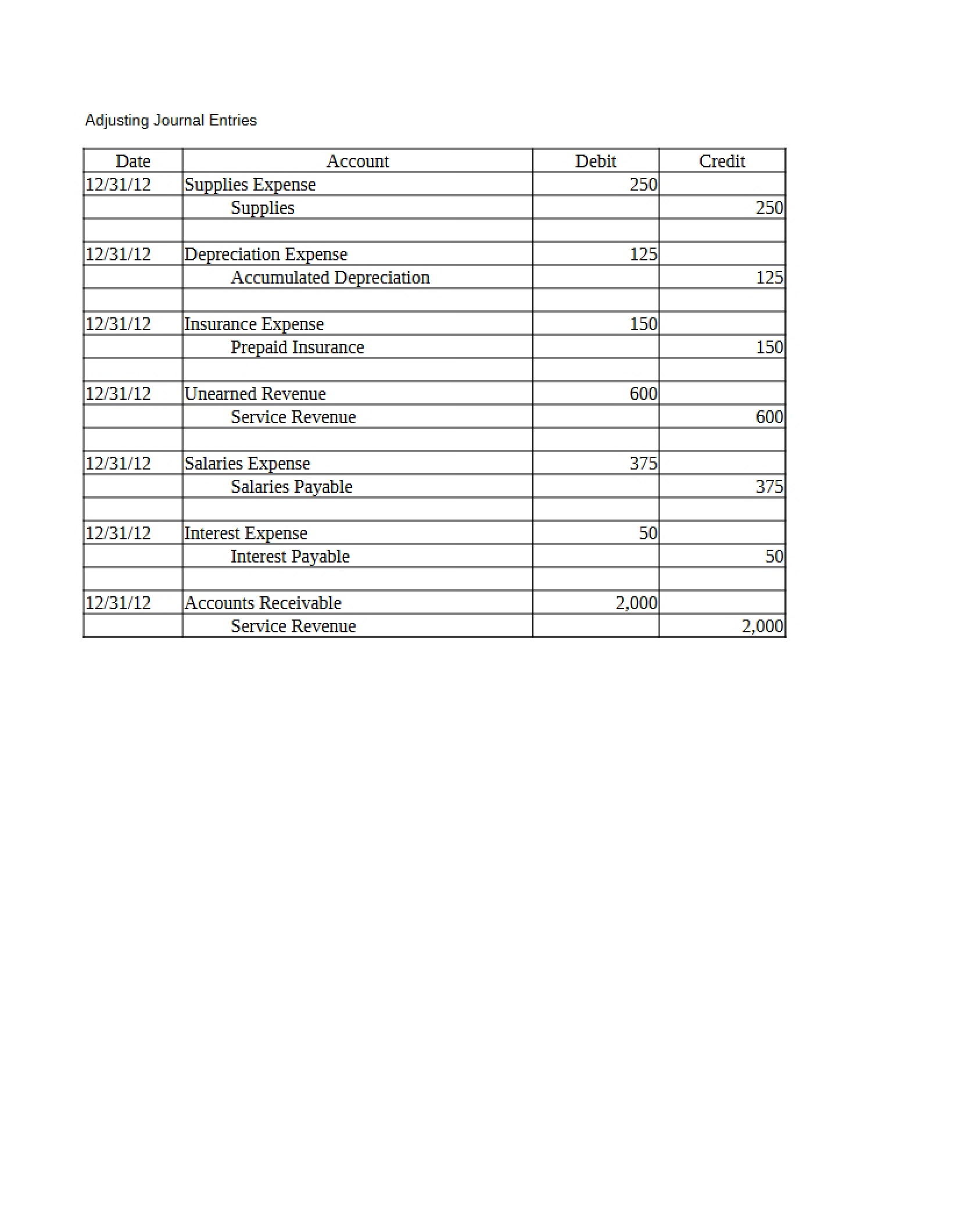
* An introduction to adjusting entries, including their purpose and frequency.
* Definitions of deferrals (prepaid expenses and unearned revenue).
* A basic example of adjusting entries for supplies and prepaid insurance.
* A tabular analysis demonstrating the impact of adjustments on the accounting equation.
This preview *does not* include: detailed examples of all types of accruals, advanced adjusting entry scenarios, or comprehensive practice exercises. It also does not cover the preparation of a full set of financial statements beyond the simplified income statement examples provided.