What This Document Is
This study guide provides a comprehensive overview of key concepts related to photosynthesis, a fundamental process in biology. Specifically geared towards students in General Biology I (BIO 1200) at the University of Detroit Mercy, these notes distill complex biochemical pathways into a structured and accessible format. It’s designed to support your understanding of how plants and other organisms convert light energy into chemical energy.
Why This Document Matters
These notes are an invaluable resource for students looking to solidify their grasp of photosynthetic processes. They are particularly helpful when reviewing lecture material, preparing for quizzes and exams, or working through homework assignments. If you’re finding the intricacies of energy capture and carbohydrate production challenging, this guide offers a focused and detailed exploration of the subject matter. Accessing the full notes will provide a significant advantage in mastering this core biological principle.
Topics Covered
* The overall process of photosynthesis and its location within plant cells
* The role of water and carbon dioxide in photosynthesis
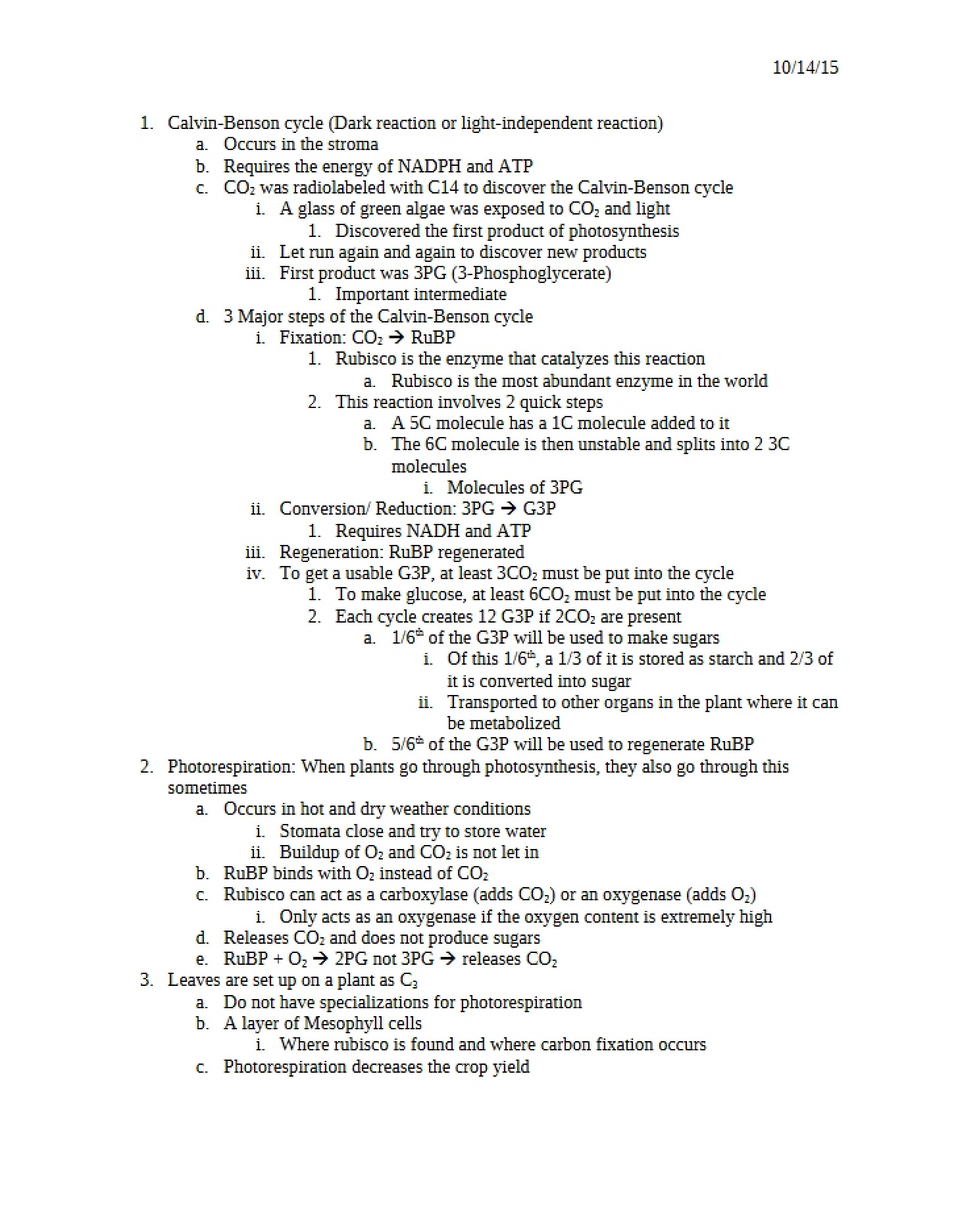
* The two main stages of photosynthesis: light-dependent and light-independent reactions
* The nature of light and how pigments interact with it
* Key photosynthetic pigments and their functions
* Electron transport systems involved in photosynthesis
* The roles of Photosystems I and II
* ATP and NADPH production during photosynthesis
What This Document Provides
* A detailed breakdown of the biochemical reactions involved in photosynthesis.
* Explanations of key terminology, such as transpiration, stomata, and photophosphorylation.
* An exploration of how energy is transferred and utilized during the photosynthetic process.
* A focused look at the roles of different pigments in capturing light energy.
* A structured presentation of the electron transport systems and their outputs.
* Clarification of the differences between cyclic and noncyclic electron transport.