What This Document Is
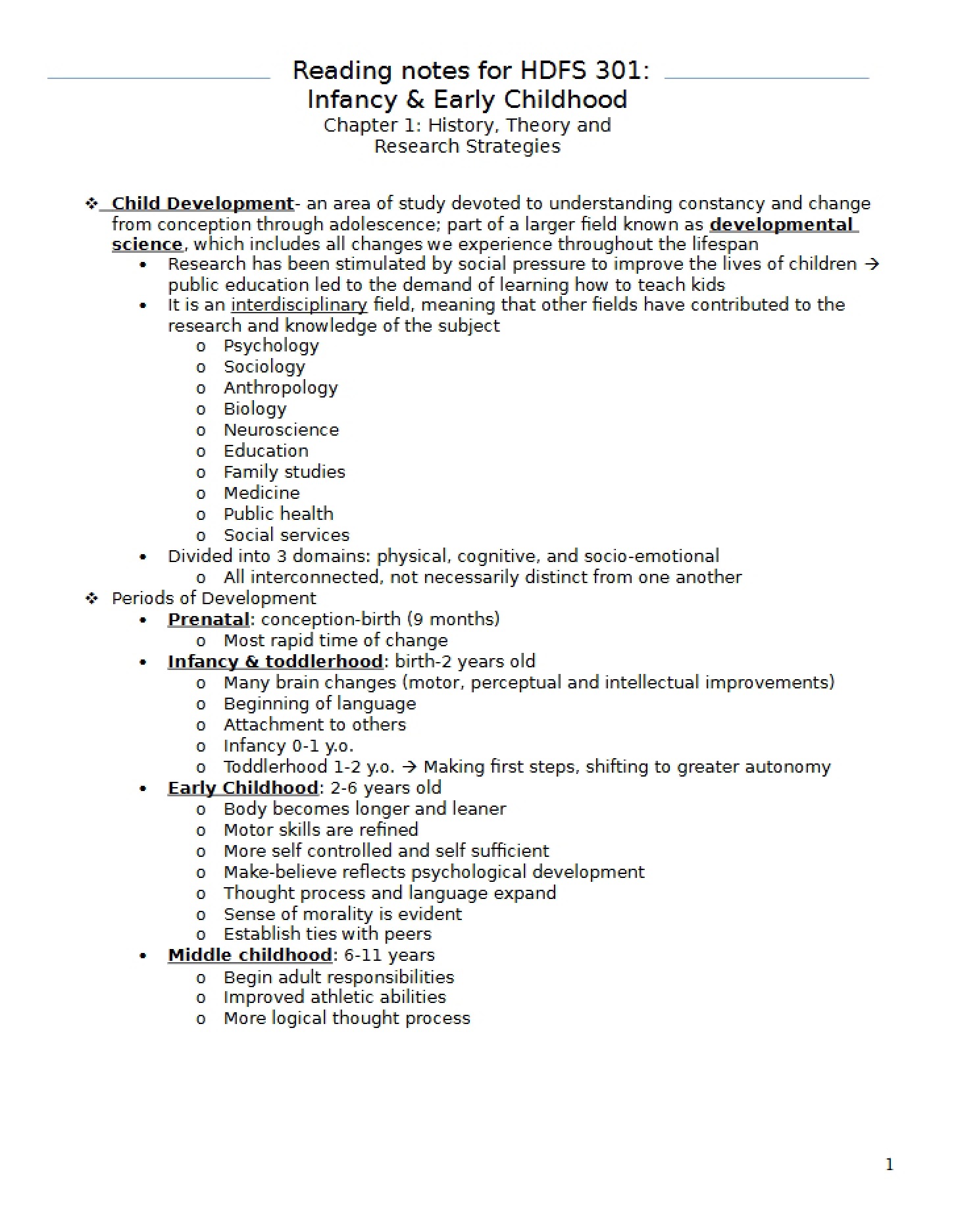
These are lecture notes covering foundational concepts in HDFS 301: Infancy & Early Childhood, specifically focusing on Chapter 1. This resource provides a structured overview of the historical context, core theoretical frameworks, and essential research approaches used in the field of child development. It’s designed to complement in-class lectures and provide a solid base for understanding the complexities of early human growth.
Why This Document Matters
This resource is ideal for students enrolled in introductory child development courses, particularly those at the University of Illinois at Urbana-Champaign. It’s most beneficial when used *alongside* attending lectures, as it offers a detailed outline and expanded notes to reinforce learning. Students preparing for quizzes or exams on the historical and theoretical underpinnings of the field will find this a valuable study aid. It’s also helpful for anyone seeking a comprehensive introduction to the key perspectives shaping our understanding of infants and young children.
Topics Covered
* The evolution of thought regarding child development throughout history.
* Categorization and comparison of major theoretical perspectives (biological, psychoanalytic, environmental, cognitive, contextual).
* Criteria for evaluating the strength and applicability of developmental theories.
* Fundamental themes in child development, including the interplay of continuous vs. discontinuous development and nature vs. nurture.
* The interconnectedness of developmental domains and the influence of individual differences.
* The impact of historical and cultural contexts on child-rearing practices and development.
What This Document Provides
* A detailed lecture outline for Chapter 1, offering a clear structure for understanding the material.
* Expanded notes elaborating on key concepts and ideas presented in the lecture.
* An overview of the historical foundations of the field, tracing the changing perceptions of children.
* Discussion points designed to stimulate critical thinking about core developmental principles.
* Insights into emerging consensus views within the field of child development.