What This Document Is
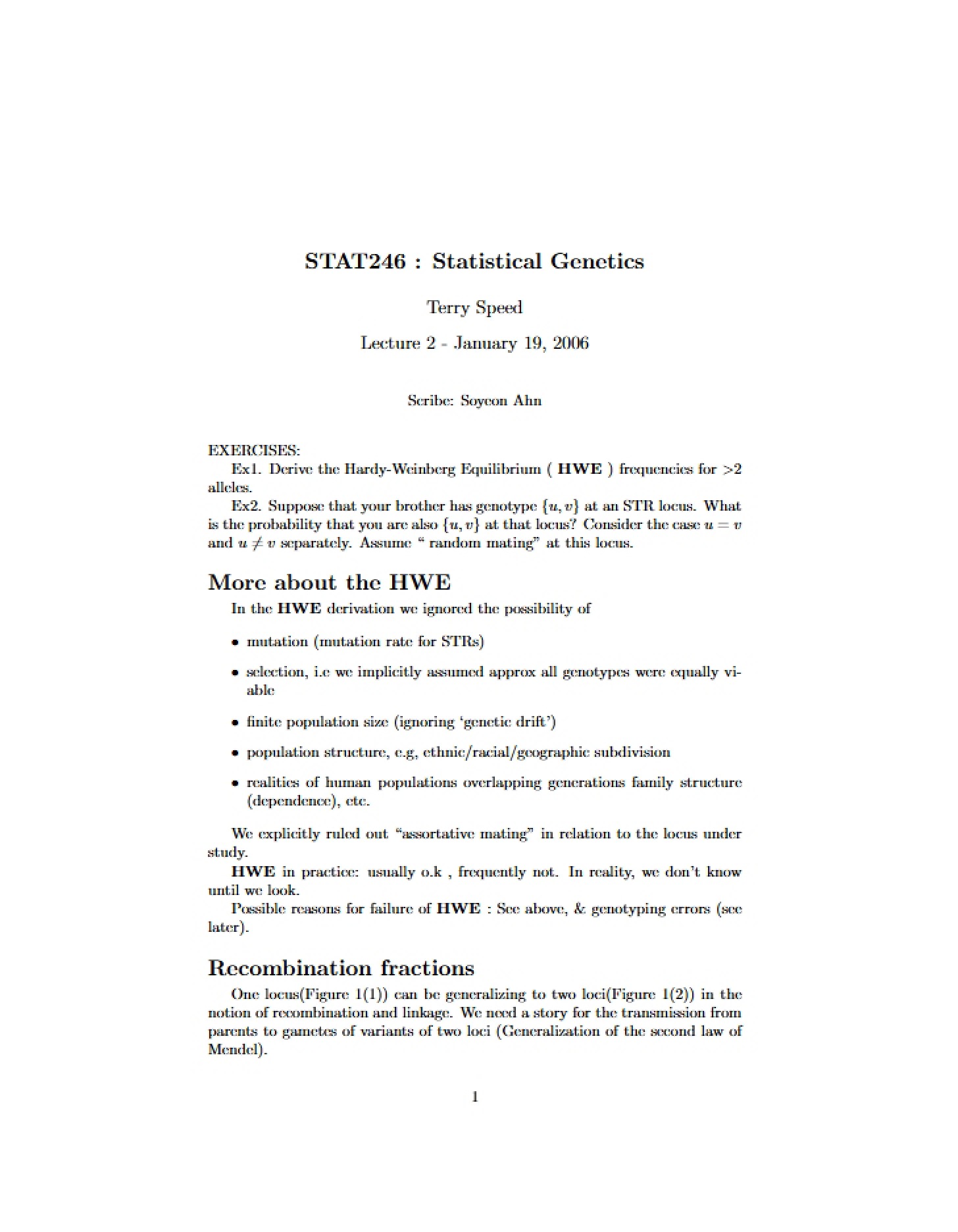
These are lecture notes from Statistics 246, a course on Statistical Genetics offered at the University of California, Berkeley. The notes cover methods used in the field of genetics to identify and analyze regulatory elements within DNA sequences. Specifically, they focus on techniques for discovering *cis*-regulatory modules – sections of DNA that control gene expression – and understanding how these modules function. The notes represent material from Week 14, Lecture 1 of the Spring 2006 course.
Why This Document Matters
These notes would be particularly valuable for students enrolled in advanced genetics, genomics, or bioinformatics courses. They are also helpful for researchers working on gene regulation, computational biology, or related fields. If you are seeking a deeper understanding of the computational approaches used to decipher the complex code of gene expression, these notes offer a focused exploration of key methodologies. They are best used as a supplement to coursework or as a reference for ongoing research.
Topics Covered
* Methods for identifying shared motifs in DNA sequences
* Clustering techniques applied to gene expression data
* Linear regression models for analyzing the relationship between gene expression and regulatory elements
* The Gibbs sampling approach to motif discovery
* Historical context and evolution of computational methods in genetics
* Analysis of specific datasets, including the *E. coli* CRP dataset
What This Document Provides
* An overview of different computational strategies for finding regulatory modules.
* Discussion of the strengths and limitations of various methods when applied to different organisms (bacteria, yeast, fly, mouse, human).
* A foundational understanding of the motif alignment model.
* Insights into the challenges of identifying functional DNA sequences.
* References to key research papers in the field, including Tompa et al. (2005) and Lawrence & Reilly (1990).