What This Document Is
These are class notes from UGBA 105, Introduction to Organizational Behavior at UC Berkeley. The notes cover foundational concepts related to understanding the complexities of managing individuals and groups within organizations. They represent a comprehensive overview of key ideas discussed in the second week of the course, focusing on the core responsibilities and challenges faced by managers. This material is designed to build a strong theoretical base for analyzing real-world organizational scenarios.
Why This Document Matters
This resource is invaluable for students enrolled in introductory organizational behavior courses, particularly those seeking to solidify their understanding of the manager’s role. It’s especially helpful for students preparing for case discussions, group projects, or exams that require applying organizational behavior principles. Reviewing these notes can also benefit anyone interested in gaining a deeper insight into the dynamics of effective leadership and organizational design, and how these elements contribute to overall success.
Topics Covered
* The evolving definition of a manager’s role and responsibilities
* Contrasting perspectives on management – the ‘engineer’ versus ‘leader’ approaches
* The importance of aligning formal and informal organizational elements
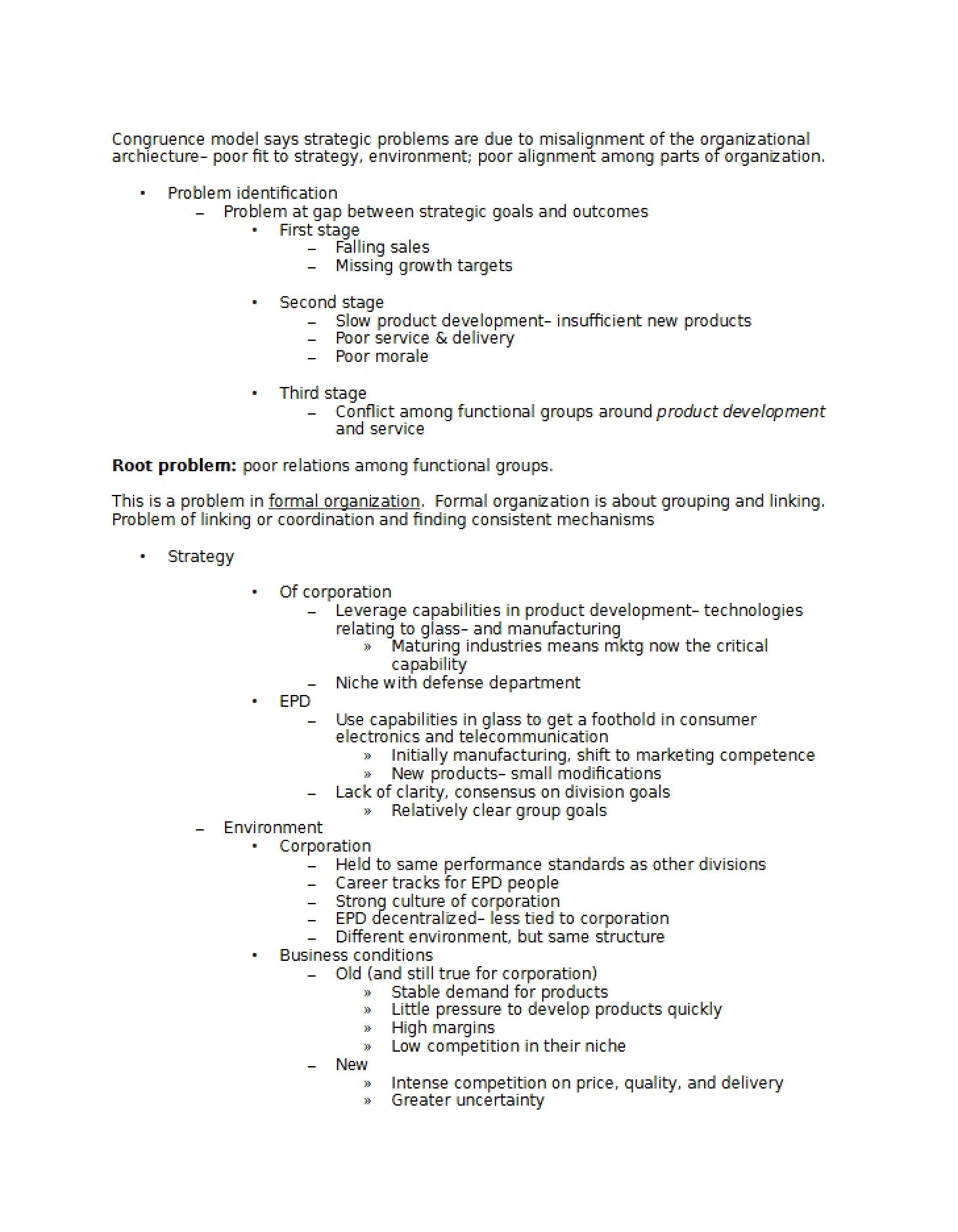
* A framework for organizational analysis and problem-solving
* Identifying performance gaps and root causes within organizations
* Key components influencing organizational congruence
* The relationship between strategy, structure, people, and tasks
What This Document Provides
* A structured overview of the course’s progression and objectives.
* A discussion framework for evaluating potential “Manager of the Year” candidates.
* A detailed exploration of a model for analyzing organizational challenges.
* A breakdown of the core components of an organization and their interdependencies.
* An introduction to key “levers” managers can utilize to drive positive change.
* A foundational understanding of the “fit” hypothesis in organizational design.