What This Document Is
These are class notes from RTV 3007: Development and Structure of Electronic Media and New Technology at the University of Central Florida, covering core concepts related to the evolution and organization of the media landscape. The notes detail the mechanics of content creation, distribution, and scheduling within the broadcast industry, encompassing both traditional and emerging models. They offer a focused look at how media outlets operate and the factors influencing their programming decisions.
Why This Document Matters
This resource is ideal for students enrolled in RTV 3007, or anyone seeking a foundational understanding of how electronic media functions. It’s particularly helpful when studying for quizzes and exams, or when needing a concise reference point for complex industry concepts. Reviewing these notes can reinforce lecture material and provide a clearer picture of the relationships between content providers, distributors, and audiences. Accessing the full notes will provide a deeper dive into the intricacies of the media industry.
Topics Covered
* The impact of increased channel options on viewer behavior
* Methods of program content acquisition for broadcast outlets
* Distinctions between local, network, and syndicated programming
* The mechanics of syndicated program licensing and rights
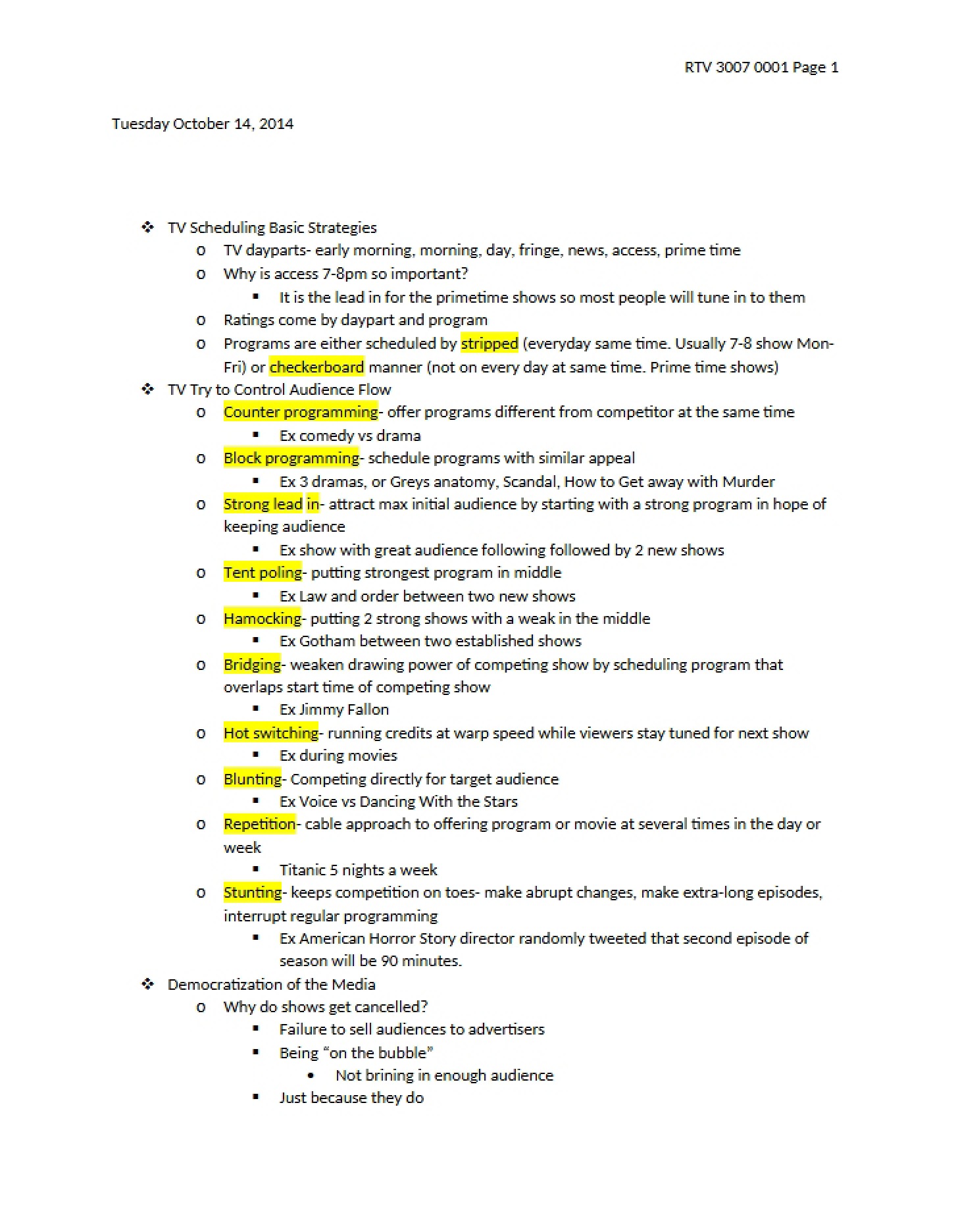
* Strategies for effective program scheduling across different media platforms
* Approaches to audience targeting in radio and television broadcasting
* The role of trade affairs in securing program distribution deals
* Financial considerations in program acquisition and scheduling
What This Document Provides
* An overview of key terminology used in the broadcast industry.
* Insights into the dynamics of the “zero sum” market in media.
* A breakdown of different content sourcing methods for radio and television.
* An exploration of the factors influencing financial agreements between stations and syndicators.
* A foundational understanding of dayparts and audience flow in scheduling.
* A look at different audience targeting strategies employed by broadcasters.