What This Document Is
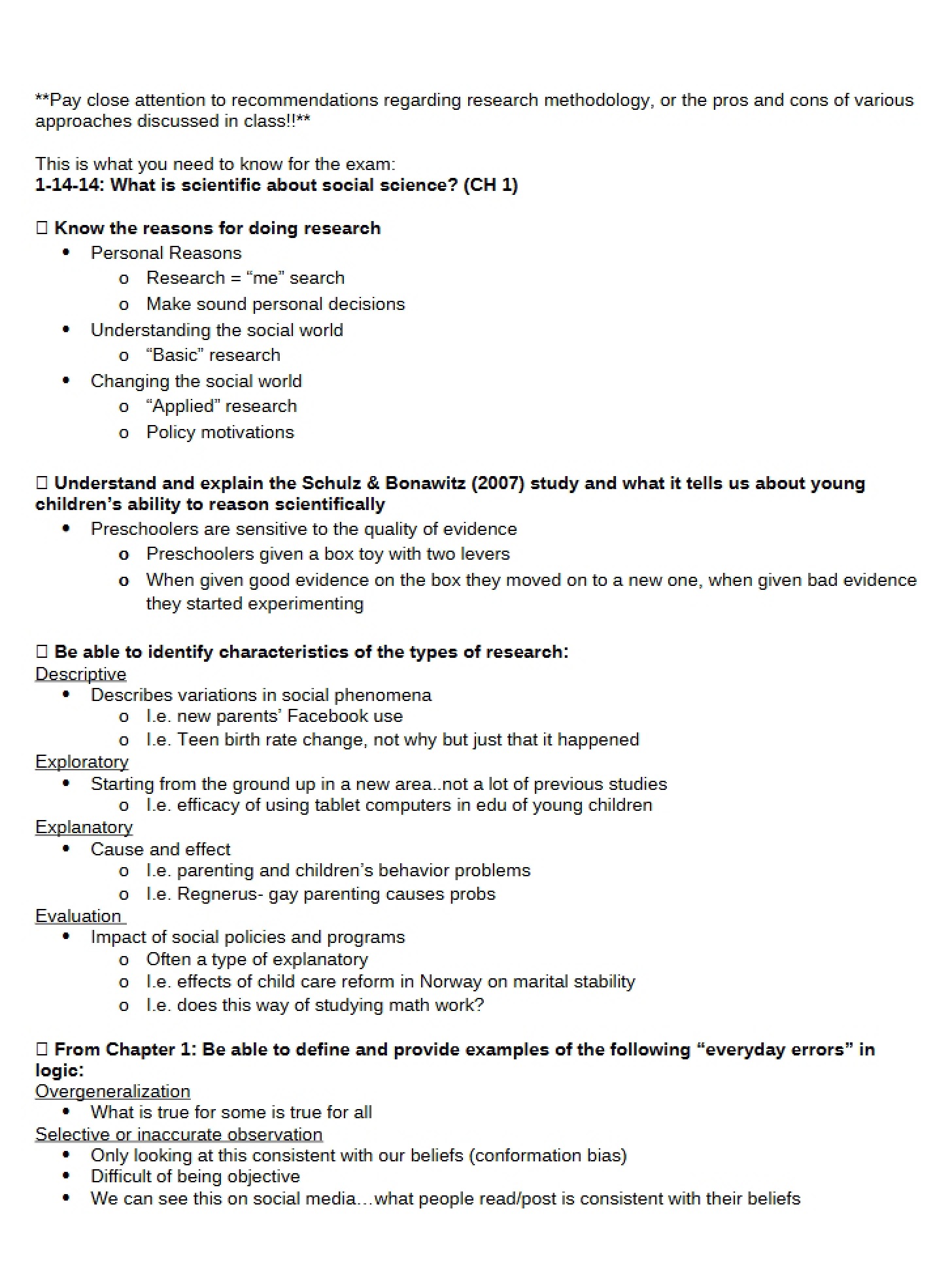
These are lecture notes from Methods in Human Ecology Research (HDFS 2900) at The Ohio State University. This resource summarizes key concepts and terminology discussed in lectures, offering a focused review of research methodologies within the field of human ecology. It’s designed to support your understanding of how research is conducted and evaluated, particularly concerning populations and data collection.
Why This Document Matters
This study guide is invaluable for students enrolled in HDFS 2900, or those taking similar introductory research methods courses. It’s particularly helpful when preparing for quizzes and exams, or when needing a concise reference for understanding core research principles. Reviewing these notes can strengthen your foundation for more advanced coursework and research projects, enabling you to critically assess and design studies effectively. It’s best used *in conjunction* with course readings and active class participation.
Topics Covered
* Defining and differentiating key population concepts
* Principles of sample selection and generalizability
* Various random sampling techniques and their applications
* Utilizing existing data sources for research
* Exploring non-probability sampling methods
* Approaches to studying challenging or “hidden” populations
* Considerations when working with large datasets
* Understanding the strengths and limitations of different data types
What This Document Provides
* Clear definitions of essential research terminology.
* An overview of different sampling strategies, outlining their core principles.
* A discussion of the benefits and drawbacks of using secondary data.
* Insights into techniques for reaching underrepresented groups in research.
* A structured framework for understanding the complexities of research design and implementation.
* A valuable resource for reinforcing lecture material and preparing for assessments.