What This Document Is
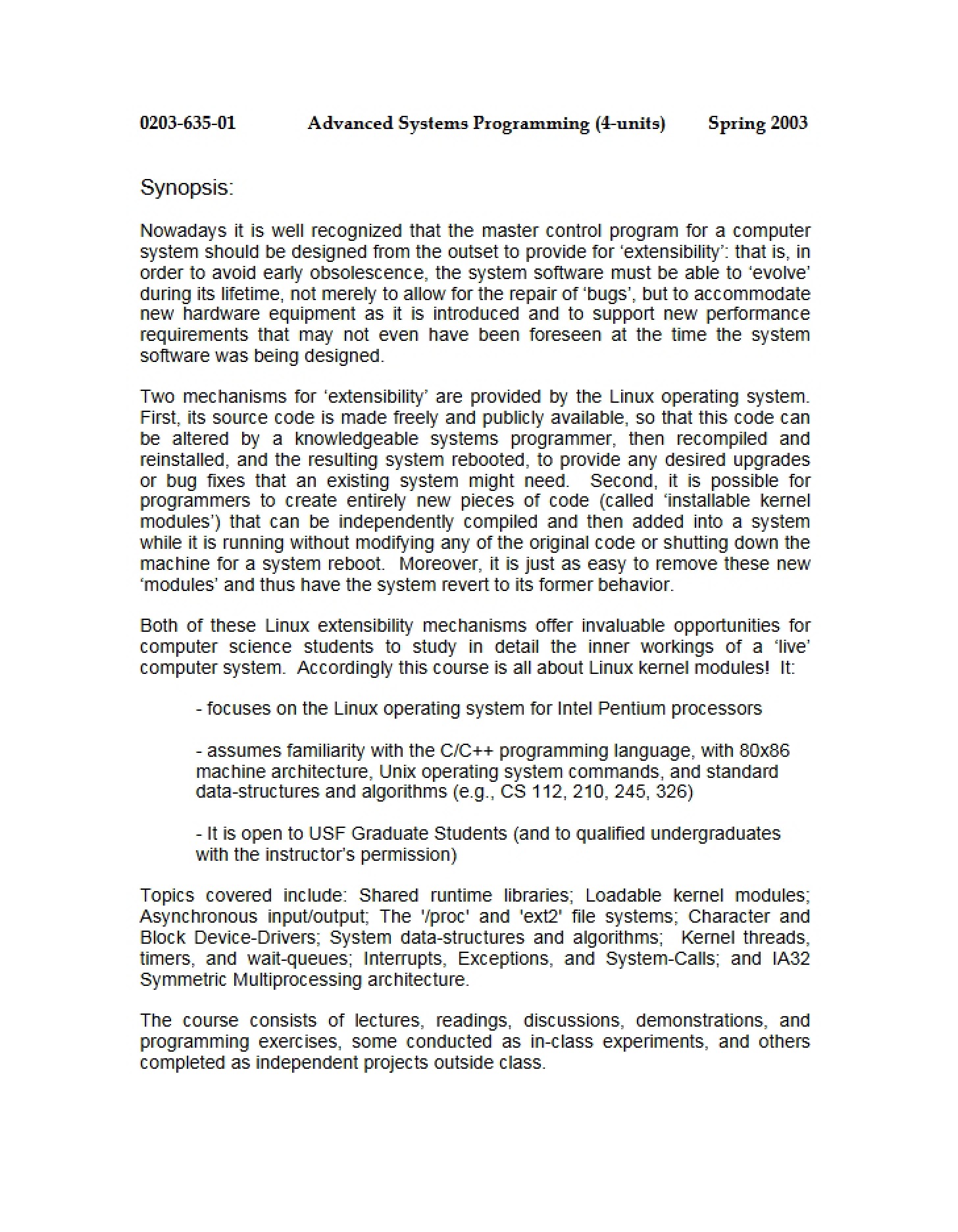
These are lecture notes from CS 635: Advanced Systems Programming at the University of San Francisco. The material centers around low-level programming concepts, specifically focusing on the intricacies of the x86 architecture and its implementation within the Linux kernel. A significant portion delves into the functionality and application of key processor instructions, with a detailed examination of one instruction in particular. The notes cover register organization, system registers, and the impact of instructions on processor state.
Why This Document Matters
This resource is invaluable for students seeking a deeper understanding of operating systems and computer architecture. It’s particularly helpful for those preparing to work with kernel-level code, embedded systems, or performance-critical applications. If you’re struggling to grasp how hardware instructions translate into kernel behavior, or need a reference for x86 assembly language within a Linux environment, these notes will provide a solid foundation. They are best used in conjunction with course lectures and hands-on coding exercises.
Common Limitations or Challenges
These notes represent a specific lecture’s content and do not constitute a comprehensive course syllabus or textbook. They assume a foundational understanding of computer organization and assembly language programming. The notes focus on specific examples within the Linux kernel and may not cover all possible applications or variations of the concepts discussed. They are designed to *supplement* learning, not replace it. Access to the full document is required to gain the complete context and detailed explanations.
What This Document Provides
* An overview of x86 register categories (segment, general, program control/status, and system registers).
* Discussion of the role and frequency of use of a specific x86 instruction within the Linux kernel.
* Guidance on accessing Intel’s official documentation for detailed instruction set references.
* An explanation of the differences between Intel’s assembly syntax and the AT&T syntax used in GNU/Linux.
* Insight into the implicit operands and side effects associated with certain processor instructions.