What This Document Is
These are lecture notes from Economics 181: Monetary Policy at the University of California, Berkeley. Specifically, these notes cover an advanced continuation of the Ricardian Model of international trade, building upon foundational concepts introduced previously. The notes represent a detailed record of classroom instruction, offering a structured exploration of trade theory.
Why This Document Matters
This resource is ideal for students currently enrolled in or planning to take advanced international economics courses. It’s particularly beneficial for those seeking a deeper understanding of the theoretical underpinnings of trade patterns and comparative advantage. Use these notes to reinforce concepts discussed in class, prepare for assessments, or review key principles before tackling more complex models. Students who find themselves needing a robust explanation of trade fundamentals will find this a valuable asset.
Topics Covered
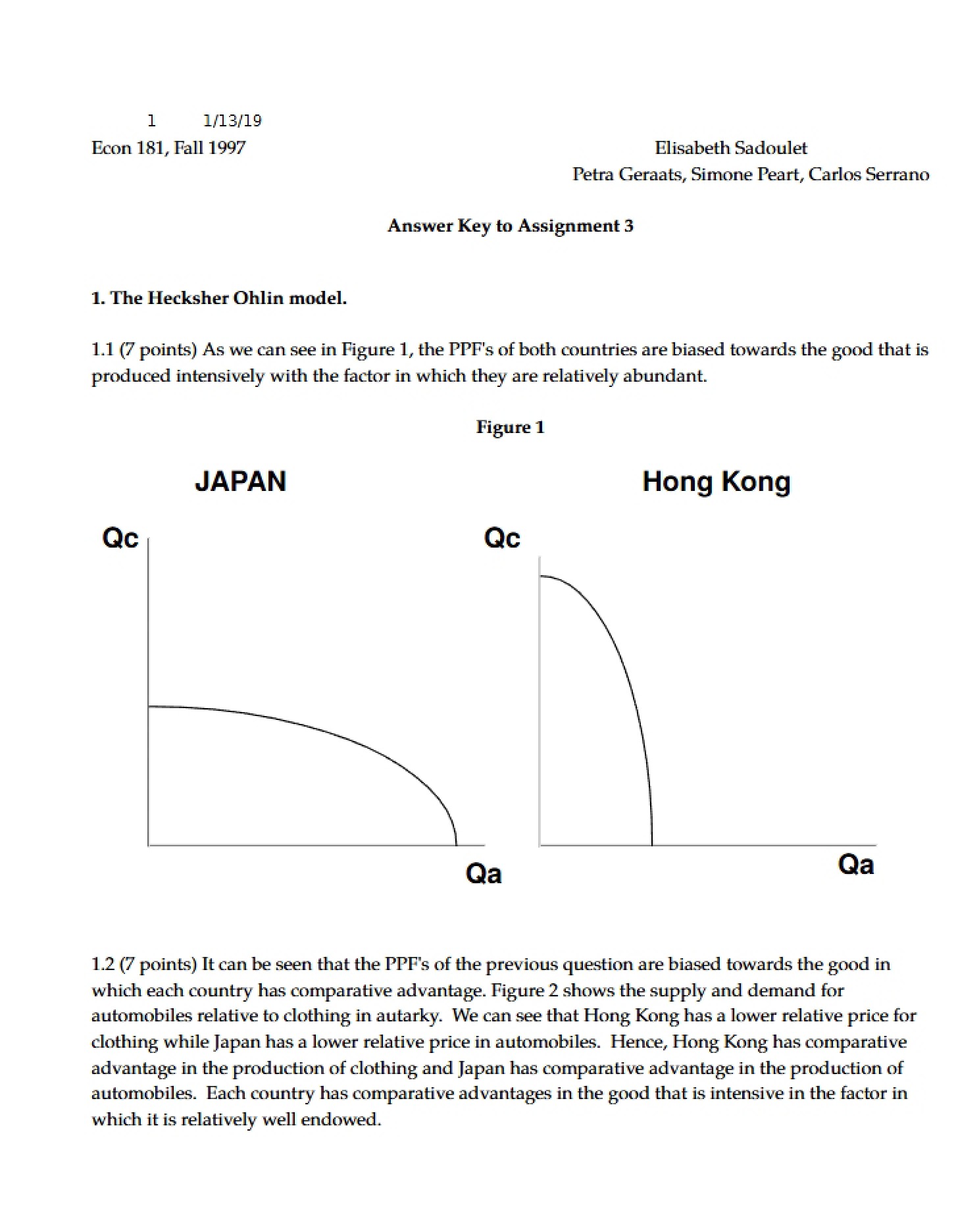
* Production Possibility Frontiers (PPFs) and their relationship to economic decision-making.
* Opportunity cost calculations and their application to international trade scenarios.
* The determination of autarky prices and their role in establishing the potential for trade gains.
* Comparative advantage – identifying which countries specialize in the production of specific goods.
* The derivation of traded goods prices in a global market.
* The expansion of consumption possibilities through international trade.
What This Document Provides
* A detailed exploration of how unit labor requirements influence production and trade.
* A framework for understanding the relationship between relative prices and trade flows.
* Illustrative examples designed to clarify complex theoretical concepts.
* A structured presentation of the material, mirroring a university-level lecture format.
* A foundation for further study in international trade and related economic fields.