What This Document Is
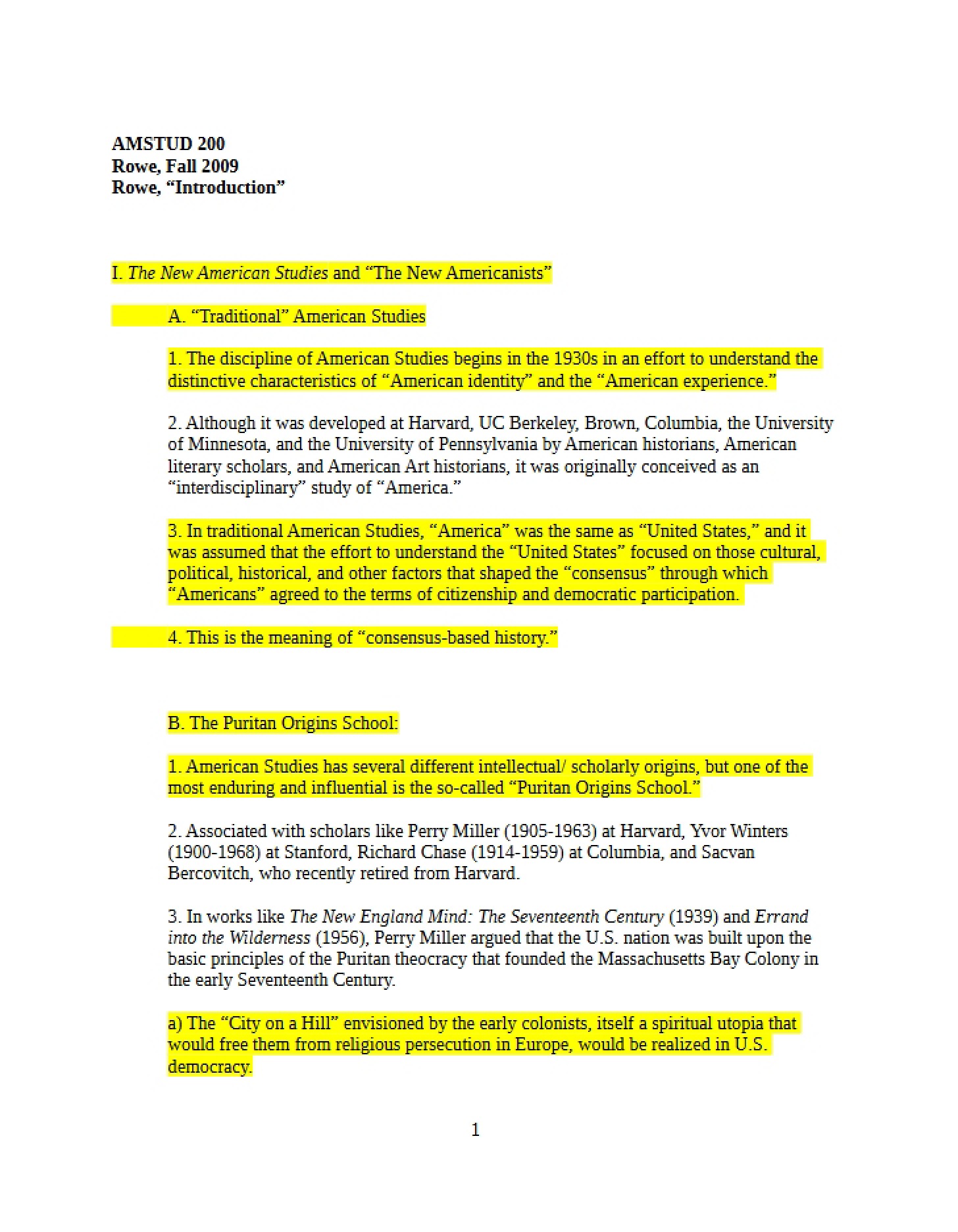
These are lecture notes from an introductory American Studies course (AMST 200m) at the University of Southern California, specifically covering material from the first few sessions of the Fall 2009 semester. The notes center around foundational theoretical concepts within the field of American Studies, particularly concerning the practice of “comparison” when analyzing cultures and societies. It delves into the historical development of comparative approaches, contrasting traditional methods with newer perspectives emerging within the discipline. The material appears to be based on readings from John Rowe’s work.
Why This Document Matters
This resource is invaluable for students enrolled in introductory American Studies courses, or those seeking a deeper understanding of the theoretical underpinnings of the field. It’s particularly helpful for grasping complex concepts related to cultural analysis, national identity, and the challenges of comparing diverse communities. Reviewing these notes can be beneficial when preparing for class discussions, formulating research questions, or beginning to synthesize core ideas presented early in the semester. It’s a strong starting point for anyone wanting to understand the intellectual history of American Studies.
Common Limitations or Challenges
These notes represent a specific instructor’s interpretation of course material and assigned readings. They do not substitute for direct engagement with the source texts or active participation in class. The notes are focused on theoretical discussions and do not offer comprehensive historical context or detailed case studies. Furthermore, they represent a snapshot of a course from a specific point in time and may not reflect all current scholarly debates within the field.
What This Document Provides
* Exploration of the core concept of “comparative” analysis in American Studies.
* Discussion of the historical evolution of comparative methodologies.
* Consideration of the relationship between “unity” and “difference” within a national context.
* Introduction to key theoretical perspectives on cultural “hybridity.”
* Engagement with the work of scholars like Homi Bhabha and their relevance to American Studies.
* Analysis of the assumptions underlying traditional approaches to studying cultures and literatures.