What This Document Is
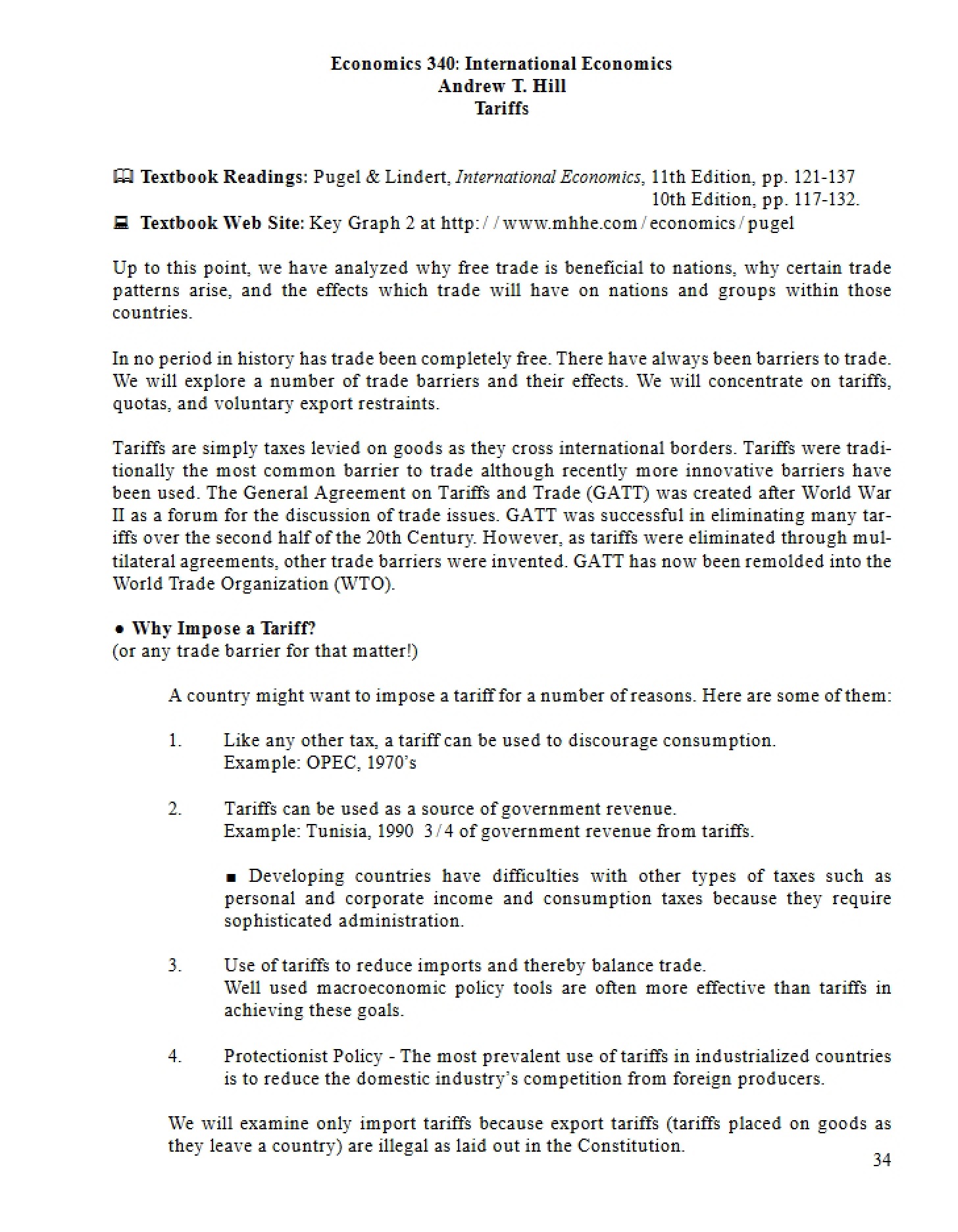
This document contains detailed lecture notes from an International Economics (ECON 340) course at the University of Delaware. It focuses on the complexities of international trade, moving beyond basic principles to explore the nuances of agreements between nations and the resulting economic impacts. These notes offer a focused examination of regional trade dynamics and the factors influencing global economic integration.
Why This Document Matters
Students enrolled in International Economics, or related fields like Global Business or Political Economy, will find these notes particularly valuable. They are ideal for reinforcing concepts discussed in class, preparing for assessments, or gaining a deeper understanding of the practical implications of trade policies. These notes can be used alongside textbook readings and independent research to build a comprehensive grasp of the subject matter. Accessing the full content will provide a significant advantage in understanding the intricacies of the global trade landscape.
Topics Covered
* Regional Trading Agreements: Types and characteristics
* Economic Integration: Processes and levels of advancement
* Trade Liberalization: Benefits and considerations
* Trade Creation and Diversion: Analyzing welfare effects
* The European Union: Historical development and key policies
* Customs Unions: Formation and impact on trade flows
* Factors influencing the success of regional trade arrangements
* External trade restrictions and their implications
What This Document Provides
* A structured overview of different forms of economic integration.
* An exploration of the motivations behind forming regional trade agreements.
* A framework for evaluating the potential economic consequences of trade arrangements.
* Insights into the evolution and structure of a major economic bloc.
* Key terminology and concepts related to international trade policy.
* A foundation for understanding the complexities of global trade relationships.