What This Document Is
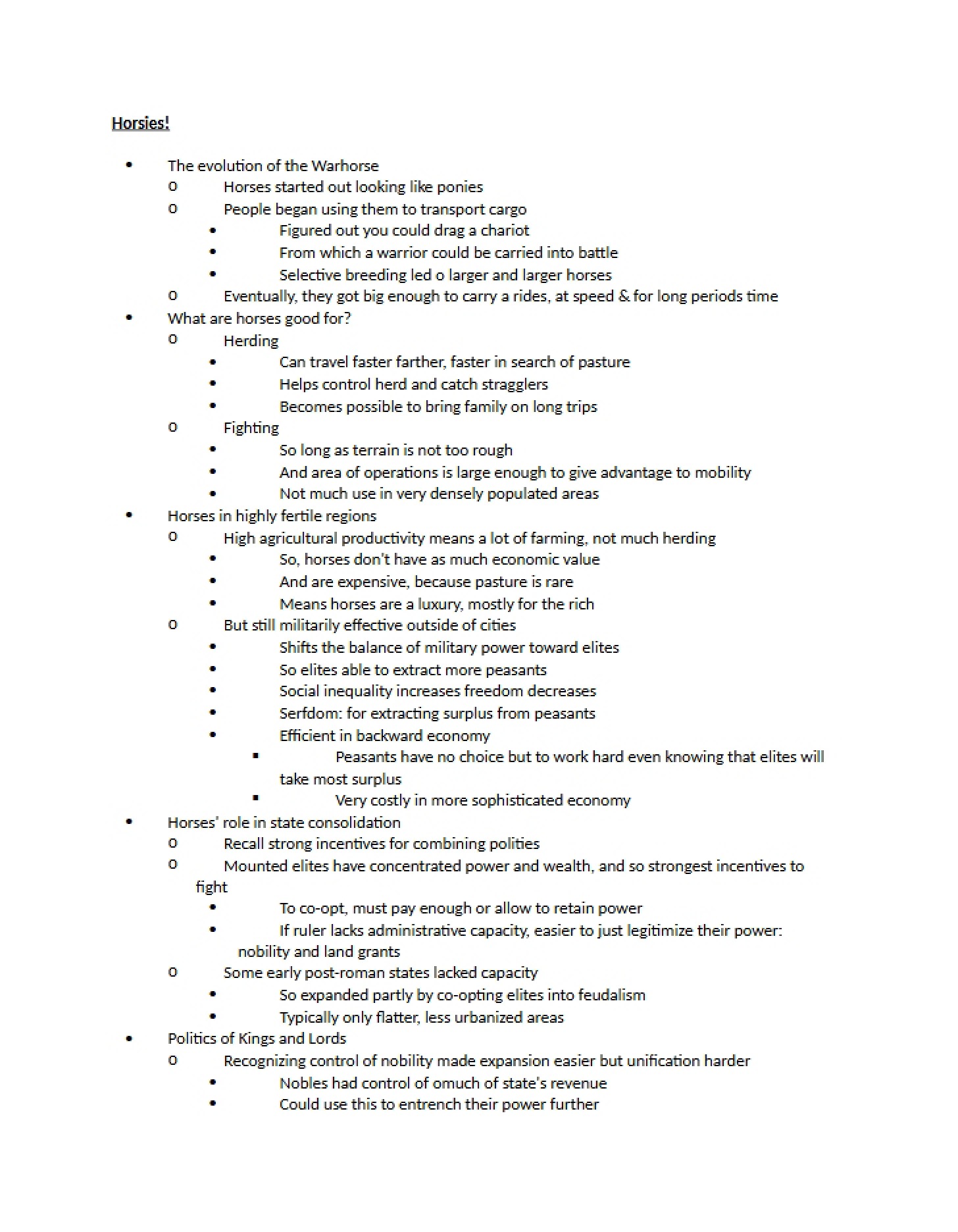
This study guide provides detailed lecture notes focusing on the historical development of warfare, specifically examining the transition from early societal structures to more complex state-level organization. It delves into the interplay between economic factors, social hierarchies, and military innovation during formative periods of civilization. The core subject matter centers on understanding how early forms of conflict shaped political and social landscapes.
Why This Document Matters
Students enrolled in Conflict Resolution and Peace Research (IR 318) at USC will find this resource particularly valuable when studying the roots of organized violence and the emergence of political structures. It’s ideal for supplementing classroom learning, preparing for discussions, and building a foundational understanding of the historical context underpinning contemporary conflict dynamics. Those seeking to grasp the long-term evolution of statecraft and its relationship to military power will also benefit. This is especially useful when analyzing the preconditions for large-scale conflict.
Common Limitations or Challenges
This resource focuses specifically on the lecture content and does not include external readings or assigned coursework. It’s designed to be a companion to the course material, not a replacement for active participation in lectures or completion of assignments. While it offers a comprehensive overview of the topics covered, it does not provide definitive answers or interpretations – critical thinking and further research are still required. It does not cover conflicts *after* the early state period.
What This Document Provides
* An exploration of the connection between economic growth, wealth inequality, and the rise of organized warfare.
* Insights into the development of early military forces and their impact on societal structures.
* Analysis of the factors contributing to the emergence of cities and their role in military strategy.
* Discussion of the evolution of military tactics and technologies in early state societies.
* Examination of the relationship between governance, taxation, and the incentives for political consolidation.
* Consideration of the social dynamics influencing military recruitment and the rise of mercenary forces.