What This Document Is
These are lecture notes from a Biochemical Genetics (PHYS 645) course at the University of Delaware, focusing on the crucial intersection of biological systems and quantitative analysis. The notes detail concepts related to signal conversion – specifically, how naturally occurring analog signals are transformed into digital formats and vice versa. This is a foundational topic for understanding how biological data is processed, stored, and interpreted in modern genetics research.
Why This Document Matters
Students enrolled in advanced biochemical genetics, biophysics, or related fields will find these notes particularly valuable. They are ideal for reinforcing lecture material, preparing for exams, or building a strong conceptual understanding of data handling techniques. Researchers and professionals working with biological data who need a refresher on the principles of analog-to-digital and digital-to-analog conversion will also benefit. These notes are most useful when studied in conjunction with course readings and assignments.
Topics Covered
* Analog and Digital Signal Fundamentals
* Analog-to-Digital Conversion (A/D) Methods
* Digital-to-Analog Conversion (D/A) Techniques
* Weighted Adder Digital-to-Analog Converters
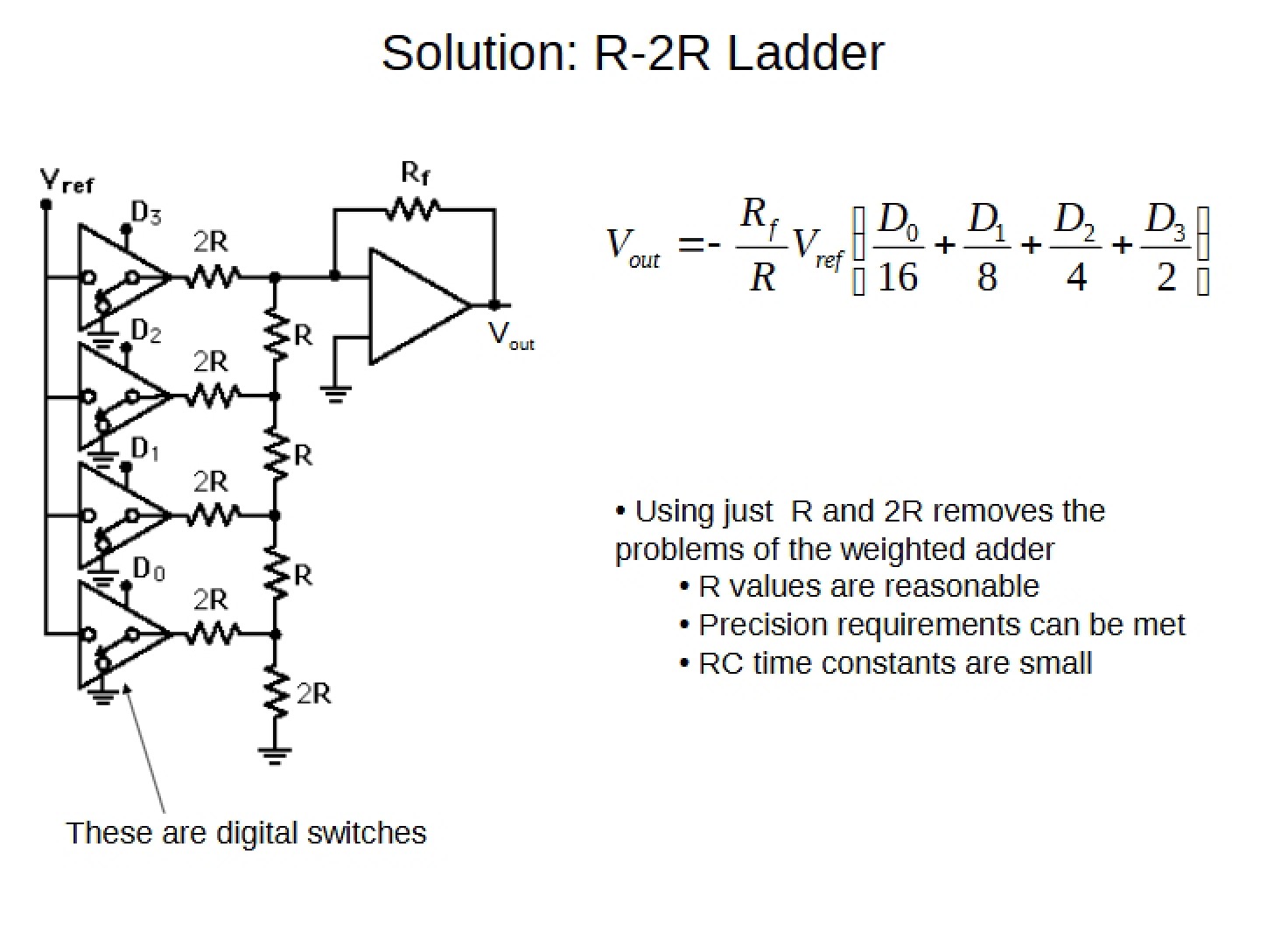
* R-2R Ladder Networks for Improved Conversion
* Key Specifications of Digital-to-Analog Converters
* Considerations for Resolution, Accuracy, and Speed in Signal Conversion
What This Document Provides
* An overview of the necessity for converting between analog and digital signals in biological contexts.
* A detailed exploration of different approaches to digital-to-analog conversion.
* Discussion of the practical limitations and challenges associated with high-resolution conversion.
* Examination of key performance characteristics to consider when selecting or evaluating a D/A converter.
* Insight into real-world applications of these concepts, such as data acquisition and signal generation.