What This Document Is
These are lecture notes from Computational Geometry (CS 497) at the University of Illinois at Urbana-Champaign, focusing on software design frameworks and patterns. The material explores fundamental principles for building robust and maintainable applications, moving beyond basic coding techniques to emphasize architectural considerations. It delves into how to structure software for flexibility and reusability, particularly within a geometric computing context. The notes appear to be based on lectures delivered on January 13, 2019.
Why This Document Matters
This resource is ideal for students taking a computational geometry course, or anyone interested in advanced software engineering principles. It’s particularly valuable when you’re looking to understand how to design complex systems, not just implement them. These notes will be helpful when you need a deeper understanding of how to organize code for larger projects, and how to leverage established design patterns to improve code quality and reduce development time. It’s a strong foundation for anyone aiming to build a career in software development, especially in fields requiring sophisticated geometric algorithms.
Topics Covered
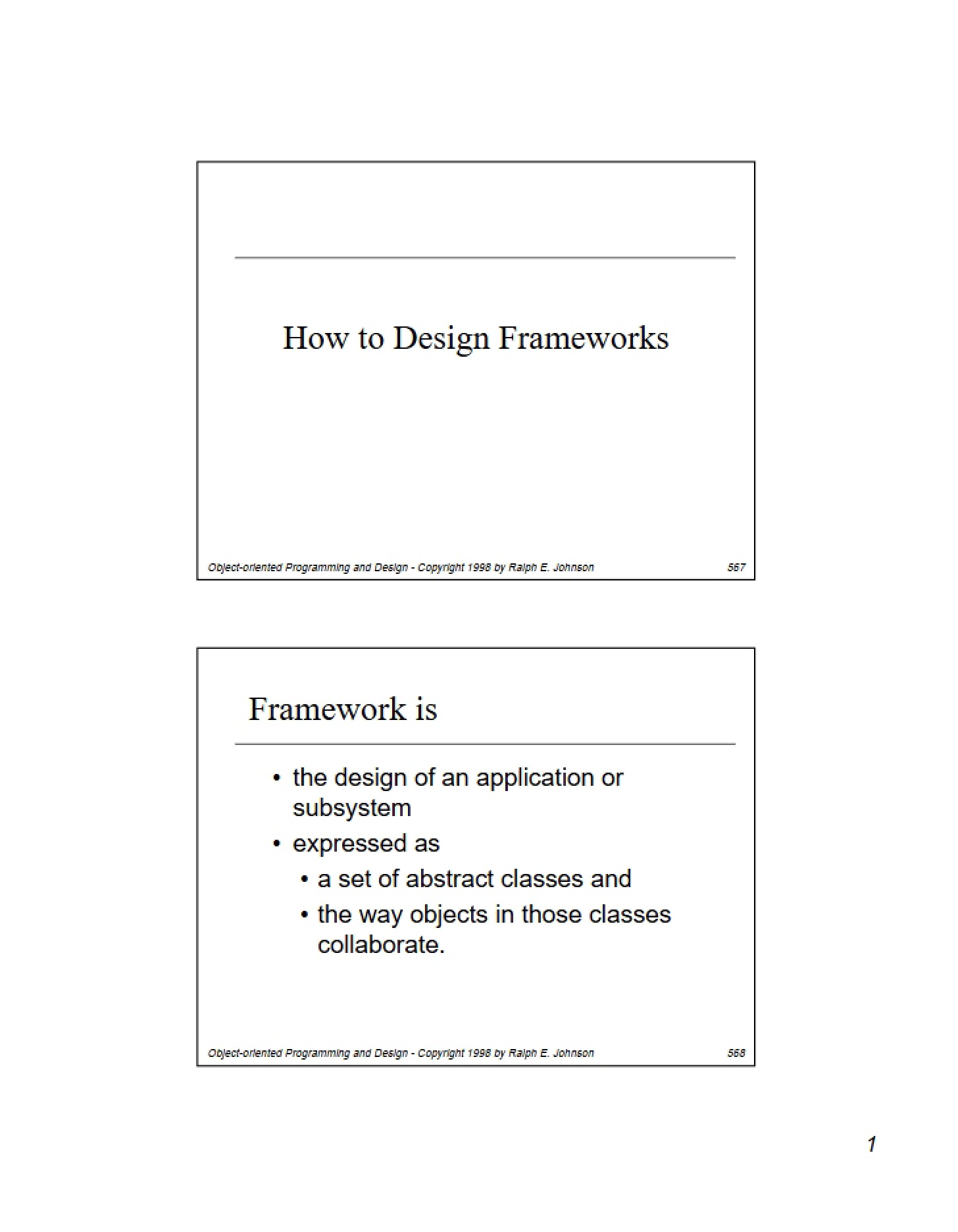
* Framework design and its importance in software development
* The concept of Inversion of Control and its implications
* The Model/View/Controller (MVC) architectural pattern – its history and evolution
* Relationships between different design patterns (Observer, Strategy, Composite, Factory Method, Decorator)
* Application building techniques using frameworks
* Implementing a counter application as a practical example
* The role of the ‘perform’ message in object interaction
What This Document Provides
* A detailed exploration of the core components of a framework application.
* Insights into the historical development of the MVC pattern.
* A breakdown of the responsibilities of the Model, View, and Controller within the MVC architecture.
* An overview of how to parameterize controllers and build user interfaces.
* A discussion of the ‘perform’ method and its use in object communication.
* A foundational understanding of how to apply these concepts to a concrete example.