What This Document Is
This material provides a focused exploration of Object Database Language (ODL) and Object Query Language (OQL) within the context of Database Systems I (CMPS 180-01) at UC Santa Cruz. It delves into the theoretical underpinnings and practical considerations of object-oriented database design and querying, building upon foundational database concepts. The resource appears to be lecture notes or a course supplement, offering a detailed look at how object-oriented principles translate into database structures and operations. It also touches upon the relationship between ODL and traditional relational database models.
Why This Document Matters
This resource is invaluable for students enrolled in CMPS 180-01 seeking a deeper understanding of ODL and OQL. It’s particularly helpful when tackling assignments and preparing for exams related to object-oriented database concepts. Individuals who benefit from this material include those aiming to expand their database skillset beyond relational models and those interested in the design and implementation of complex data structures. It’s best utilized alongside course lectures and assigned readings to reinforce key concepts.
Topics Covered
* ODL Subclasses and Inheritance
* Key Definition and Usage in ODL
* Translation of ODL Constructs to Relational Models
* Handling of Complex Data Types (Structures and Sets) within ODL
* Relationships in ODL and their Representation
* Database Normalization Techniques (specifically 4NF) in the context of ODL
* Introduction to OQL and its motivations
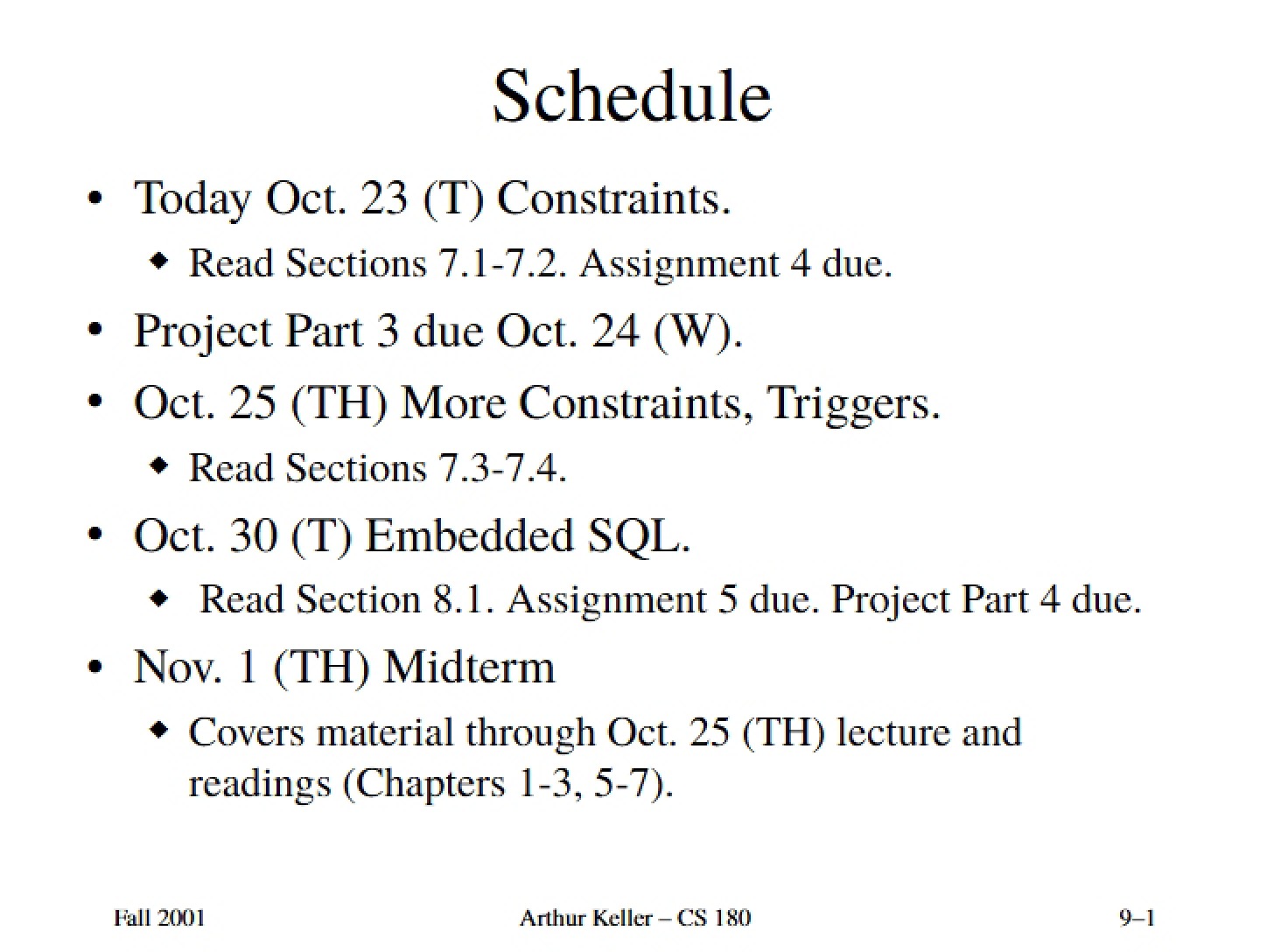
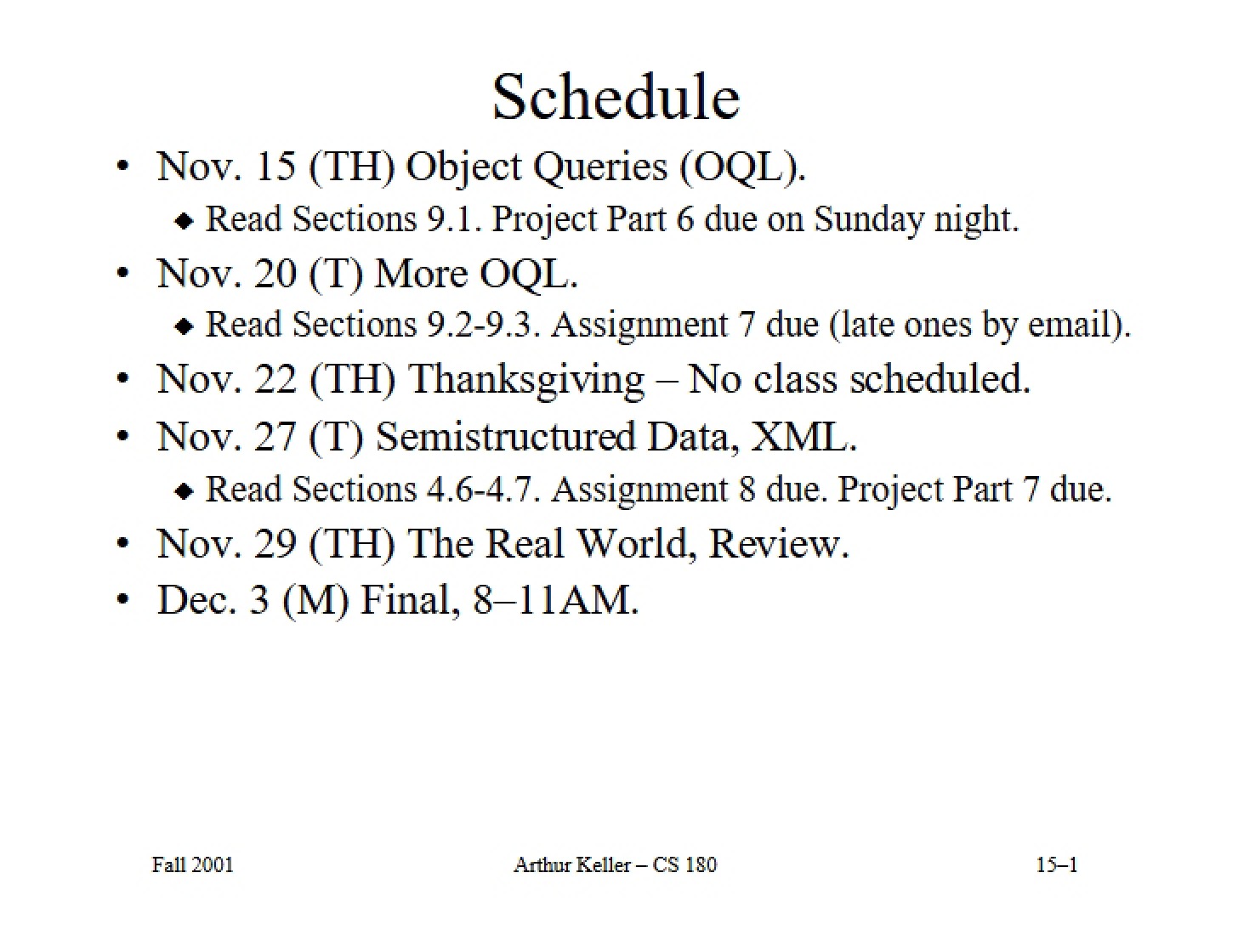
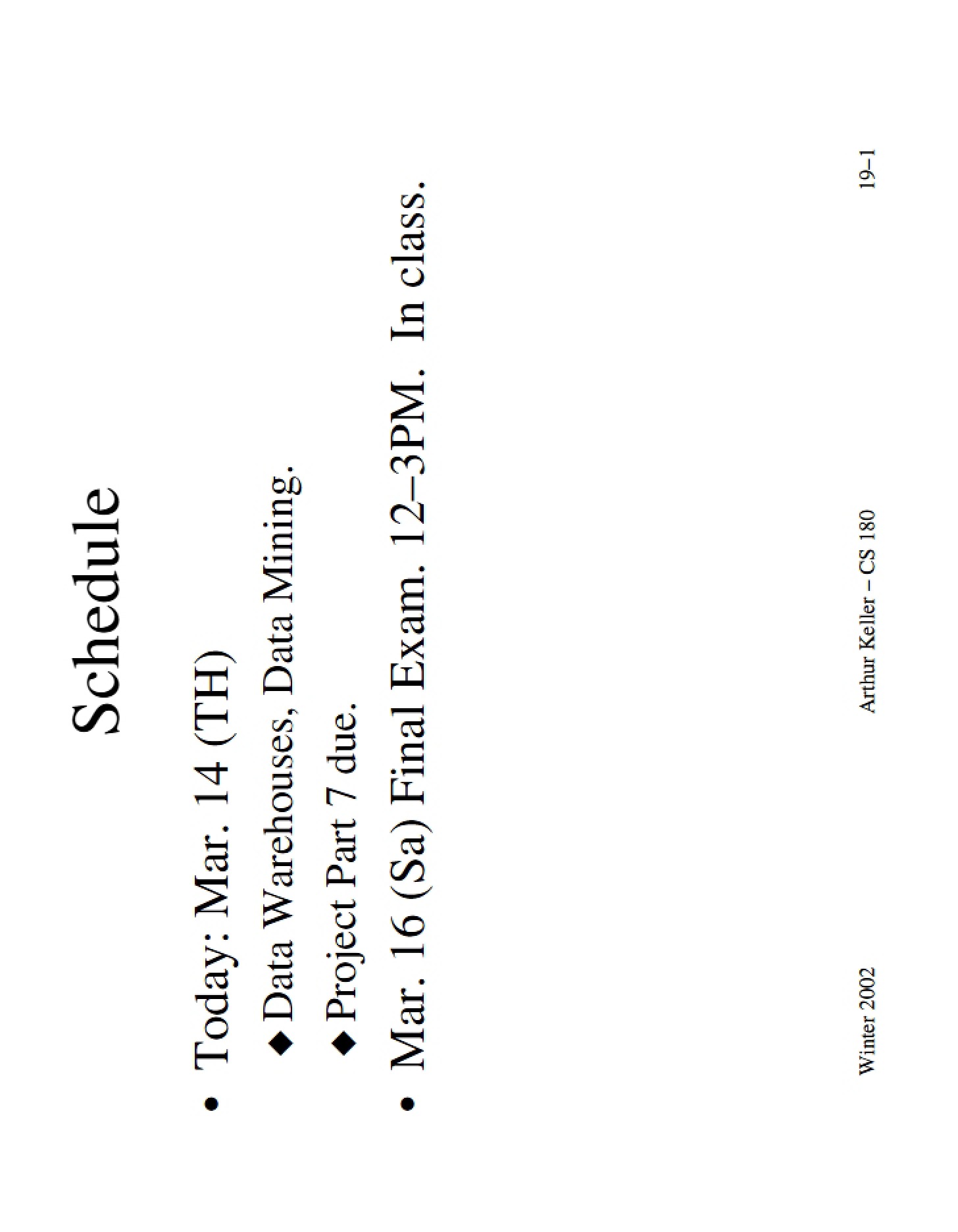
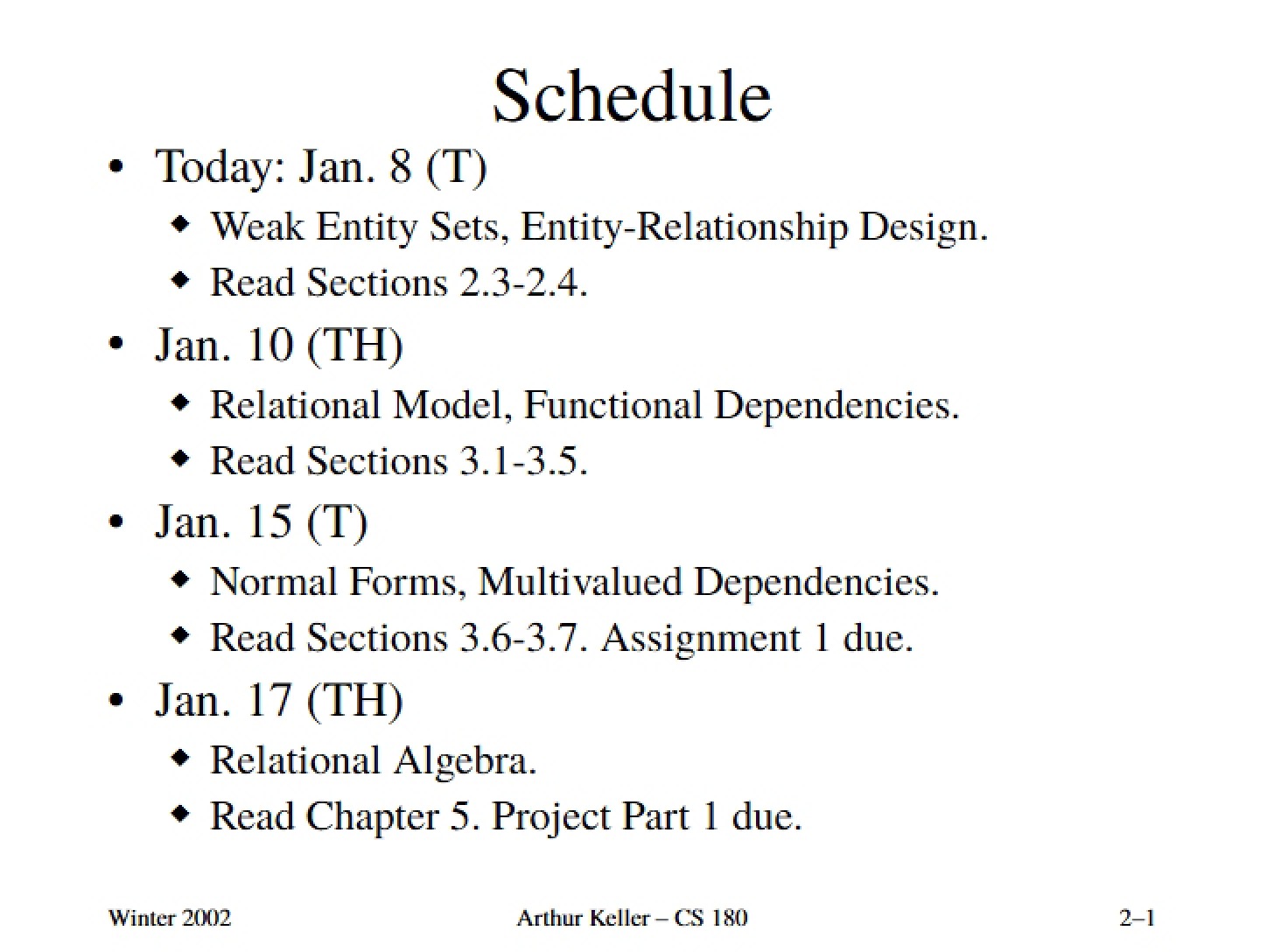
* Course Schedule and Assignment Due Dates
What This Document Provides
* Detailed explanations of ODL syntax and semantics.
* Illustrative examples demonstrating ODL concepts.
* A framework for understanding the transformation of object-oriented database schemas into relational database schemas.
* Discussions on the challenges and solutions related to representing complex data types and relationships in ODL.
* A course schedule outlining key topics and assignment deadlines for Winter 2002.
* Insights into the motivations behind object-oriented query languages like OQL.