What This Document Is
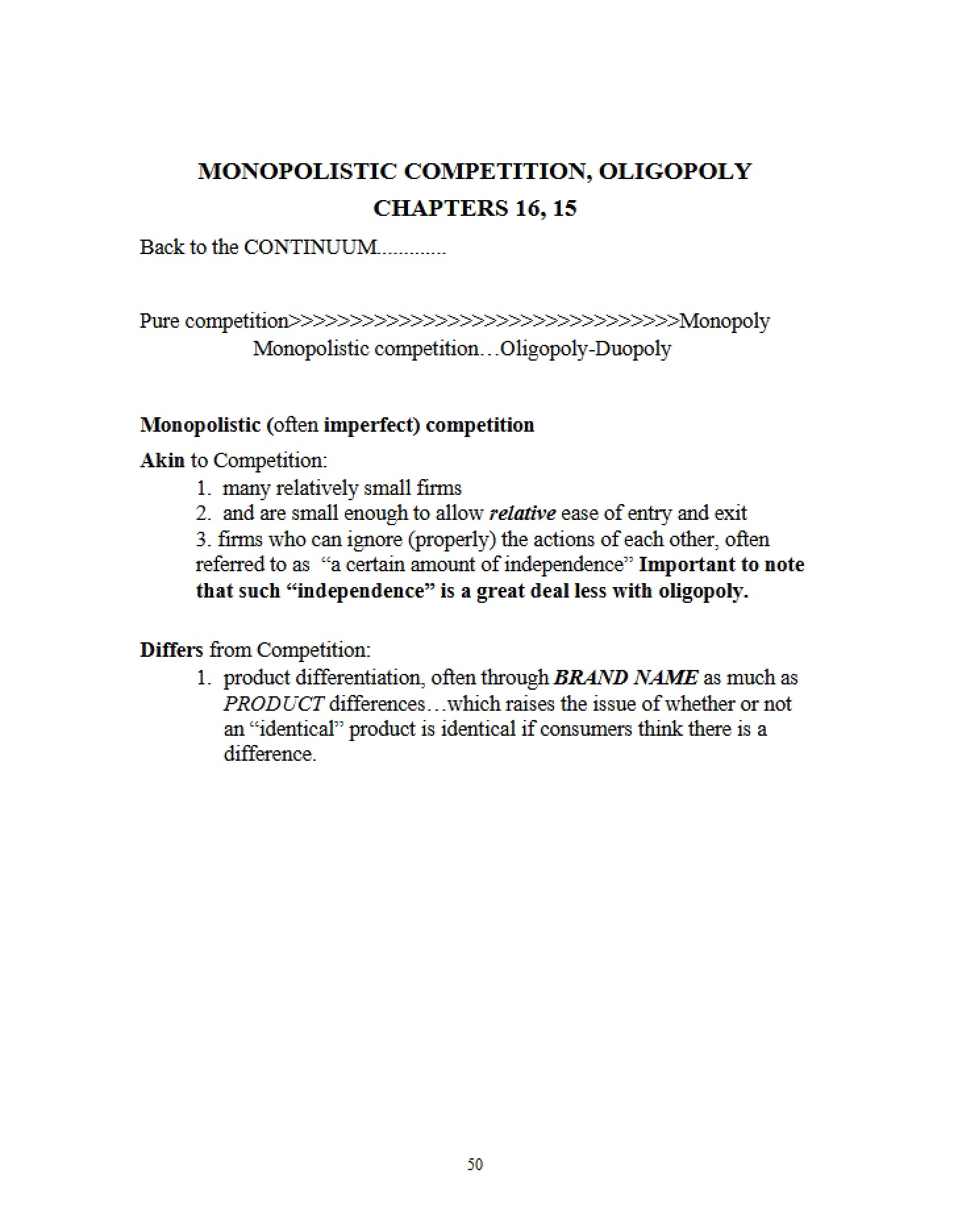
This document provides a focused exploration of two important market structures in microeconomics: monopolistic competition and oligopoly. It builds upon foundational concepts of market dynamics and delves into the complexities that arise when firms possess some degree of market power, but face varying levels of competition. This material is designed for students in an intermediate microeconomics course seeking a deeper understanding of real-world market scenarios beyond perfect competition and pure monopoly.
Why This Document Matters
This resource is particularly valuable for students preparing for exams, working on assignments, or seeking to solidify their grasp of these nuanced economic models. It’s ideal for those who want to move beyond textbook definitions and explore the strategic considerations firms face in imperfectly competitive environments. Understanding these concepts is crucial for analyzing industry behavior, predicting market outcomes, and evaluating the potential effects of policy interventions.
Topics Covered
* Characteristics defining monopolistic competition, including product differentiation and ease of entry/exit.
* The relationship between firm behavior and market outcomes in monopolistic competition, including concepts like excess capacity.
* Key features of oligopolies, such as strategic interdependence and barriers to entry.
* The role of economies of scale in the formation of oligopolistic markets.
* An introduction to game theory as it applies to oligopolistic behavior and potential for collusion.
* Considerations regarding the value of advertising within these market structures.
What This Document Provides
* A comparative analysis of monopolistic competition and oligopoly, positioning them along the spectrum of market structures.
* Discussion of the implications of firm interdependence in oligopolistic markets.
* Exploration of the factors contributing to barriers to entry in oligopolies.
* Insights into how firms might approach profit maximization in these complex environments.
* A framework for understanding the potential for both cooperative and non-cooperative outcomes in oligopolistic industries.