What This Document Is
This study guide delves into the operational side of electronic media and new technologies, specifically focusing on the commercial aspects of the industry. It’s designed for students seeking a deeper understanding of how media organizations function, generate revenue, and navigate the complexities of the broadcast landscape. The material centers around the business of media, moving beyond content creation to explore the underlying structures that support it.
Why This Document Matters
This resource is particularly valuable for students in RTV 3007 at the University of Central Florida, or anyone studying media management, broadcast journalism, or related fields. It’s ideal for supplementing lectures, preparing for assessments, and building a solid foundation in the principles of commercial media operations. Understanding these concepts is crucial for aspiring professionals aiming to work within or analyze the modern media ecosystem. It will be most helpful when you are looking to understand the financial drivers behind media choices.
Topics Covered
* The core goals and revenue models of commercial media outlets
* Distinctions between broadcast, cable, and direct-to-home (DBS) commercial operations
* Key functional areas within radio and television stations (administration, technical, programming, promotions, sales, news)
* The impact of station ownership groups on local media landscapes
* The role and influence of “owned and operated” (O&O) stations
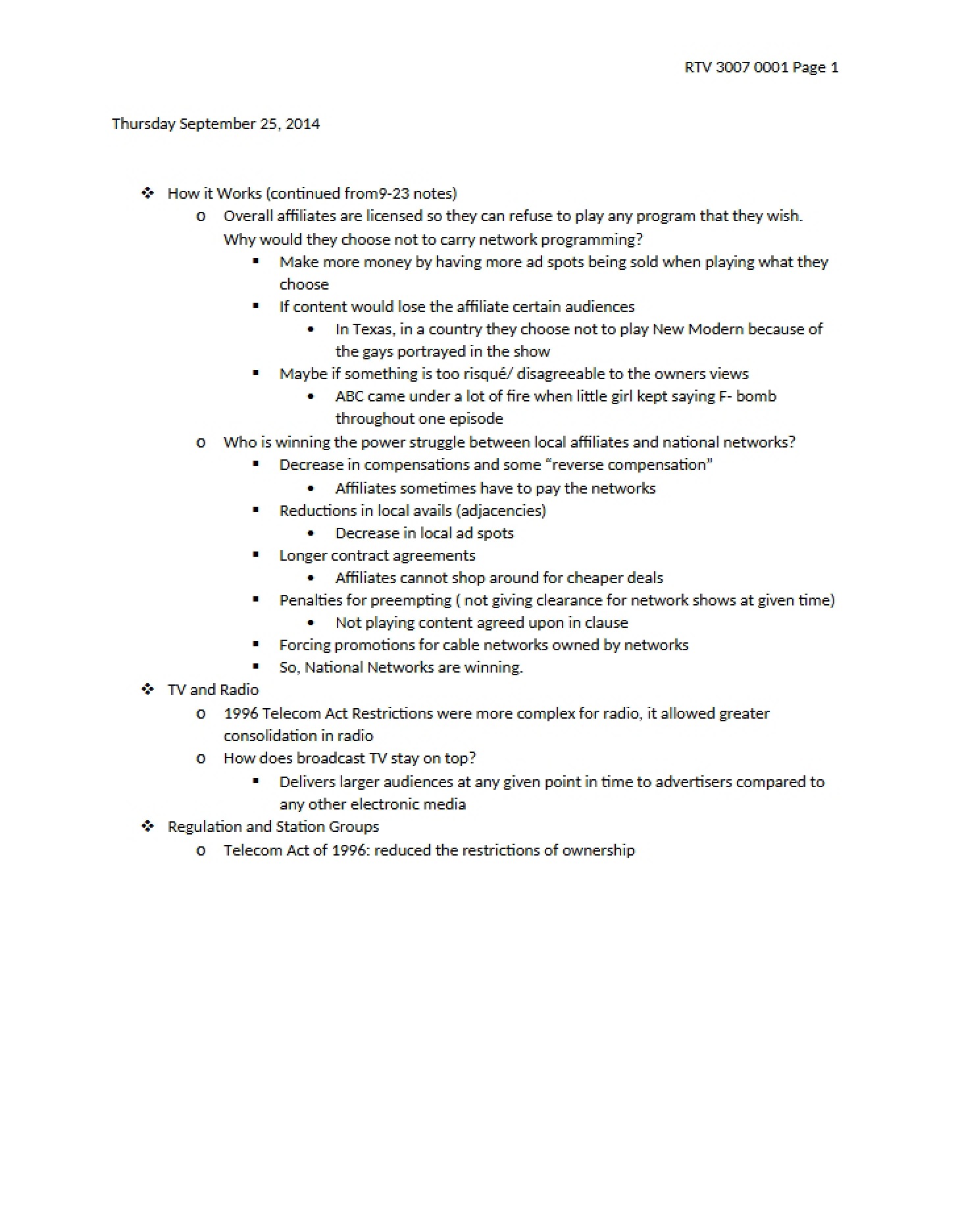
* Relationships between national networks and their affiliates
* The structure of affiliate agreements and programming schedules
What This Document Provides
* An overview of the characteristics defining commercial broadcast stations.
* Exploration of how economies of scale impact media organizations.
* Insights into the benefits and strategies employed by station groups.
* A framework for understanding the different types of station affiliations (O&O, affiliate, independent).
* Discussion of the organizational structure within media companies.
* Context for how media outlets serve and interact with local communities.