What This Document Is
This is a focused section of a comprehensive course on the thermal and mechanical behavior of materials, specifically delving into the mechanisms of strengthening metals. It explores how various factors influence a material’s resistance to deformation and failure, moving beyond basic material properties to examine microstructural controls on strength. The content centers on understanding how imperfections and additions to a material’s structure can be leveraged to enhance its mechanical performance.
Why This Document Matters
This material is crucial for students in materials science and engineering, mechanical engineering, and related fields. It’s particularly valuable when you need to understand *why* materials behave the way they do under stress, and how to tailor their composition and processing to achieve desired strength characteristics. This knowledge is foundational for selecting appropriate materials for engineering applications, predicting material lifespan, and designing robust components. It’s most helpful when you’re building a deeper understanding of solid solution strengthening, strain aging, and dislocation theory.
Common Limitations or Challenges
This section focuses on the theoretical underpinnings of strengthening mechanisms. It does not provide detailed experimental procedures, specific alloy compositions for particular applications, or complete failure analysis case studies. It also assumes a foundational understanding of concepts like dislocations, stress-strain curves, and crystal structures. It won’t walk you through complete problem solutions, but rather provides the core principles needed to approach such problems.
What This Document Provides
* An exploration of how solute atoms interact with dislocations to impede their movement.
* Discussion of different types of solute-dislocation interactions, including elastic, modulus, and chemical interactions.
* Examination of strengthening mechanisms like solid solution strengthening and strain aging.
* Insight into the effects of grain size on material strength.
* Classical empirical relationships used to model strengthening effects.
* Consideration of interstitial solutes and their impact on lattice strain.
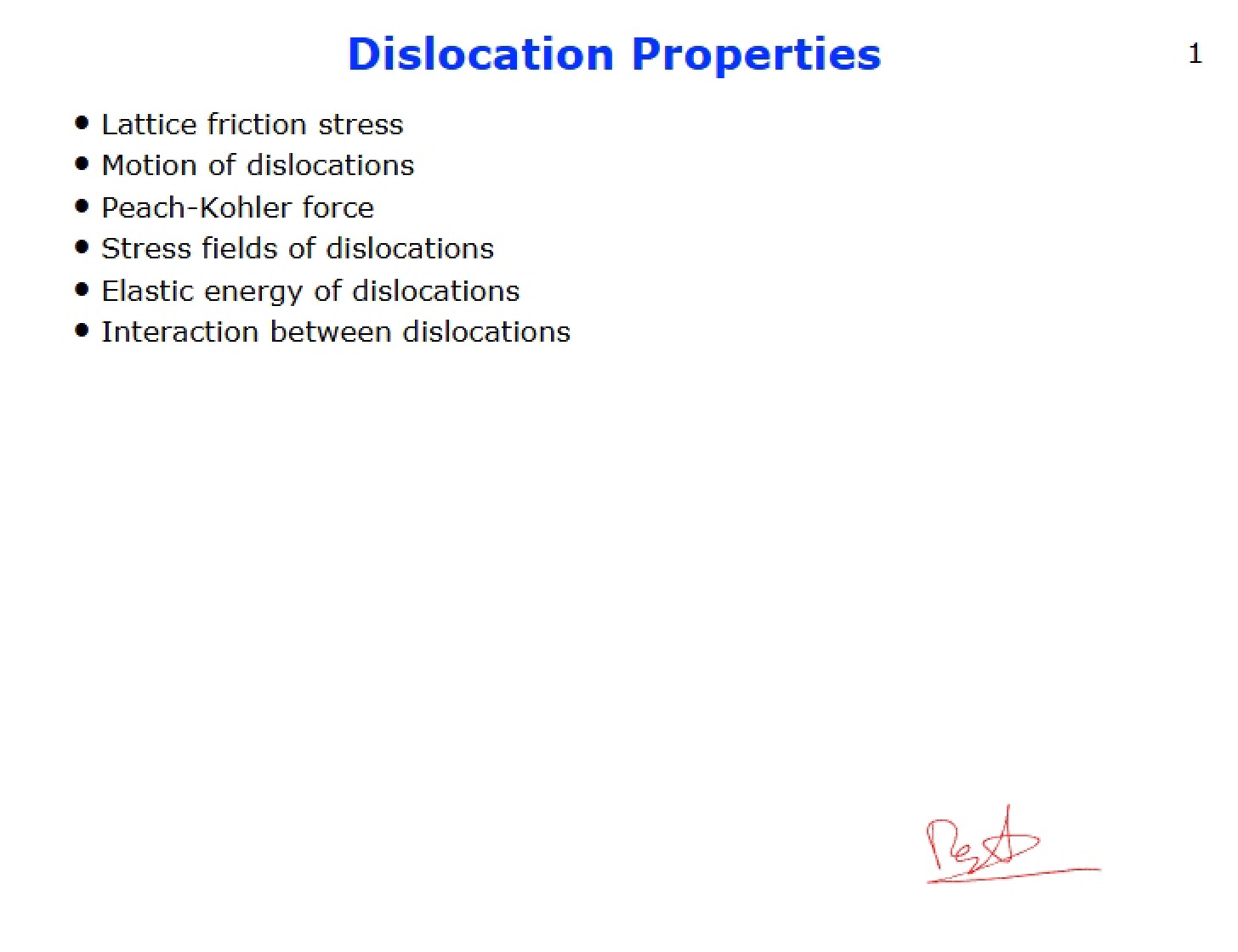
* Analysis of stress fields around dislocations and their relationship to solute distribution.