What This Document Is
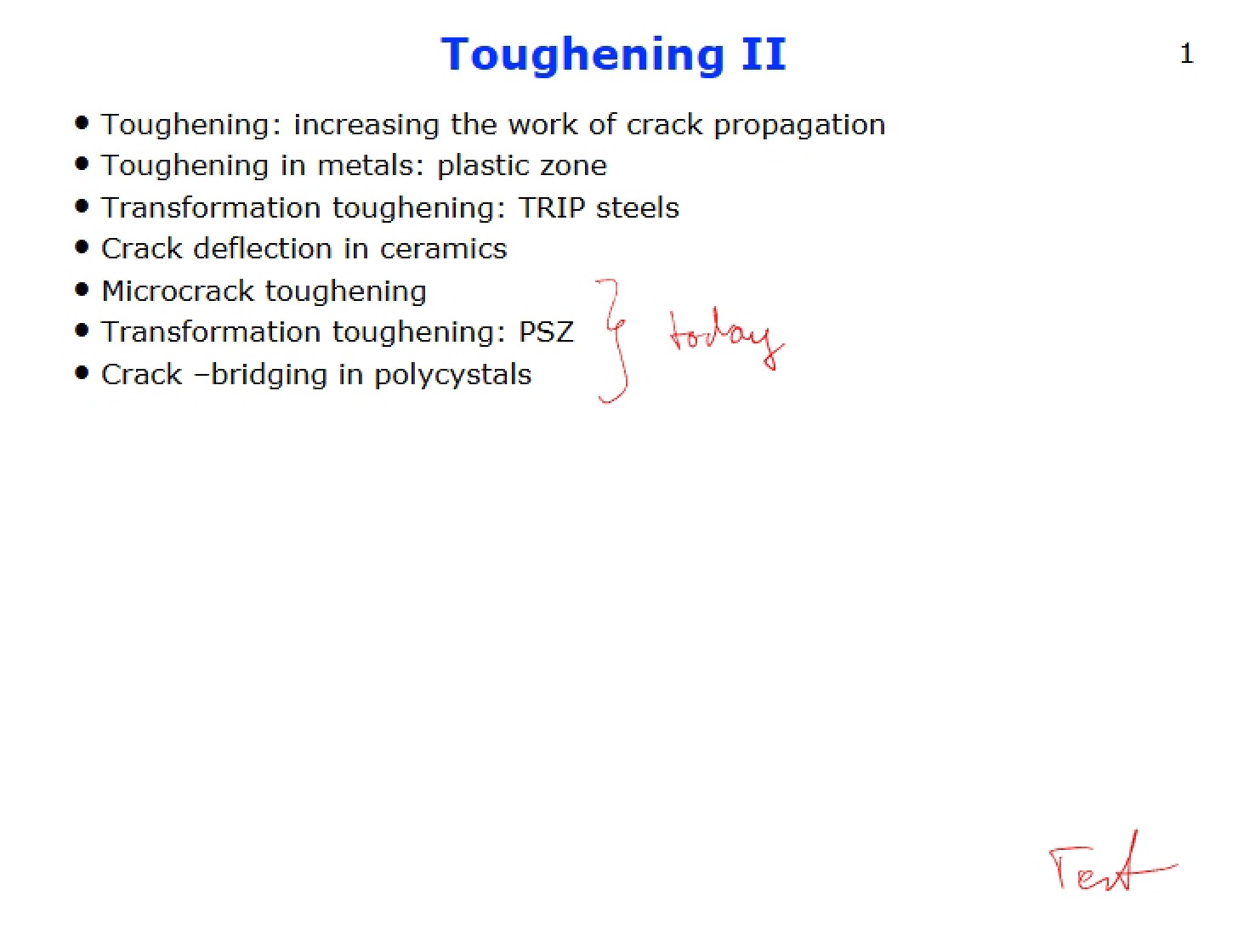
This is a focused section of a comprehensive course on the thermal-mechanical behavior of materials, specifically addressing the critical topic of *toughening* – enhancing a material’s resistance to fracture. It delves into the mechanisms by which materials can be made less brittle and more durable under stress, moving beyond simple strength considerations. The content explores how energy absorption during crack propagation is key to improving a material’s performance. It’s part of a larger series (Part 3 of a toughening module) building upon foundational materials science principles.
Why This Document Matters
This material is essential for students and professionals in materials science, mechanical engineering, and related fields. Anyone seeking a deeper understanding of how to design and select materials for demanding applications – where fracture resistance is paramount – will find this valuable. It’s particularly relevant when working with composite materials, or when needing to predict and prevent catastrophic failure in engineered systems. This section is most useful when you’ve already grasped the basics of fracture mechanics and are ready to explore advanced toughening strategies.
Common Limitations or Challenges
This resource focuses on the *principles* of toughening and doesn’t provide detailed manufacturing processes or specific material property databases. It assumes a foundational understanding of stress-strain relationships, composite materials, and fracture criteria. While it introduces key equations, it doesn’t offer step-by-step calculations or software tutorials. It also doesn’t cover all possible toughening mechanisms; the focus is on a selection of commonly employed and well-studied techniques.
What This Document Provides
* An exploration of toughening as it relates to fracture, drawing parallels to strengthening mechanisms.
* A discussion of the concept of a “process zone” and its impact on crack propagation.
* Detailed examination of crack-bridging phenomena using both brittle and ductile fibers and particles.
* Analysis of fiber pullout as a toughening mechanism, including the role of fiber diameter and interfacial shear stress.
* Consideration of how fiber characteristics (ductility vs. brittleness) influence toughening behavior.
* Illustrative examples and conceptual questions to reinforce understanding of the principles discussed.