What This Document Is
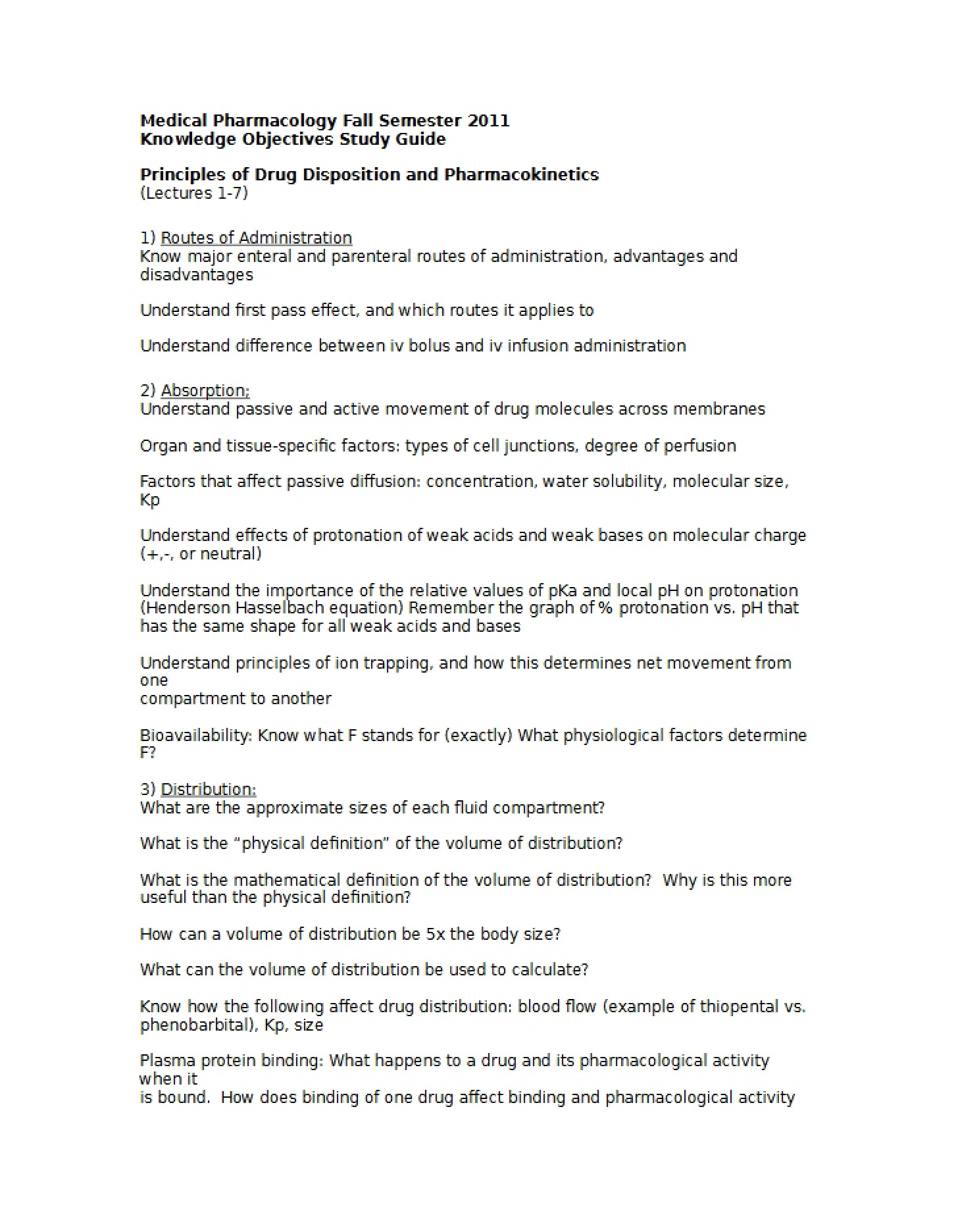
This study guide provides a comprehensive overview of pharmacokinetics and drug disposition, essential concepts within the field of medical pharmacology. It’s designed to build a strong foundational understanding of how the body interacts with medications – from the moment they enter, to their ultimate elimination. This resource delves into the processes governing drug movement and alteration within a biological system.
Why This Document Matters
This guide is invaluable for medical pharmacology students seeking to master the principles that dictate drug efficacy and safety. It’s particularly helpful when studying for exams, preparing for advanced coursework, or needing a solid reference point for understanding complex drug interactions. Anyone aiming for a deeper understanding of how drugs work *within* the body will find this a useful resource. It’s best utilized alongside lectures and other course materials to reinforce key concepts.
Topics Covered
* Routes of drug administration and their implications
* The concept of “first-pass” metabolism and its impact on bioavailability
* Mechanisms of drug absorption across biological membranes
* Factors influencing drug absorption within the gastrointestinal tract
* The relationship between administration route, speed of effect, and duration of effect
* Different types of membrane transport (active, facilitated, passive)
* Epithelial barriers and surface area considerations in drug absorption
What This Document Provides
* A detailed exploration of various administration routes, outlining their advantages and disadvantages.
* A clear explanation of the processes involved in drug absorption.
* A framework for understanding how different physiological factors influence drug disposition.
* An overview of the mechanisms by which drugs cross cell membranes.
* A foundational understanding of key terminology related to pharmacokinetics.