What This Document Is
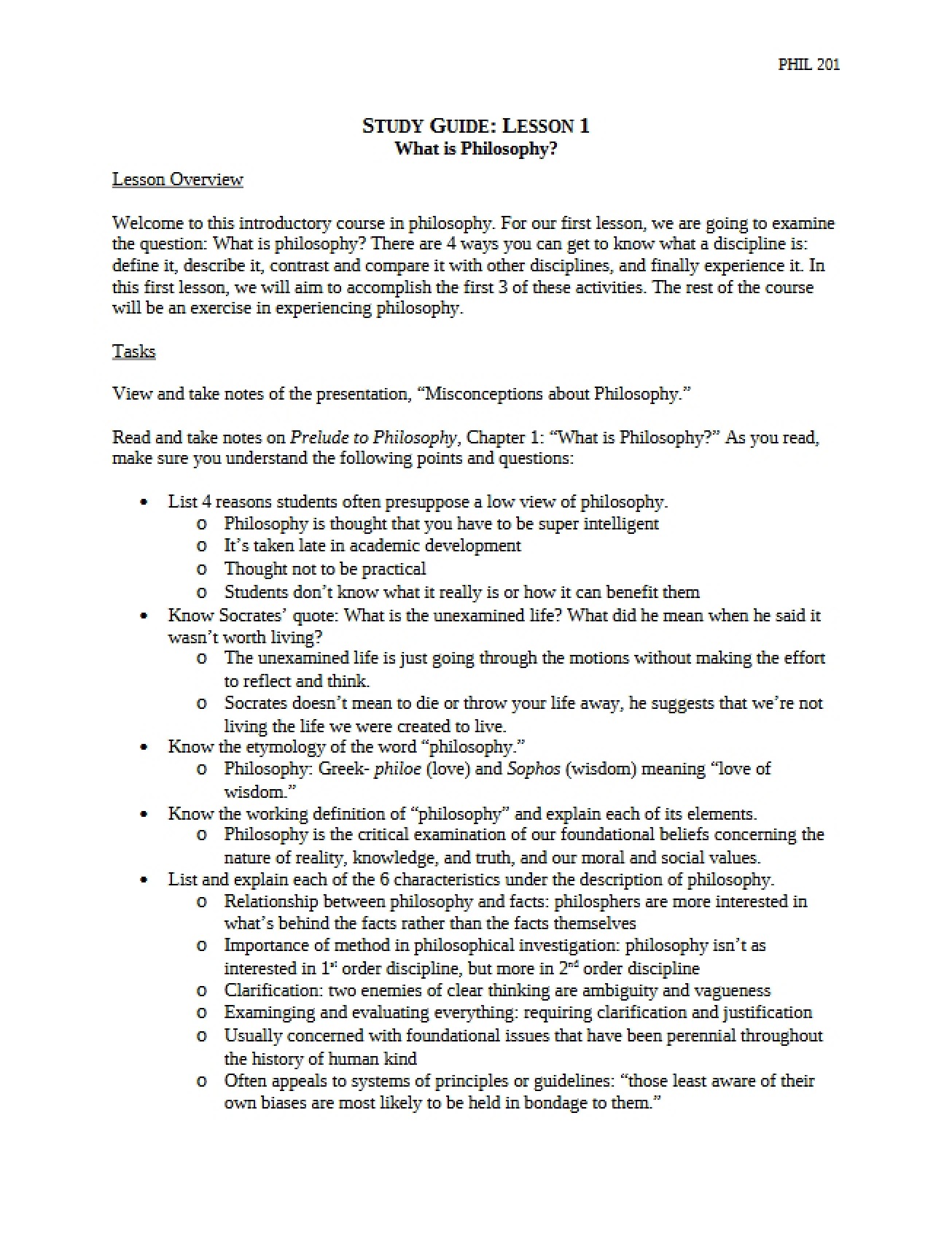
This is a study guide for Lesson 1 of PHIL 201: Philosophy & Contemporary Ideas at Liberty University, specifically covering Chapter 1: “What is Philosophy?”. It’s designed to help students prepare for course material by outlining key concepts and ideas presented by Clint Roberts. The guide focuses on understanding the nature of philosophy, its historical roots, and its relevance to everyday life.
Why This Document Matters
This study guide is valuable for students enrolled in PHIL 201 who want to reinforce their understanding of introductory philosophical concepts. It’s most useful when used *in conjunction with* the assigned readings and lectures, serving as a review tool before quizzes or exams. It exists to help students navigate the foundational ideas of the course and prepare for more complex philosophical discussions.
Common Limitations or Challenges
This study guide provides an overview of the material but does not replace the need to engage with the full chapter and course lectures. It won’t teach you philosophy itself, nor will it provide answers to assignments. It’s a support tool, not a substitute for active learning.
What This Document Provides
This study guide includes:
* An exploration of common misconceptions about philosophy.
* Four approaches to understanding what philosophy *is*.
* An examination of Socrates’ famous quote, “The unexamined life is not worth living,” and its implications.
* A breakdown of the etymology of the word “philosophy” (phileo and sophia).
* A working definition of philosophy, emphasizing critical examination.
* An overview of the three main tasks involved in philosophical analysis: clarification, justification, and evaluation.
* An introduction to the concepts of foundational beliefs and presuppositions.
This preview does *not* include a complete discussion of the three major categories of foundational beliefs (beliefs about reality, knowledge, and morality) or any practice questions. It also does not contain the full text of the chapter or lecture notes.