What This Document Is
This study guide provides a comprehensive overview of photosynthesis, a foundational process in biology. Specifically geared towards students in an Introductory Biology I course (BISC 207) at the University of Delaware, it delves into the intricacies of how plants and other organisms convert light energy into chemical energy. It’s designed to support your understanding of this vital biological pathway and its components.
Why This Document Matters
This resource is ideal for students looking to solidify their grasp of photosynthesis before an exam, while completing homework assignments, or as a supplementary aid to lectures. It’s particularly helpful for those who benefit from a structured, detailed exploration of complex biological processes. If you’re finding the textbook explanations challenging or need a consolidated resource, this guide can be a valuable asset to your studies. Understanding photosynthesis is crucial for building a strong foundation in biology, impacting your comprehension of ecology, cellular respiration, and more.
Topics Covered
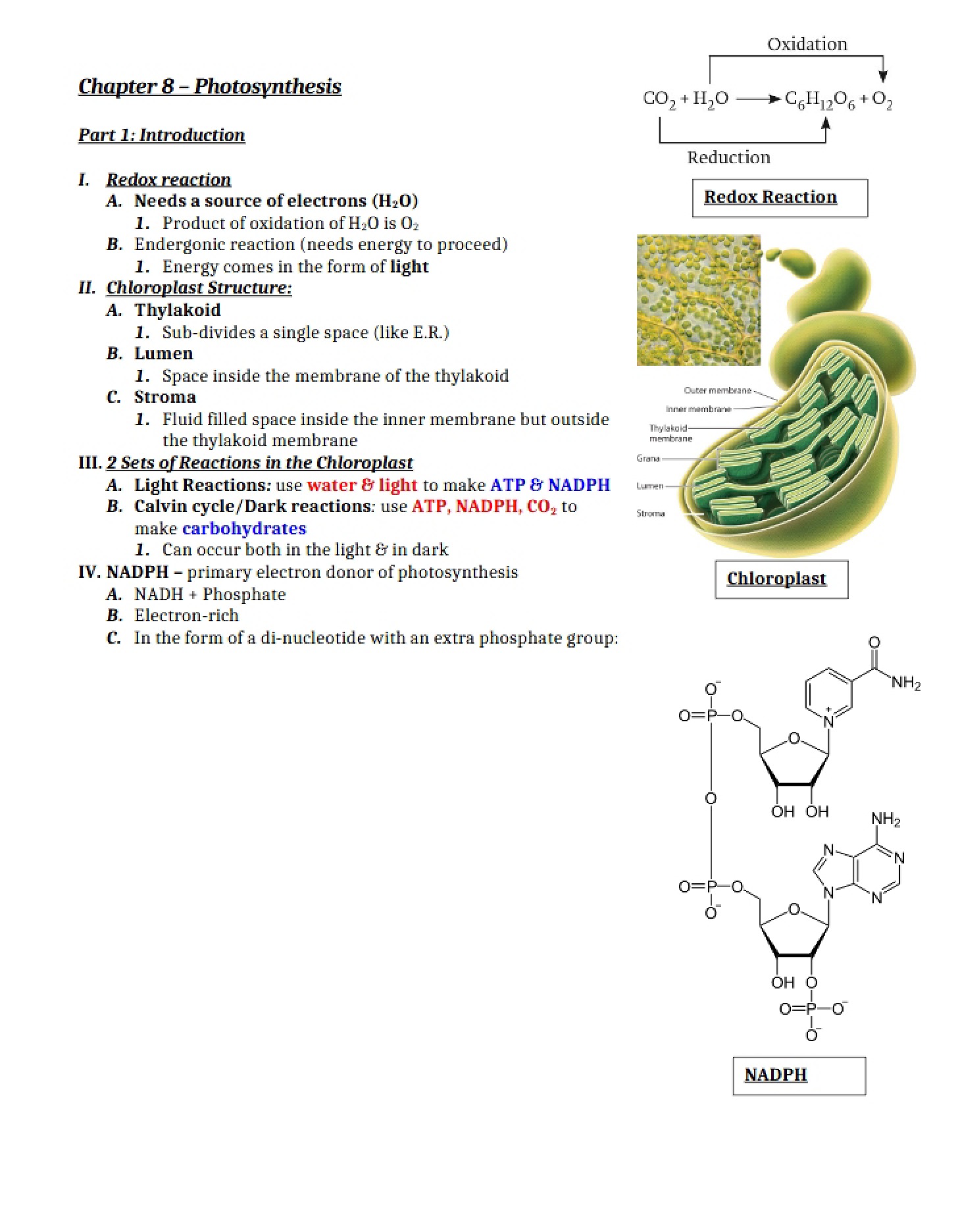
* Redox Reactions and their role in photosynthesis
* Chloroplast structure and the function of its key components
* The two main stages of photosynthesis: Light Reactions and the Calvin Cycle
* The role of NADPH as an electron carrier
* Detailed examination of the Calvin Cycle’s steps and requirements
* Photosystems and their function in light energy conversion
* Electron transport chains within the thylakoid membrane
* The generation of ATP and NADPH during photosynthesis
* Proton gradients and ATP synthase
What This Document Provides
* A detailed breakdown of the processes occurring within the chloroplast.
* An exploration of the relationship between light, water, and carbon dioxide in photosynthesis.
* An overview of the key molecules involved, including RuBP, 3-PGA, and Rubisco.
* Explanations of how energy is transferred and transformed during the light reactions and Calvin cycle.
* A structural understanding of the thylakoid membrane and its role in the process.
* Insights into the importance of electron transport chains and proton gradients.