What This Document Is
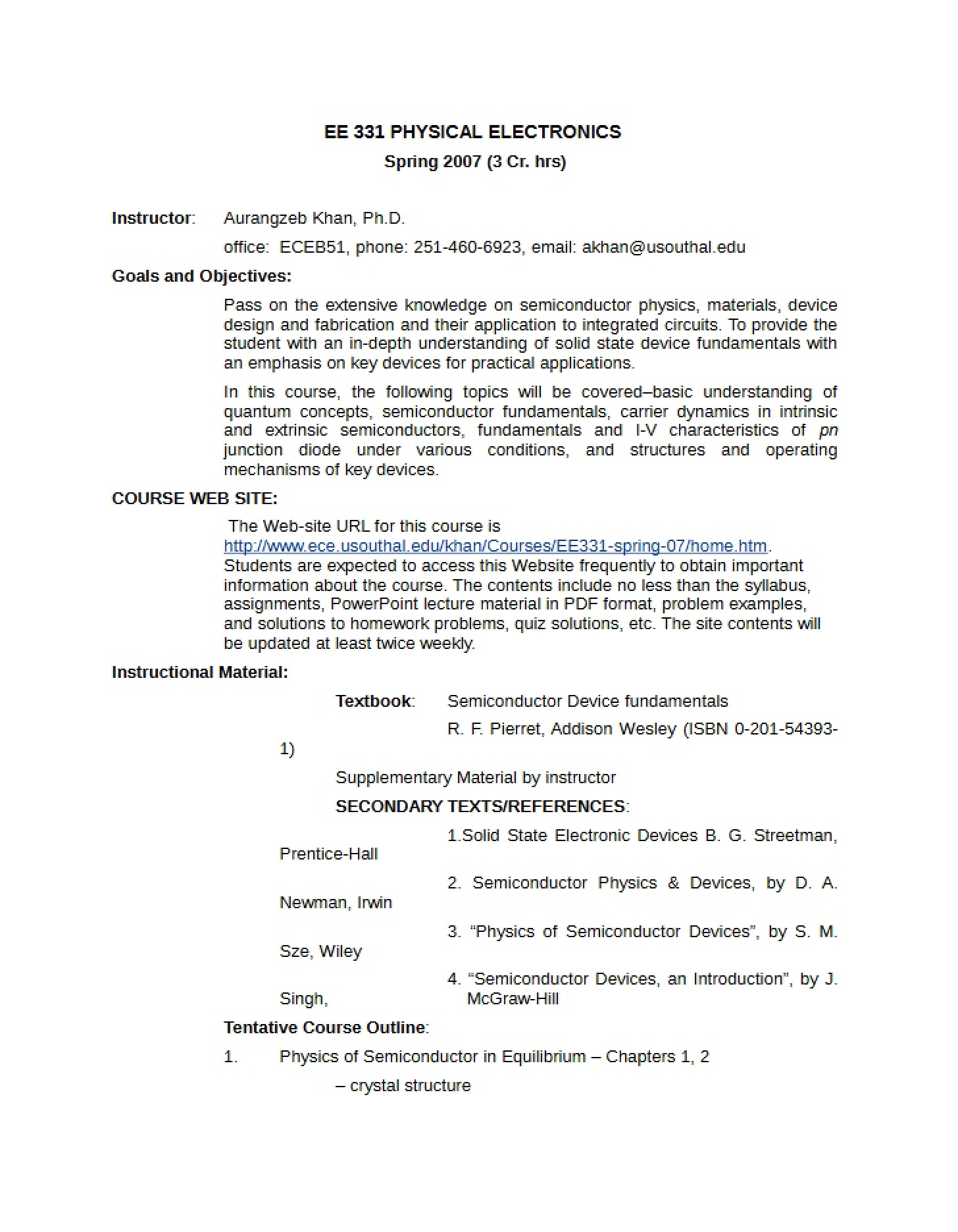
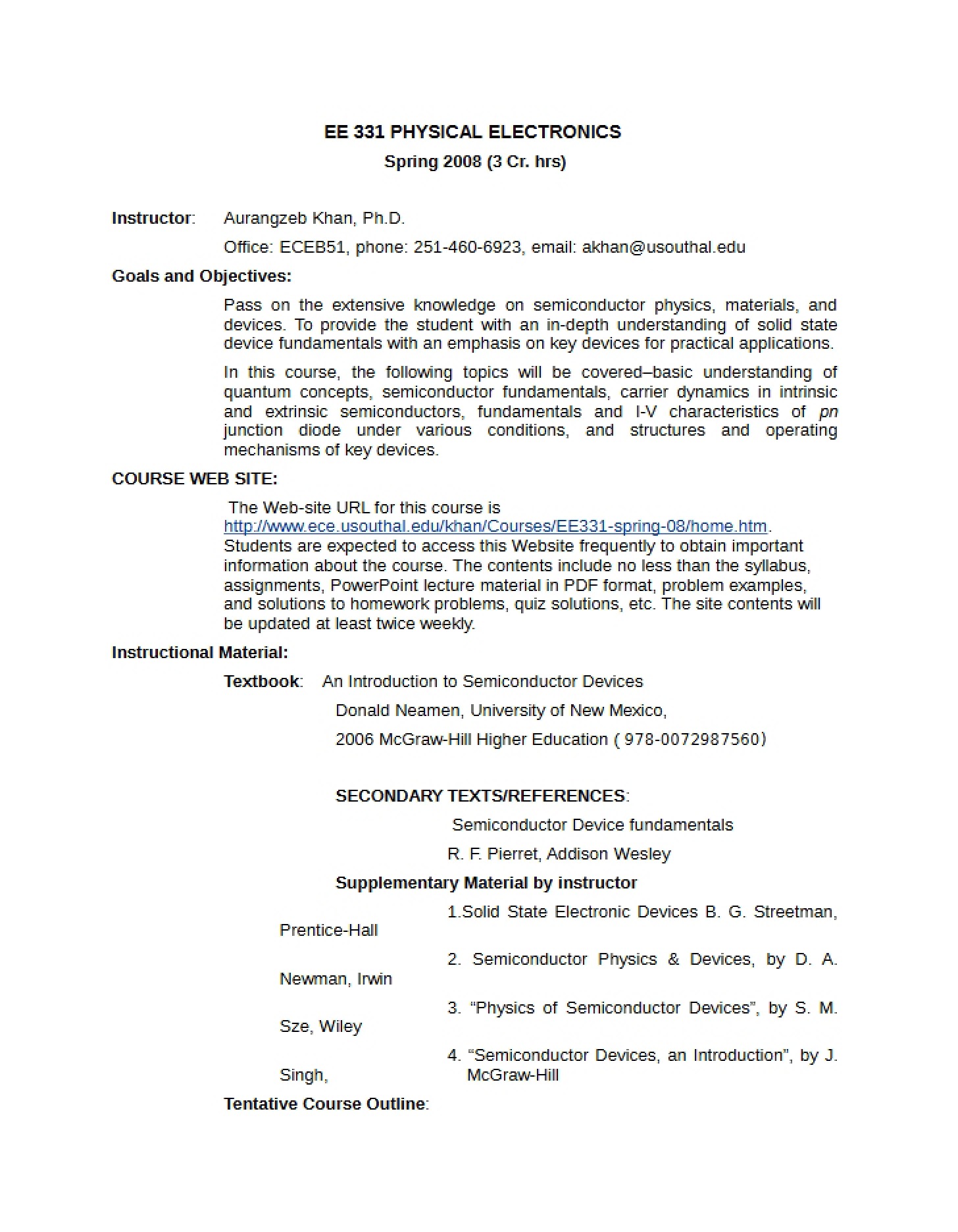
This is a comprehensive course syllabus and outline for EE 331: Physical Electronics, offered at the University of South Alabama. It details the core concepts, learning objectives, and logistical information for a semester-long study of semiconductor physics and devices. The material focuses on the fundamental principles governing the behavior of electronic materials and the operation of key electronic components. It’s designed to build a strong foundation for students pursuing further studies or careers in electrical engineering, particularly those focused on device design and integrated circuits.
Why This Document Matters
This resource is essential for any student enrolled in, or considering enrollment in, EE 331 at the University of South Alabama. It provides a clear roadmap for the course, outlining the topics covered, the expected workload, and the assessment methods. Prospective students can use this to gauge the course’s scope and determine if their prior knowledge aligns with the prerequisites. Current students will find it invaluable for staying organized, understanding expectations, and planning their study schedule. It’s particularly useful during course selection and at the beginning of the semester to understand the instructor’s approach and available resources.
Common Limitations or Challenges
This document serves as an overview and organizational guide. It does *not* contain the detailed explanations of concepts, derivations of equations, or worked examples that are central to understanding physical electronics. It also doesn’t include the actual lecture materials, homework assignments, or solutions – those are accessed separately. The outline provides topic headings, but doesn’t delve into the specifics of each subject.
What This Document Provides
* A clearly stated set of course goals and learning objectives.
* Information regarding the instructor’s contact details and office hours.
* A list of required and recommended textbooks and reference materials.
* A tentative course schedule outlining the major topics to be covered each week.
* Details on the types of assessments (tests, examinations) and their weighting.
* Important course policies regarding attendance and academic responsibility.
* A link to the course website, which serves as a central hub for course materials.
* Prerequisites for the course, ensuring students have the necessary background knowledge.