What This Document Is
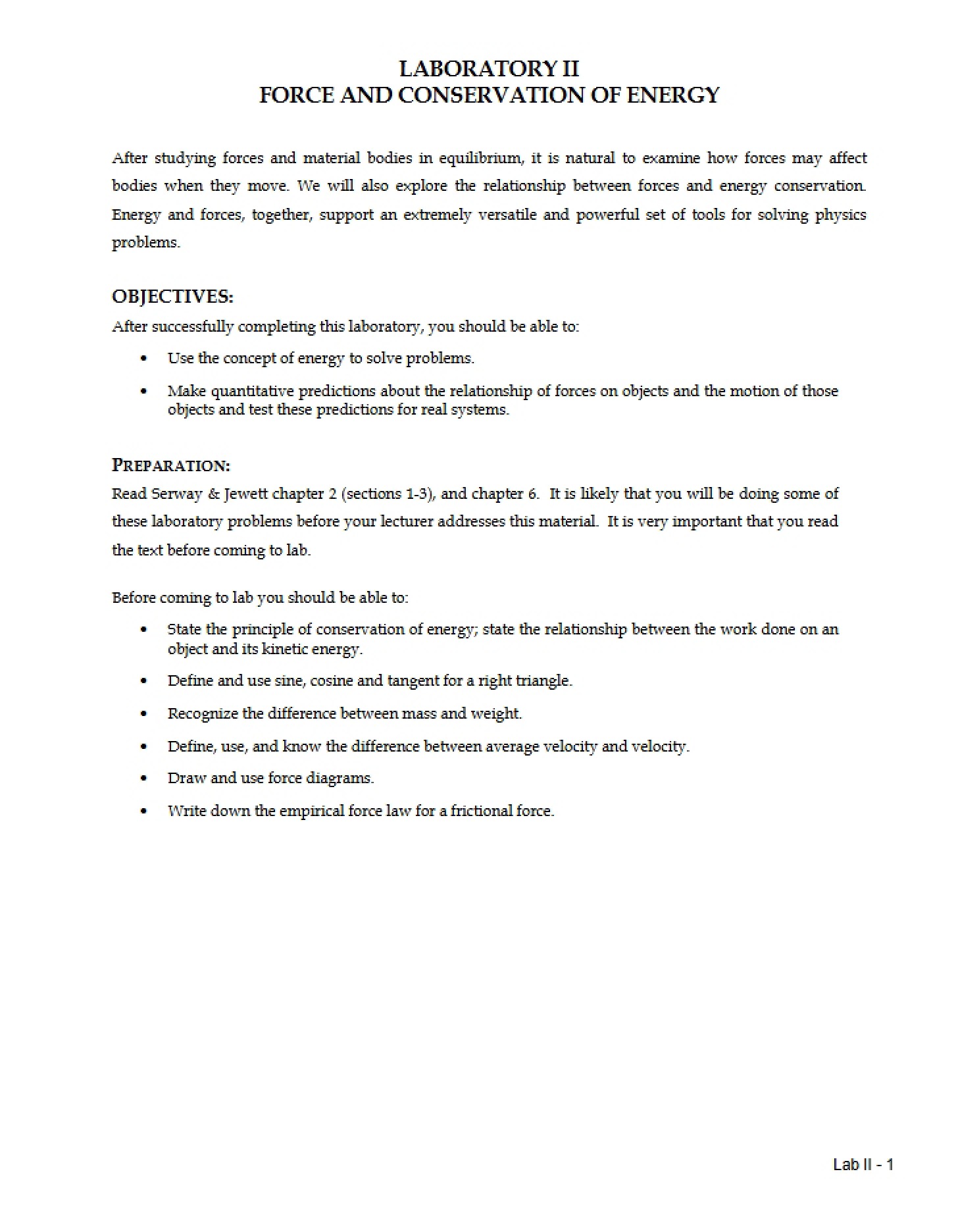
This is an introductory guide for the Physics 1201 laboratory course at the University of Minnesota Twin Cities. It serves as a foundational resource outlining the philosophy, expectations, and practical considerations for success within the lab component of the course. It’s designed to bridge the gap between theoretical physics concepts presented in lectures and their real-world application through hands-on experimentation. This isn’t a replacement for the full lab manual, but rather a crucial starting point for understanding the course’s approach to learning physics.
Why This Document Matters
This introduction is essential for all students enrolled in Physics 1201. It’s particularly valuable *before* your first lab session, helping you understand the unique learning environment and the emphasis on conceptual understanding over rote measurement. Students who carefully review this material will be better prepared to engage with lab activities, collaborate effectively with peers, and produce meaningful lab reports. It’s also helpful to revisit throughout the semester as a reminder of the course’s core principles and expectations.
Common Limitations or Challenges
This document provides a broad overview and does *not* contain specific experimental procedures, data tables, or detailed analysis techniques. It won’t walk you through solving particular physics problems, nor does it offer pre-filled lab reports as examples. It focuses on the ‘why’ and ‘how’ of the lab experience, not the ‘what’ of each individual experiment. Access to the complete lab manual is required to perform experiments and complete assignments.
What This Document Provides
* A clear articulation of the course’s learning objectives and the role of the laboratory in achieving them.
* Guidance on how to effectively prepare for lab sessions, maximizing your learning experience.
* An overview of the expectations for student participation, collaboration, and communication.
* Information regarding safety protocols and essential materials needed for each lab session.
* An introduction to the structure and requirements for laboratory reports, including where to find further guidance.
* A discussion of how the lab component integrates with lectures and discussion sections.