What This Document Is
This study guide delves into a specific and influential policing strategy known as “Broken Windows” policing. It’s a focused exploration of the theory behind this approach, its historical origins, and its practical application within real-world law enforcement contexts. The guide analyzes the core principles that differentiate this strategy from more traditional methods, offering a detailed look at its underlying philosophy and intended outcomes. It’s based on course material from SOCIOL 5618 at The Ohio State University.
Why This Document Matters
Students enrolled in courses on criminology, sociology of policing, or criminal justice will find this guide particularly valuable. It’s ideal for those seeking a deeper understanding of proactive policing strategies and the debates surrounding their effectiveness. This resource is helpful when preparing for class discussions, working on assignments that require analysis of policing methods, or studying for exams that cover contemporary law enforcement theory. It provides a solid foundation for critically evaluating the complexities of maintaining public order and reducing crime.
Topics Covered
* The historical development of the Broken Windows theory
* Core principles and key components of the Broken Windows policing strategy
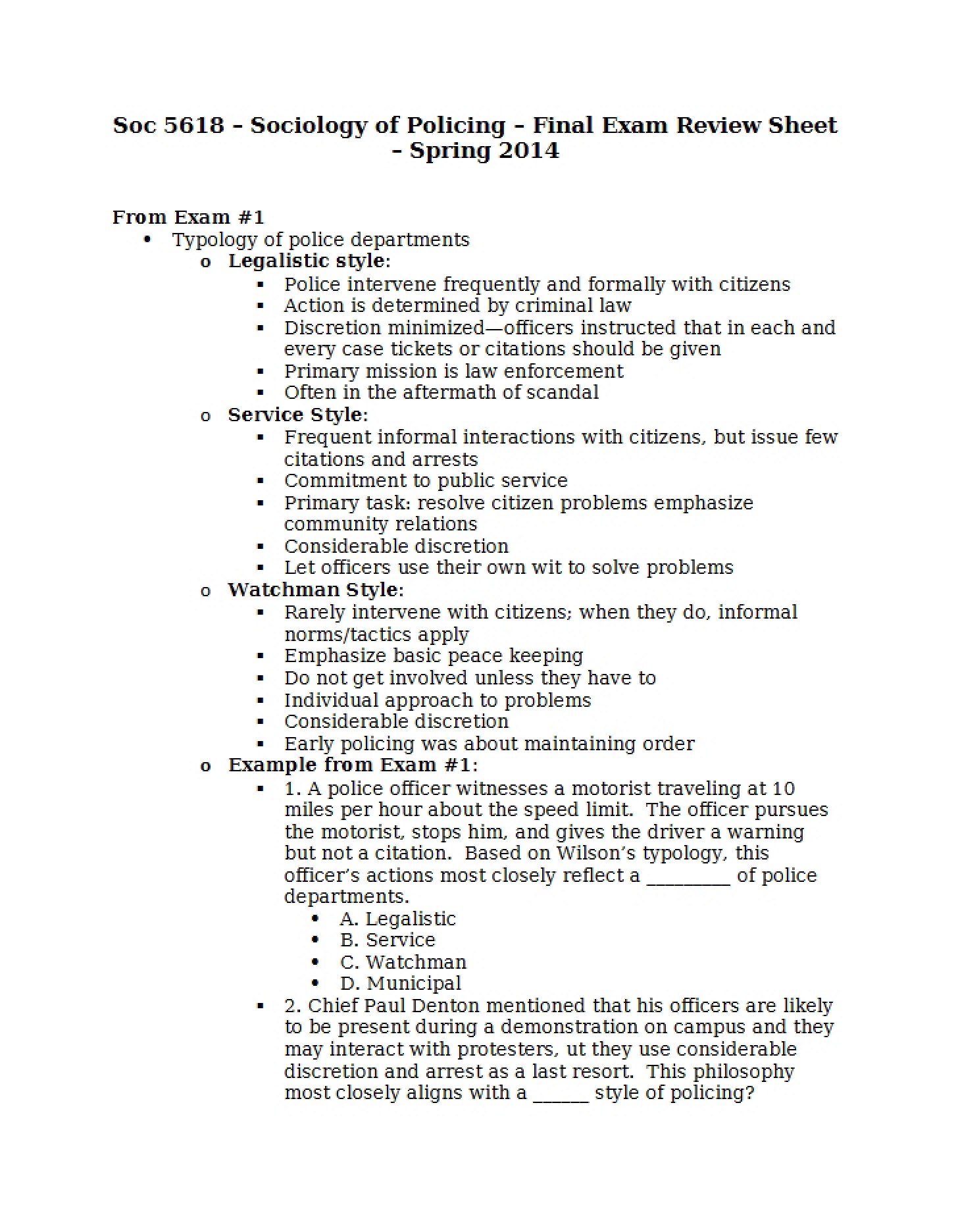
* Differentiation between proactive and reactive policing approaches
* The role of disorder in relation to more serious criminal activity
* The impact of police presence and community engagement
* Analysis of the initial implementation of the strategy in a major urban center
* Considerations regarding public perception and fear of crime
What This Document Provides
* A comprehensive overview of the foundational concepts behind Broken Windows policing.
* An examination of the intended consequences of addressing minor offenses and public disorder.
* Insights into the potential benefits of increased police-community interaction.
* A framework for understanding the strategic rationale behind prioritizing certain types of offenses.
* A focused analysis of a specific case study illustrating the implementation of the strategy.
* A detailed exploration of the theoretical underpinnings of this influential policing approach.