What This Document Is
This document presents an in-depth exploration of the political economy factors influencing competition within high-technology industries. Specifically, it focuses on analyzing the independent variables that shape a nation’s ability to foster innovation and maintain a competitive edge in the global market. The analysis utilizes a case study approach, examining historical trends and organizational structures to illustrate key concepts. It’s geared towards advanced students and professionals seeking a nuanced understanding of the interplay between political forces, economic structures, and technological advancement.
Why This Document Matters
This material is essential for MBA students specializing in international trade, strategy, and technology management. It’s particularly valuable when studying the dynamics of global competition, the role of government in industrial policy, and the evolution of industry structures. Professionals involved in international business development, market analysis, or government affairs will also find this a useful resource for understanding the complex factors that drive success in high-tech sectors. It’s best utilized when seeking a framework for evaluating the competitive landscape of specific technology industries or national economies.
Topics Covered
* Political systems and their impact on economic policy
* The role of production profiles in shaping competitive advantage
* Analysis of domestic industry structures and their evolution
* The organization of key factor inputs (capital, labor, resources, technology)
* Case studies of national innovation systems and their effectiveness
* The impact of organizational innovations on investment and growth
* Factors contributing to the decline of previously dominant industrial models
* The influence of international pressures and policy adjustments
What This Document Provides
* A framework for analyzing the political economy of technology competition.
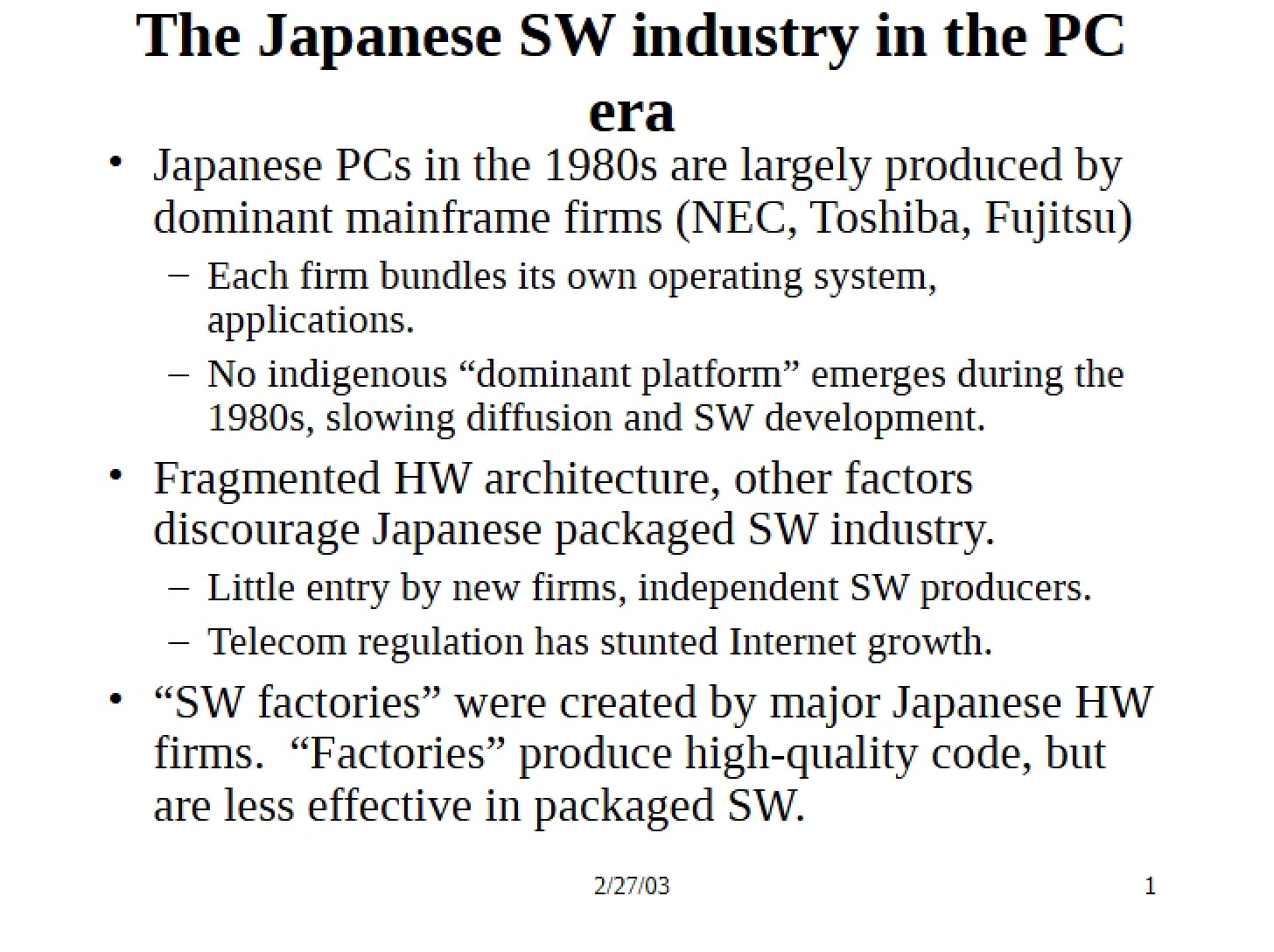
* A detailed case study of Japan’s high-growth period and subsequent challenges.
* Insights into the role of government policies in promoting or hindering technological development.
* An examination of the impact of organizational structures (like Keiretsu) on industry performance.
* Historical context on the evolution of chip competition and lead markets.
* Data tables illustrating market share trends across different regions.
* An overview of major silicon foundry startups and expansions.