What This Document Is
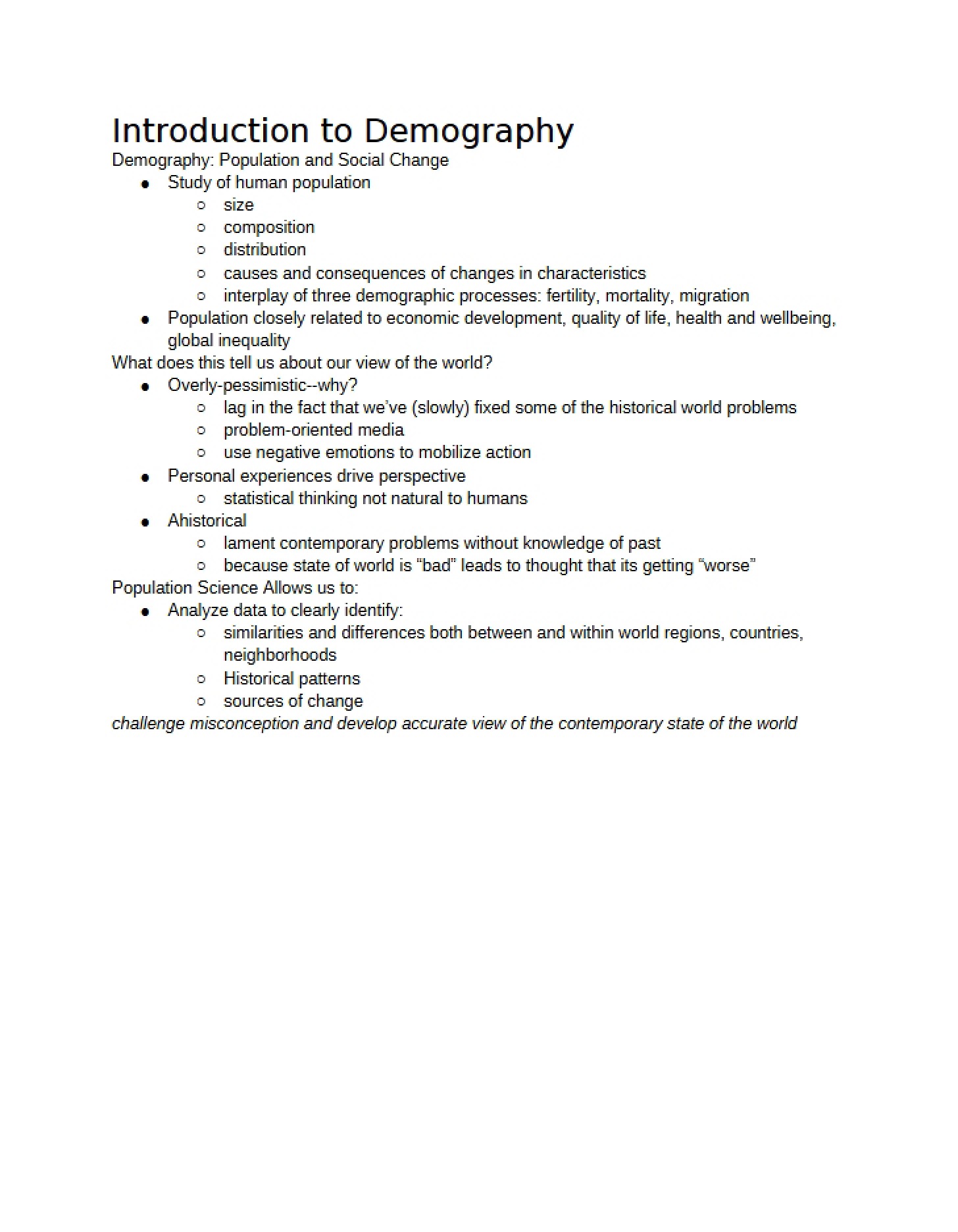
This document serves as an introduction to the field of Population Studies, a core component of quantitative reasoning within the social sciences. It explores the fundamental concepts and historical development of demography – the study of human populations and their dynamics. It delves into the factors influencing population change, including birth rates, death rates, and migration patterns, and examines how these elements interact to shape societal trends. The material provides a foundational understanding of how population is measured and analyzed.
Why This Document Matters
This resource is invaluable for students in quantitative reasoning courses, particularly those interested in sociology, economics, public health, or urban planning. It’s especially helpful when beginning to grapple with complex social issues that are directly tied to population trends. Understanding the principles outlined here will provide a strong base for analyzing demographic data and interpreting population-related research. It’s ideal for students seeking a broad overview before diving into specialized areas of population research or needing context for related coursework.
Common Limitations or Challenges
This introduction provides a conceptual framework and historical context. It does *not* offer detailed statistical methodologies or step-by-step calculations for demographic analysis. While it touches upon various theoretical perspectives, it doesn’t present an exhaustive review of every demographic theory. Furthermore, it focuses on establishing core principles and does not delve into specific regional or country-level demographic profiles. Access to the full material is required for in-depth exploration of these topics.
What This Document Provides
* An overview of the definition and scope of demography.
* A historical timeline tracing the origins of population studies.
* Exploration of classical and contemporary theories regarding population growth and its societal impacts.
* Discussion of key demographic issues facing the world today.
* An outline of the differing perspectives – macro and micro – used in demographic analysis.
* An introduction to the interdisciplinary nature of population studies.