What This Document Is
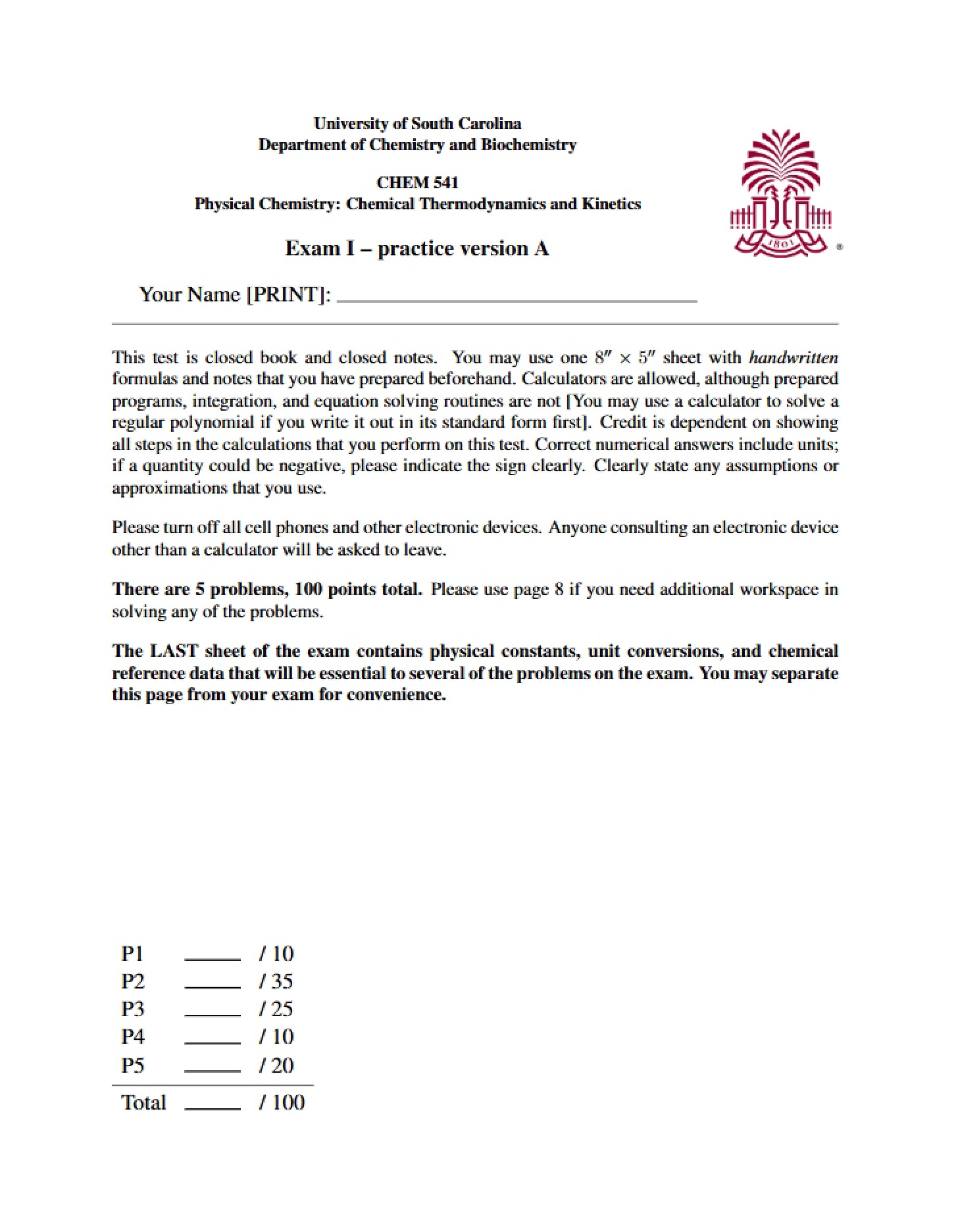
This is a practice exam, specifically designed to help students prepare for Exam III in CHEM 541: Physical Chemistry – Chemical Thermodynamics and Kinetics, at the University of South Carolina. It covers core principles within the course, focusing on the application of thermodynamic and kinetic concepts to solve complex problems. The practice exam mimics the format and style of an actual exam, providing a realistic assessment opportunity.
Why This Document Matters
This resource is invaluable for students enrolled in a physical chemistry course, particularly those nearing a major exam on thermodynamics and kinetics. It’s best utilized *after* thorough study of course materials – lectures, textbooks, and assigned readings. Working through this practice exam will help identify knowledge gaps, refine problem-solving skills, and build confidence before the official assessment. It’s also beneficial for understanding the types of questions and the level of detail expected by the instructor. Students who actively engage with this material will be better prepared to demonstrate their understanding of key concepts under exam conditions.
Common Limitations or Challenges
This practice exam is a *sample* assessment and does not encompass the entirety of potential exam content. It’s designed to be representative, but the actual exam may include questions on slightly different topics or presented in a different manner. Furthermore, this document does not provide detailed explanations or worked solutions; it’s intended to be a self-assessment tool. It assumes a foundational understanding of physical chemistry principles.
What This Document Provides
* A full-length practice exam mirroring the structure of CHEM 541 Exam III.
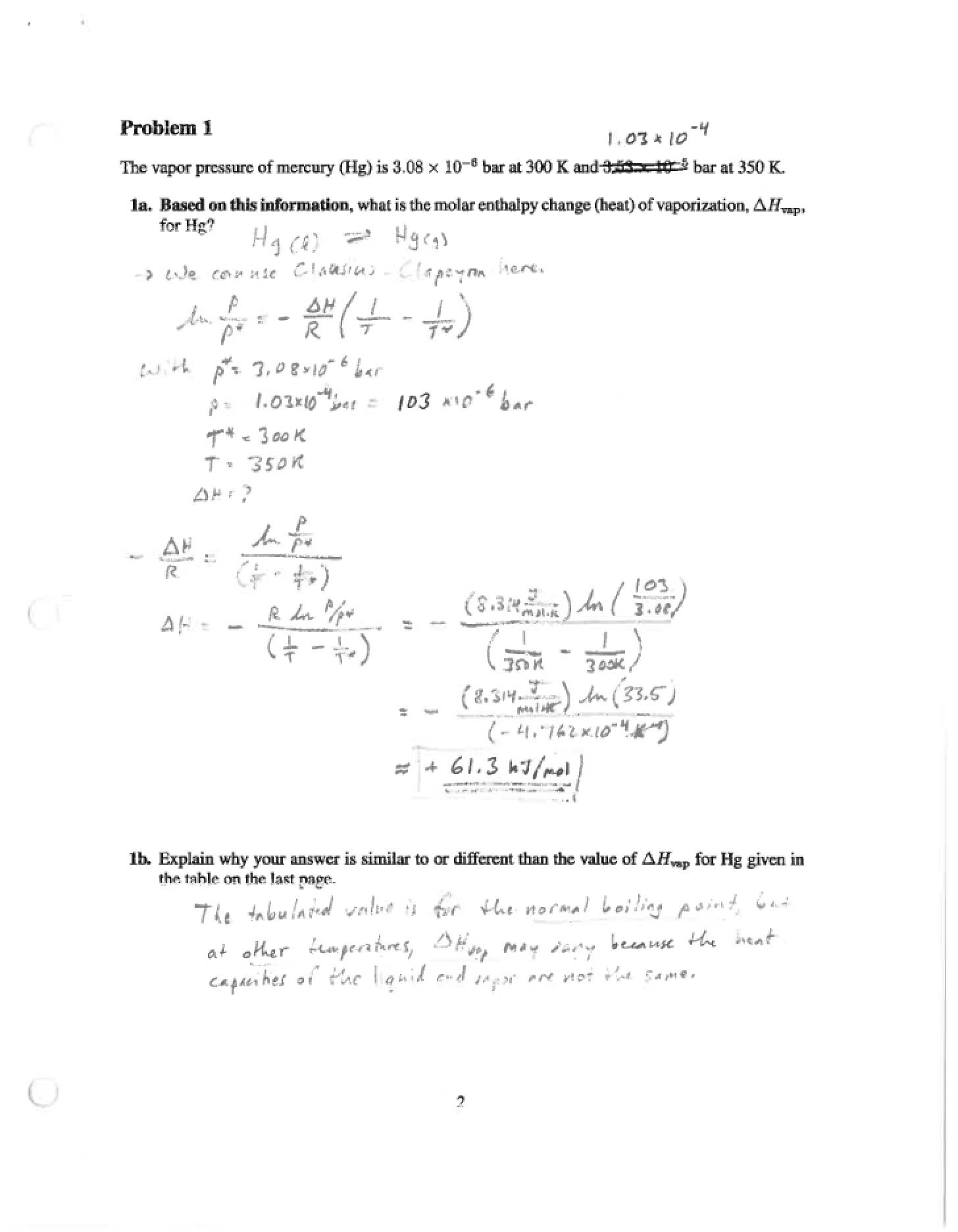
* Problems covering topics such as vapor pressure, enthalpy of vaporization, partial molar volumes, chemical equilibrium, and freezing point depression.
* Questions requiring application of concepts to real-world scenarios (e.g., oil drilling, combustion, ice cream mixtures).
* A dedicated section with essential physical constants, unit conversions, and chemical reference data.
* A clear indication of point values for each problem, reflecting the relative importance of different topics.