What This Document Is
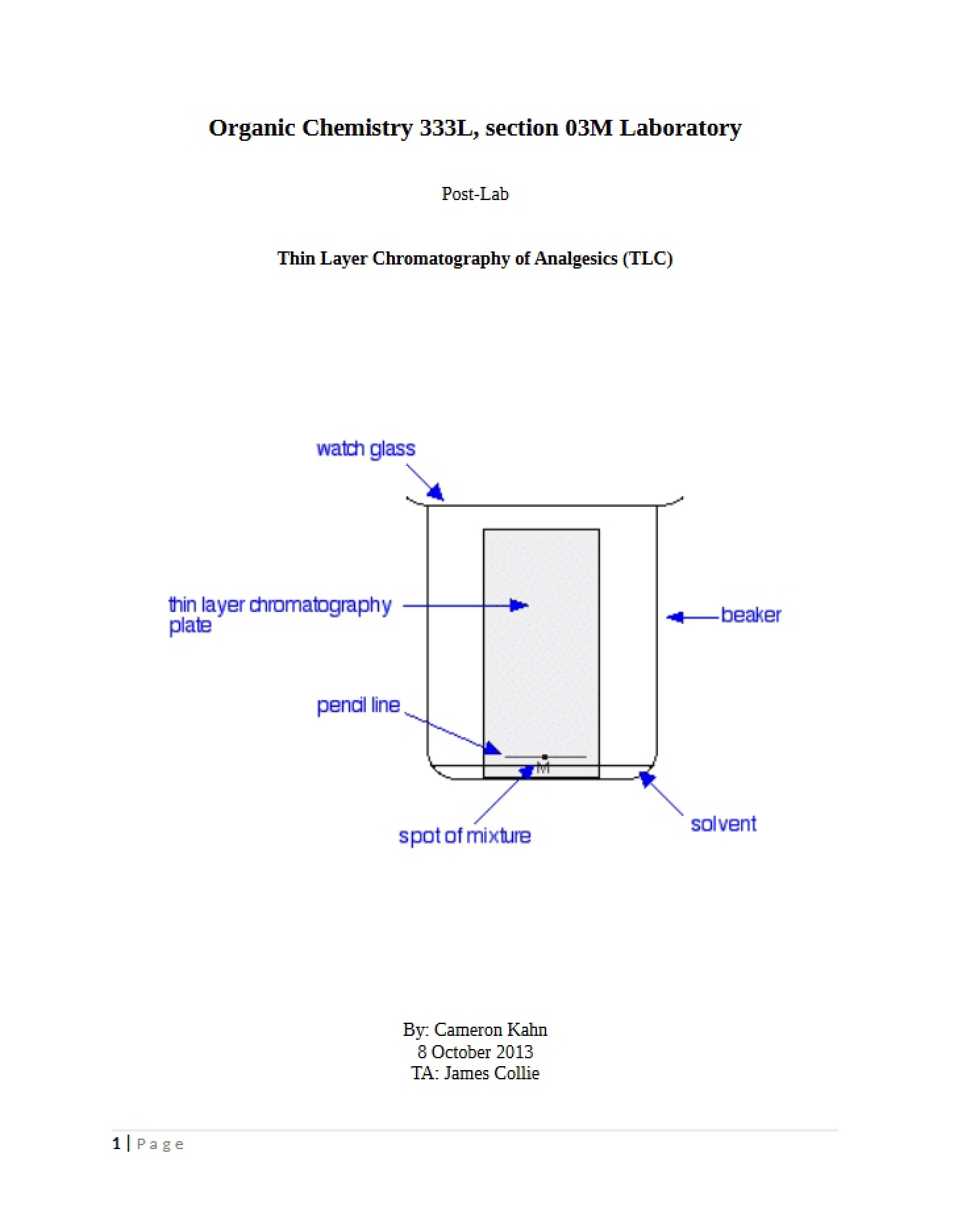
This pre-lab guide prepares you for Experiment 4 in Organic Chemistry I (CHEM 333) at the University of South Carolina, focusing on the principles and application of Thin Layer Chromatography (TLC). It’s designed to build your foundational understanding *before* you step into the lab, ensuring you’re equipped to successfully analyze a set of analgesic compounds. The guide delves into the theoretical underpinnings of TLC, explaining the key concepts that govern how different substances separate on a TLC plate.
Why This Document Matters
This resource is essential for any student enrolled in CHEM 333L-021 who wants to maximize their lab time and achieve a strong understanding of chromatographic techniques. It’s particularly helpful if you’re new to TLC or need a refresher on the factors influencing separation and identification of organic compounds. Reviewing this material *before* the lab will allow you to focus on practical skills and data interpretation during the experiment itself, rather than struggling with the underlying theory. It’s ideal for preparation before beginning the experiment and for reviewing concepts afterward.
Common Limitations or Challenges
This pre-lab guide provides the *theoretical framework* for the experiment. It will not walk you through the detailed, step-by-step procedure for performing the TLC analysis. It also doesn’t include specific data, observations, or conclusions from the experiment itself – those are for you to generate in the lab! It focuses on the ‘why’ behind the experiment, not the ‘how’. You will need to refer to the full lab manual for complete experimental instructions.
What This Document Provides
* A comprehensive overview of Thin Layer Chromatography (TLC) principles.
* Explanation of key terms like mobile phase, stationary phase, capillary action, and R<sub>f</sub> values.
* Discussion of the factors influencing the separation of compounds during TLC.
* Insight into the utility of TLC for analyzing mixtures, identifying substances, and monitoring reactions.
* Contextual information regarding the application of TLC to the analysis of analgesics.