What This Document Is
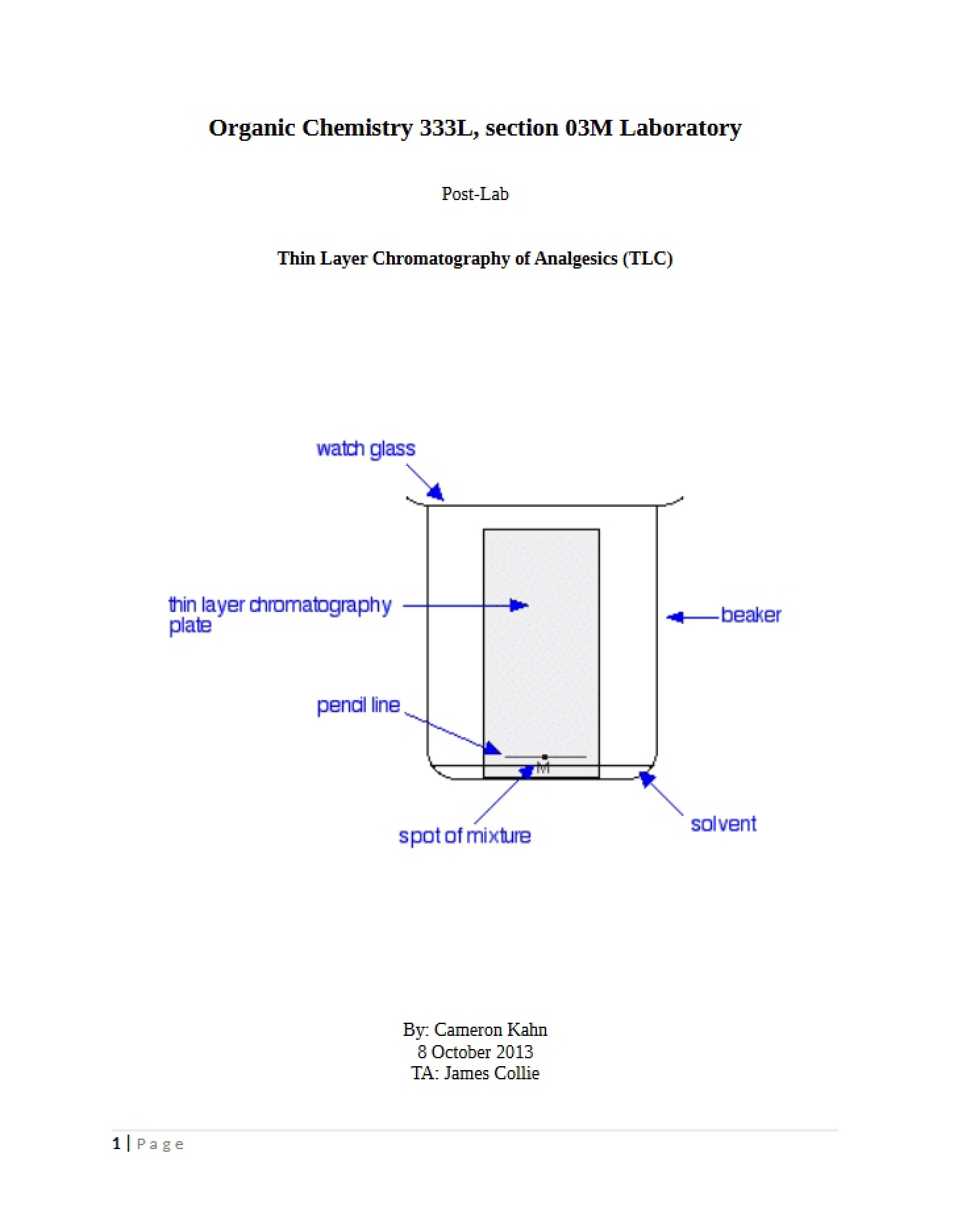
This is a pre-laboratory document designed to prepare students for an experiment in Organic Chemistry I, specifically focusing on the application of Thin Layer Chromatography (TLC) to analyze analgesic compounds. It’s intended to be reviewed *before* entering the lab, ensuring a foundational understanding of the principles and purpose of the experiment. The document originates from a University of South Carolina (CHEM 333L) course and is dated January 2019.
Why This Document Matters
This resource is crucial for students enrolled in organic chemistry laboratory courses. It’s particularly beneficial for those who are new to TLC, a fundamental separation technique used to assess the purity of compounds, identify unknowns, and monitor reaction progress. Reviewing this material *prior* to the lab session will maximize your time and comprehension during the hands-on portion of the experiment. It will help you understand the theoretical basis for the procedure and the significance of the results obtained.
Common Limitations or Challenges
This pre-lab document provides the theoretical groundwork for the TLC experiment. It does *not* contain detailed, step-by-step instructions for performing the experiment itself. It will not provide specific data, observations, or conclusions from a completed experiment. Furthermore, it doesn’t offer troubleshooting advice for common issues encountered during TLC. Access to the full document is required for a complete understanding of the experimental procedure and analysis.
What This Document Provides
* An overview of the experiment’s objective – understanding how to perform and analyze TLC with analgesics.
* A discussion of the underlying theory behind TLC, including concepts of mobile and stationary phases.
* Explanation of the Retention Factor (Rf) and its significance in compound identification.
* Identification of factors influencing Rf values and the importance of consistent experimental conditions.
* Discussion of how TLC can be used to support the identification of unknown compounds.