What This Document Is
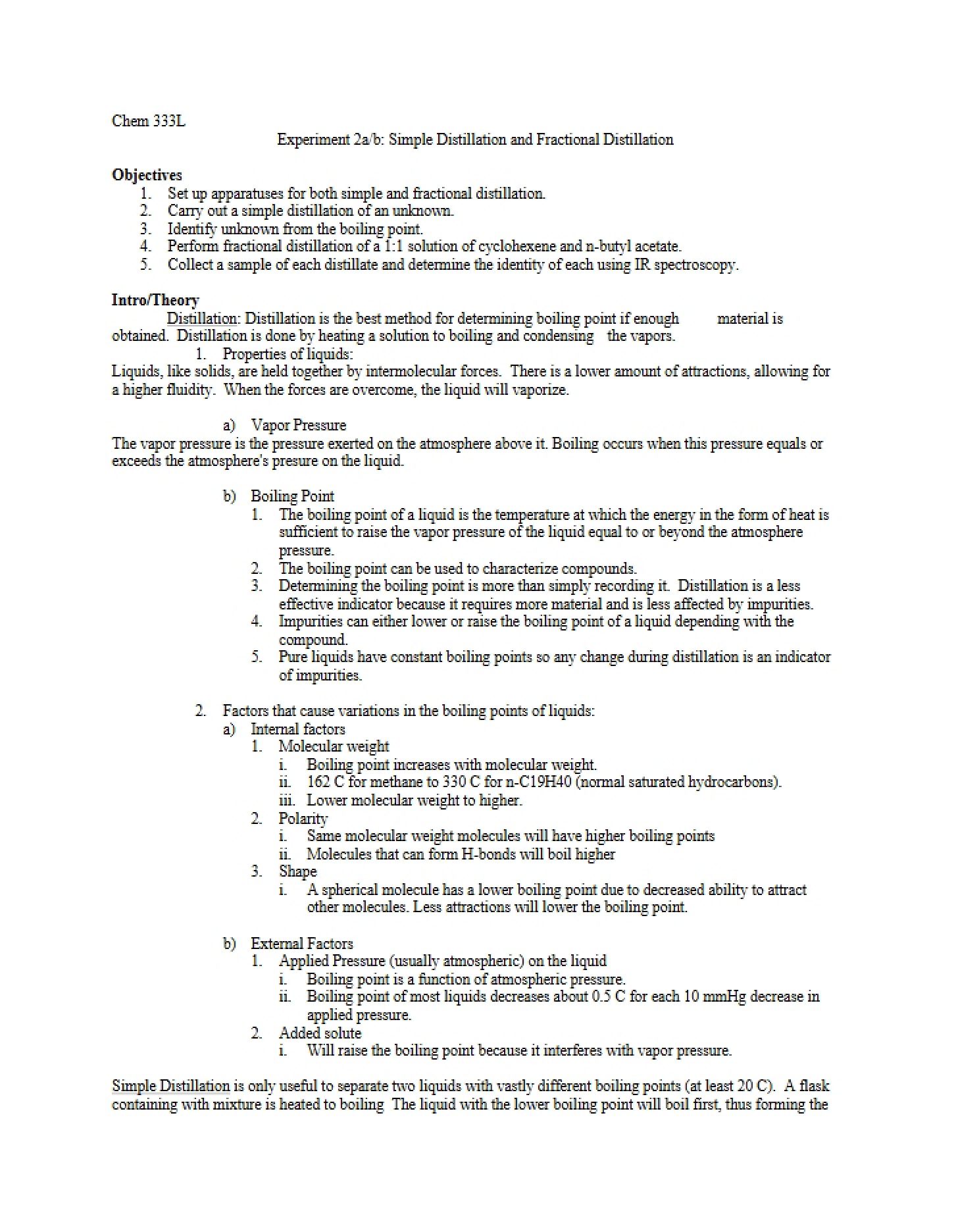
This is a pre-laboratory guide focused on the principles and setup for a simple distillation experiment in organic chemistry. Specifically, it prepares students for a lab involving the separation and identification of organic molecules using distillation techniques. It delves into the theoretical underpinnings of distillation, exploring the forces governing phase changes and the impact of impurities on boiling points. The guide also introduces different distillation apparatus configurations.
Why This Document Matters
This resource is essential for any student enrolled in an Organic Chemistry I laboratory—particularly those at the University of South Carolina (CHEM 333). It’s best utilized *before* entering the lab to ensure a solid understanding of the experiment’s objectives, the underlying scientific principles, and the expected outcomes. Reviewing this material will maximize your lab time and contribute to a more successful and insightful learning experience. It’s designed to build confidence and preparedness before hands-on work begins.
Common Limitations or Challenges
This pre-lab guide provides foundational knowledge and context. It does *not* contain detailed, step-by-step instructions for performing the distillation. It won’t provide specific data analysis guidance or the results of any experimental trials. Furthermore, it does not offer troubleshooting advice for common experimental errors. Access to the full document is required for complete experimental protocols and detailed analysis instructions.
What This Document Provides
* A clear statement of the experiment’s overall objective.
* A discussion of the fundamental theory behind distillation processes.
* Explanation of the relationship between intermolecular forces and boiling point.
* An overview of how impurities affect boiling point ranges.
* Introduction to the concepts of simple and fractional distillation.
* Discussion of factors influencing boiling point, such as molecular properties and pressure.
* Context regarding the importance of boiling point determination for compound identification.