What This Document Is
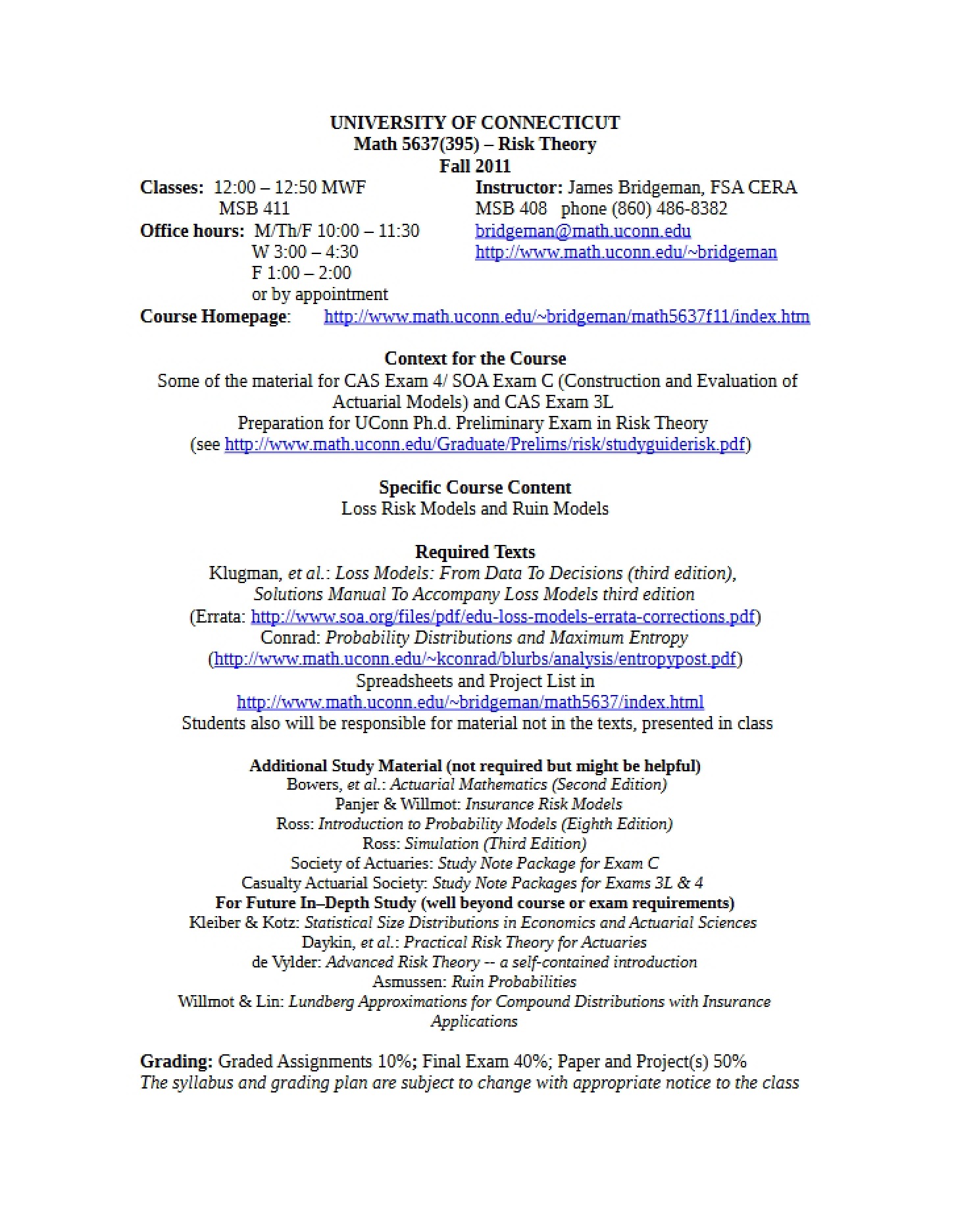
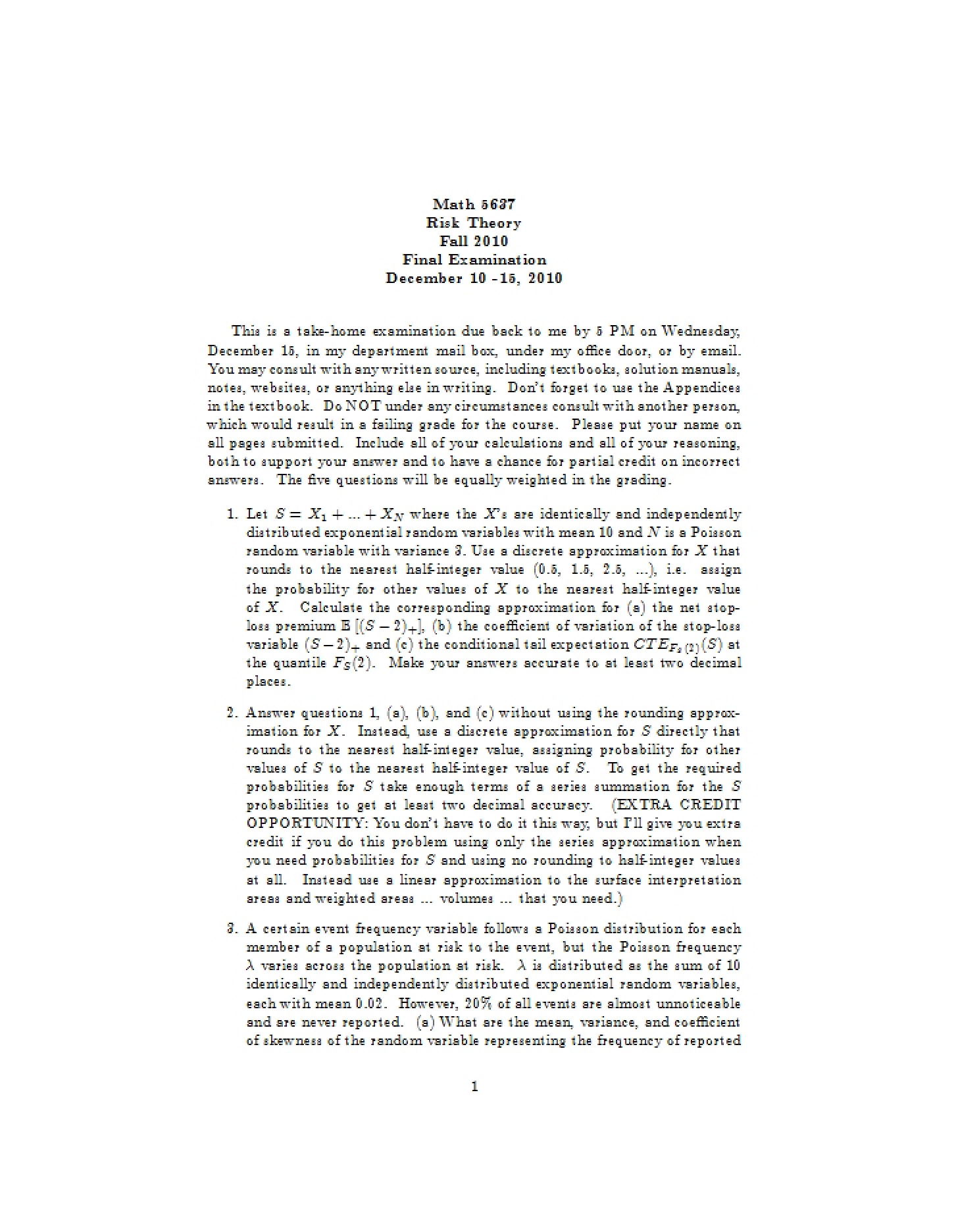
This is a comprehensive study guide designed to support students enrolled in a graduate-level Risk Theory course (MATH 5637) at the University of Connecticut. It serves as a focused resource for preparing for preliminary examinations and deepening understanding of core concepts within the field of actuarial science and mathematical finance. The guide consolidates key theoretical frameworks and modeling techniques essential for advanced study and professional application.
Why This Document Matters
This study guide is invaluable for students seeking to solidify their grasp of risk theory principles. It’s particularly helpful for those preparing for qualifying exams, reviewing before major assessments, or needing a concentrated reference point for complex topics. Individuals aiming for careers in actuarial science, quantitative finance, or related fields will find this resource beneficial in building a strong foundational knowledge base. It’s best utilized alongside course lectures and assigned readings to maximize comprehension and retention.
Topics Covered
* Modeling random variables and their properties (distributions, transforms, and relationships)
* Techniques for handling censored, truncated, and shifted variables in risk assessment
* Methods for evaluating and ranking risk, including hazard rates and mean excess loss functions
* Severity modeling using maximum entropy principles and various distribution families
* Extreme value theory and its application to modeling maximum losses
* Frequency models, compound distributions, and their role in collective risk models
* Ruin theory, including calculations of ruin probabilities and survival analysis
* The impact of coverage modifications on risk models
What This Document Provides
* A structured overview of key concepts in risk theory, organized for efficient study.
* Connections between different modeling approaches and their practical applications.
* A compilation of relevant terminology and definitions.
* References to core textbooks and supplemental materials, including specific chapters and online resources.
* Guidance on analytical techniques used in risk assessment and modeling.