What This Document Is
This is a detailed exploration of the vertical structure of Earth’s atmosphere, specifically focusing on the relationship between pressure, density, and temperature at varying altitudes. It’s designed as a foundational resource for understanding how atmospheric conditions change as you move upwards from the surface, and how these changes influence weather patterns. The material delves into the layers of the atmosphere and the unique characteristics of each.
Why This Document Matters
This resource is ideal for students in introductory meteorology courses seeking a comprehensive understanding of atmospheric fundamentals. It’s particularly helpful when studying atmospheric stability, weather map interpretation, and the forces that drive atmospheric circulation. Anyone preparing to analyze weather data or model atmospheric processes will find this a valuable reference. Understanding these concepts is crucial for building a strong base in meteorology and related fields.
Topics Covered
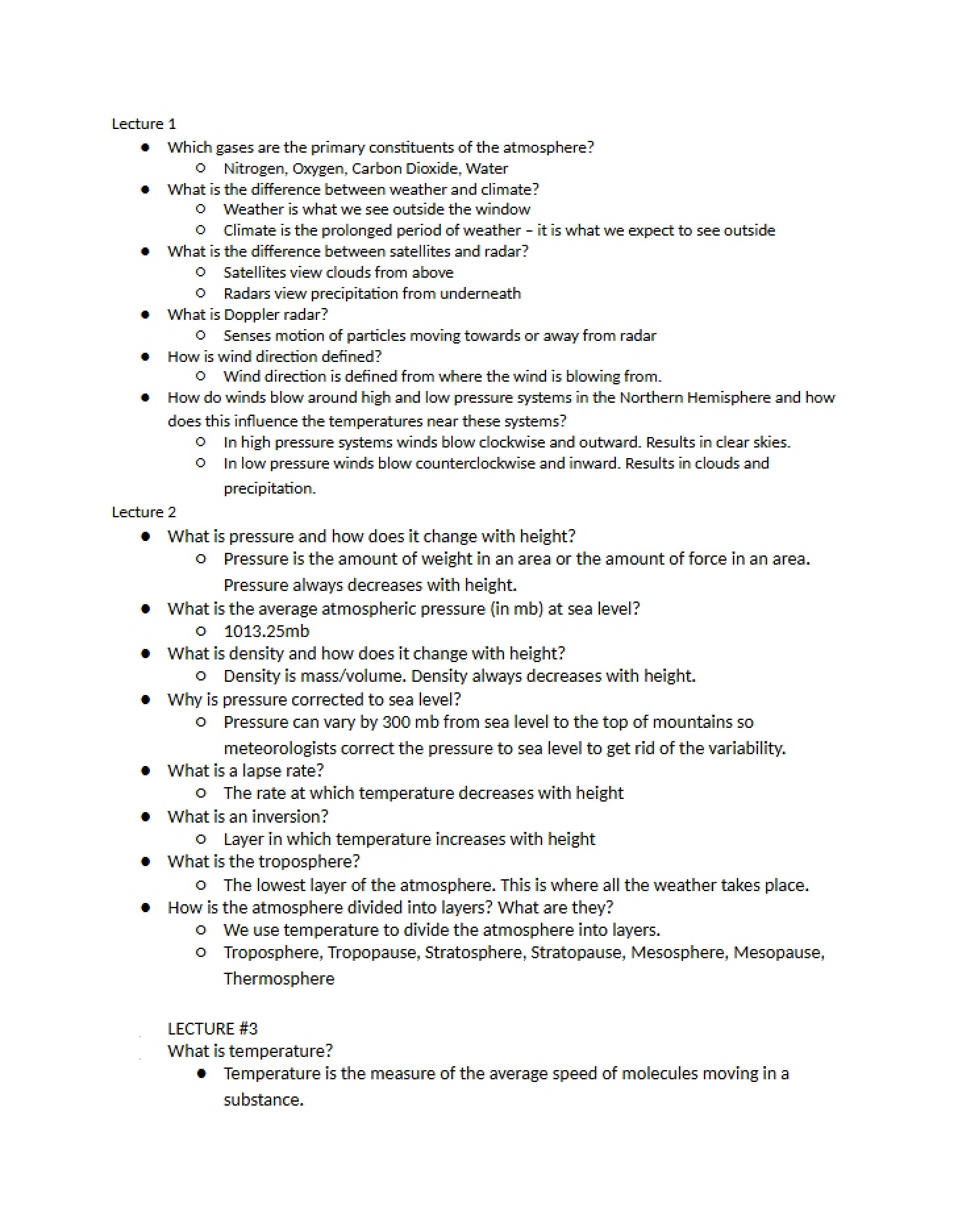
* Atmospheric Pressure and its Measurement
* The Relationship Between Pressure, Density, and Altitude
* Vertical Layers of the Atmosphere (Troposphere, Stratosphere, Mesosphere, Thermosphere)
* Temperature Profiles and Lapse Rates
* Atmospheric Soundings and Data Collection
* Identifying Key Atmospheric Boundaries (Tropopause, Stratopause, etc.)
* The Influence of Atmospheric Structure on Weather Systems
What This Document Provides
* A clear explanation of how atmospheric pressure is defined and measured.
* An overview of the standard units used for measuring pressure and density.
* Detailed descriptions of the characteristics of each atmospheric layer.
* Insights into how temperature changes with altitude and the concept of inversions.
* Information regarding the methods and tools used to gather upper-air atmospheric data.
* A framework for understanding the connection between upper-level atmospheric conditions and surface weather.