What This Document Is
This resource is a focused exploration of classical conditioning, a foundational concept within the field of learning psychology. Developed for students in PSYC 390 at the University of Idaho, it delves into the core principles governing how associations are formed between stimuli and responses. It’s designed to complement lecture material and provide a structured understanding of this essential learning process. The material utilizes visual aids alongside explanations to enhance comprehension.
Why This Document Matters
This resource is ideal for psychology students seeking a deeper grasp of classical conditioning. It’s particularly helpful when studying for exams, completing assignments, or simply reinforcing concepts presented in class. Anyone looking to build a strong foundation in behavioral psychology will find this a valuable study aid. Understanding classical conditioning is crucial not only for psychology majors but also for those in related fields like education, marketing, and healthcare, where understanding behavioral responses is key.
Topics Covered
* The fundamental processes underlying classical conditioning
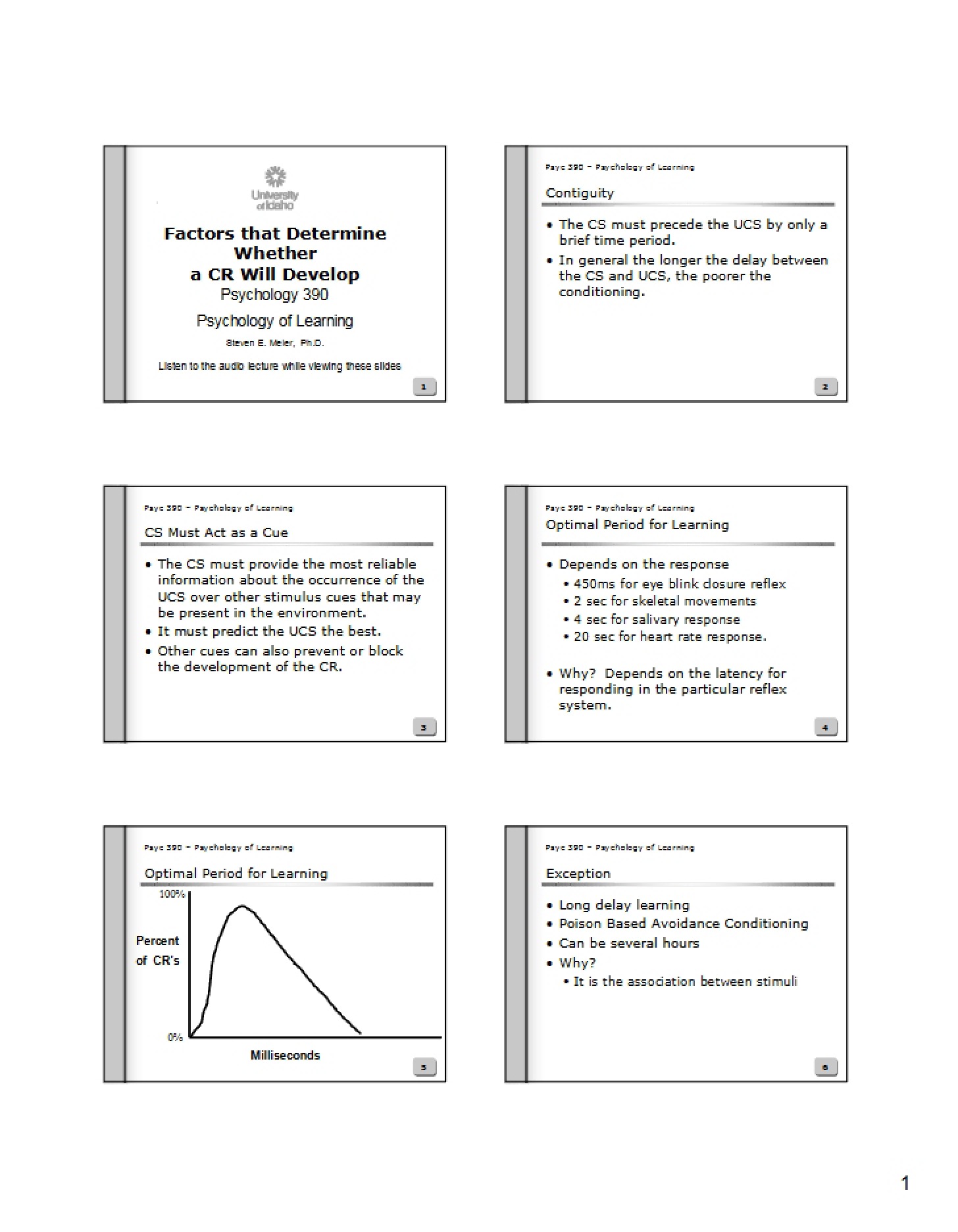
* Factors influencing the strength of conditioned responses
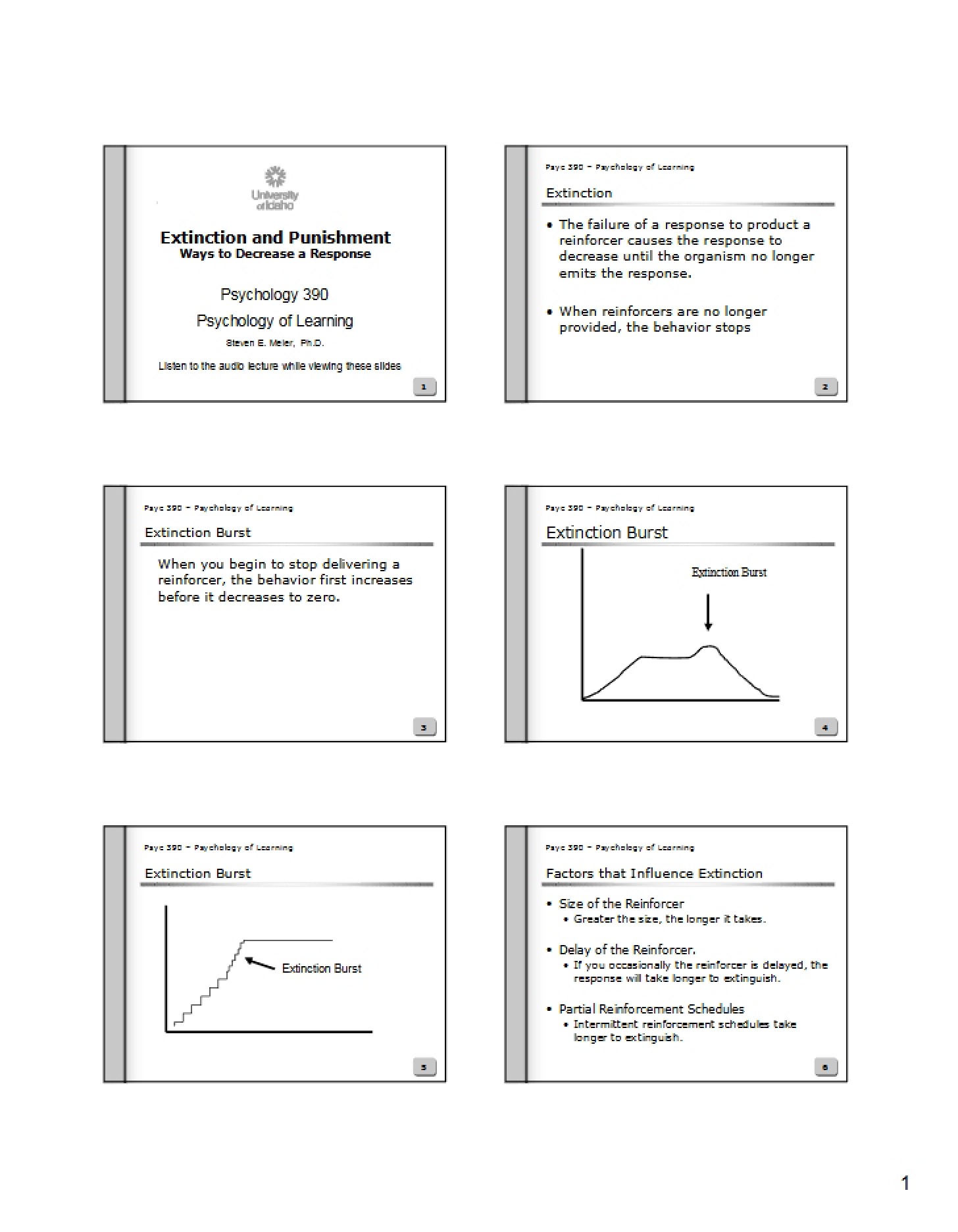
* The phenomenon of extinction and its graphical representation
* Spontaneous recovery and its characteristics
* Stimulus generalization and its impact on responses
* The process of stimulus discrimination
* Higher-order conditioning and the creation of secondary associations
What This Document Provides
* A clear presentation of the core components of the classical conditioning paradigm.
* Visual representations illustrating key processes like extinction and spontaneous recovery.
* An examination of how learned responses can be influenced by stimulus similarity.
* Exploration of how organisms learn to differentiate between stimuli.
* Insights into the development of complex associations through secondary conditioning.
* A framework for understanding how environmental factors shape behavior.