What This Document Is
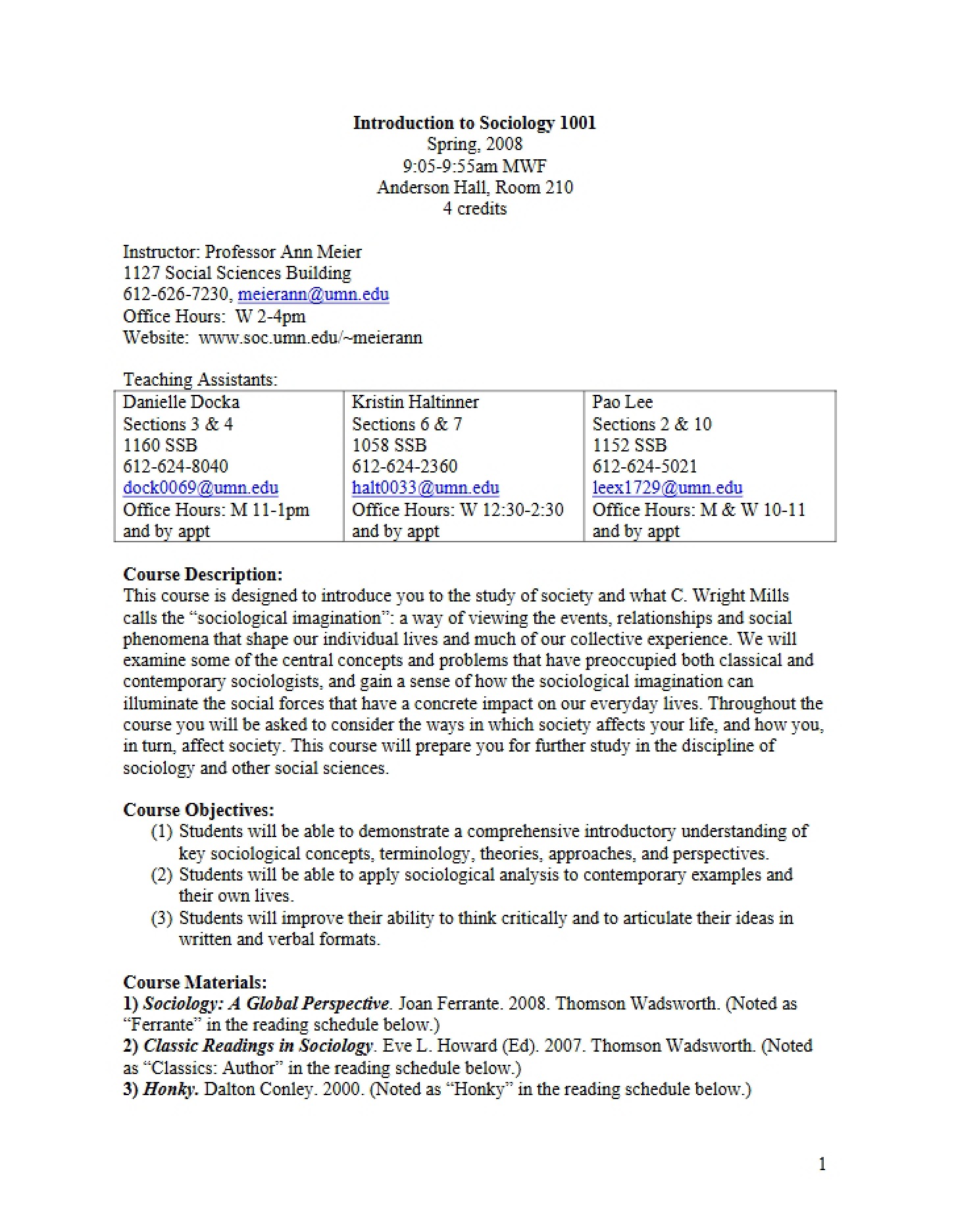
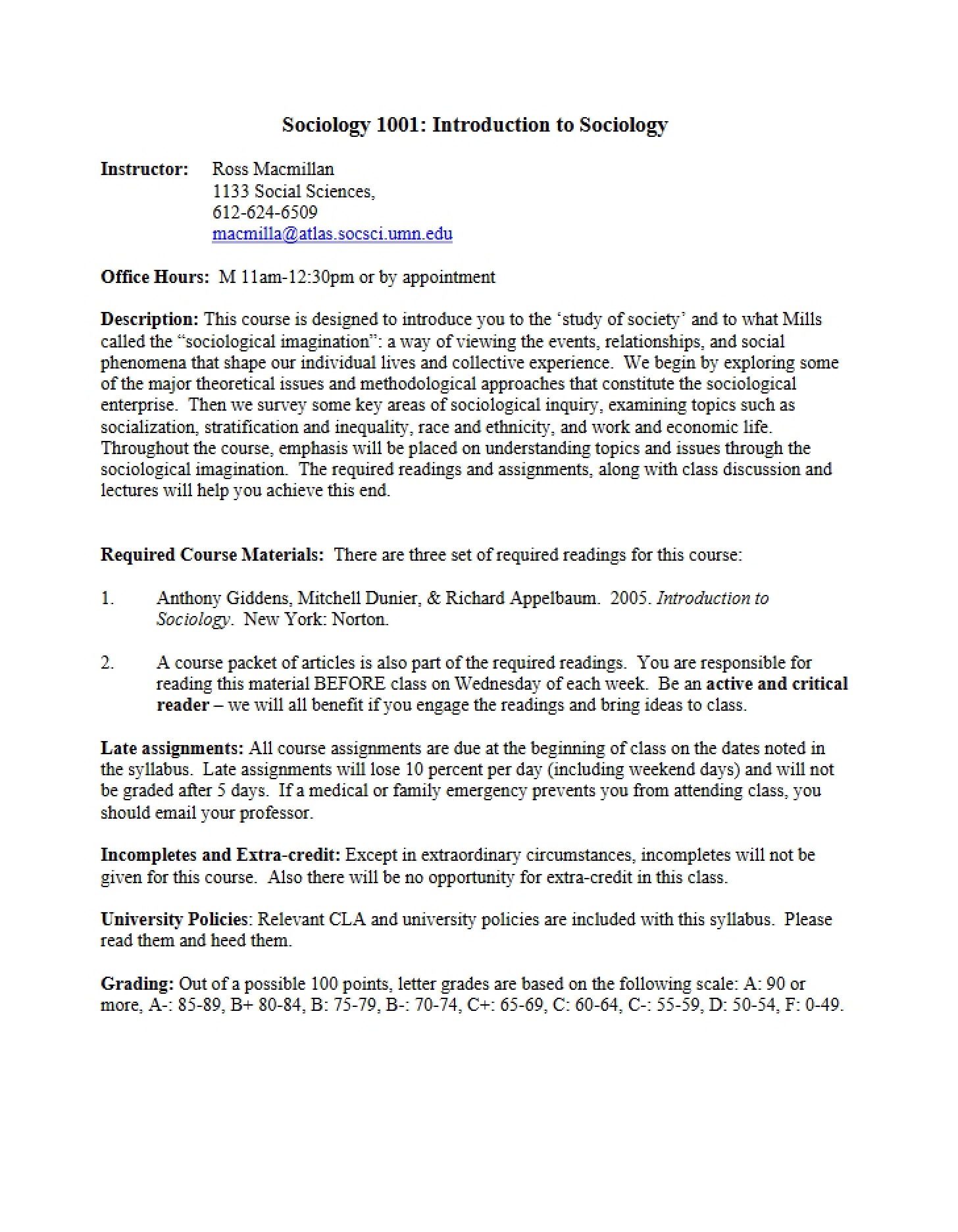
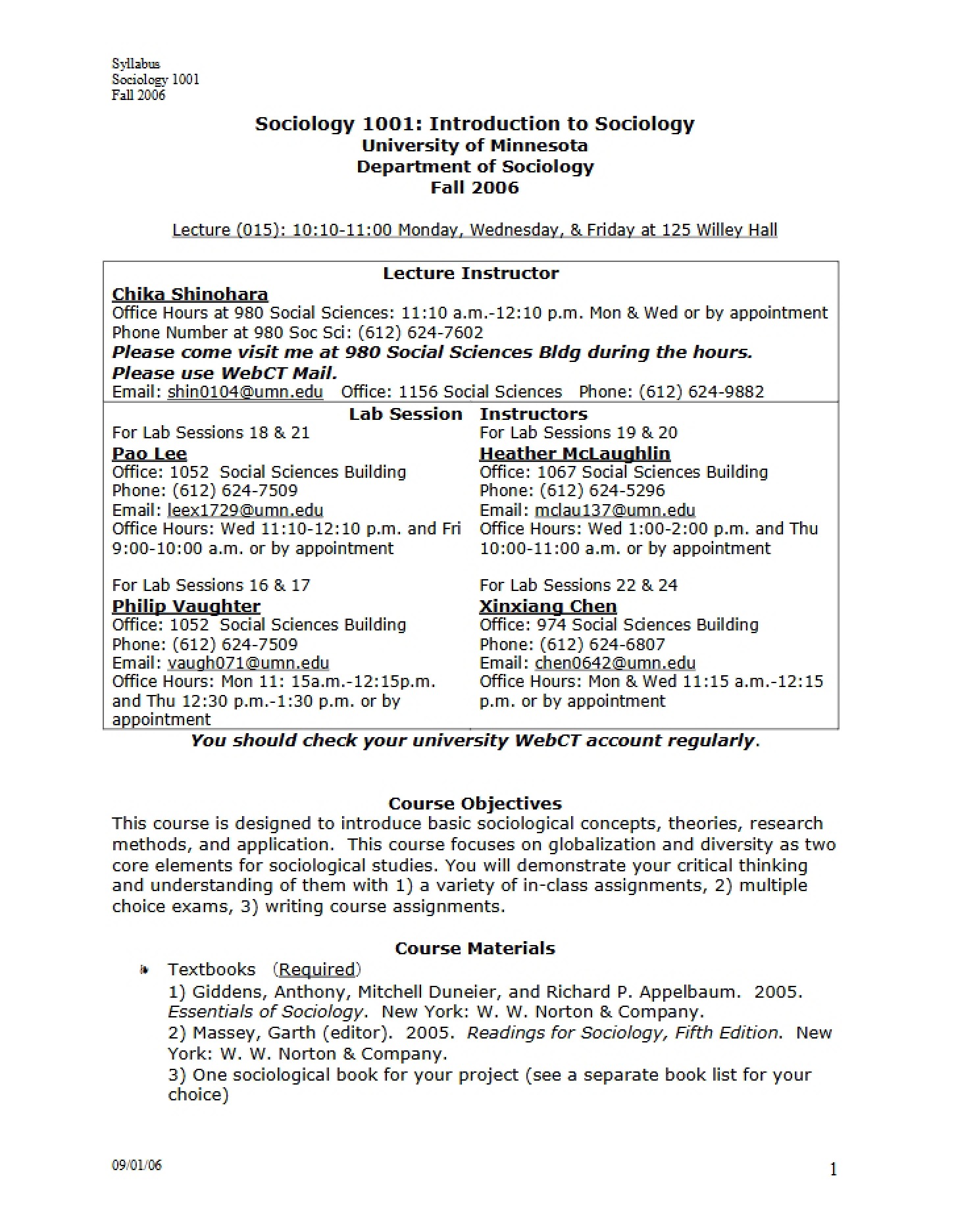
This document is a comprehensive syllabus for an introductory-level Sociology course (SOC 1001) offered at the University of Minnesota Twin Cities. It outlines the course structure, expectations, and policies for students new to the field of sociological study. It serves as a foundational guide to understanding the scope and aims of the course, setting the stage for a semester-long exploration of societal structures and human behavior.
Why This Document Matters
This syllabus is essential for any student enrolled in, or considering enrolling in, this introductory Sociology course. It clarifies the instructor’s approach to teaching and learning, details grading criteria, and highlights important resources available to students. Reviewing this document *before* the course begins will help you understand the workload, required materials, and the overall academic expectations. It’s particularly useful for students wanting to assess if the course aligns with their learning style and academic goals.
Common Limitations or Challenges
This syllabus provides an overview of the course but does not contain the actual course content – lectures, readings, assignments, or specific analyses. It outlines *what* will be covered, but not *how* it will be covered in detail. It also doesn’t offer direct assistance with course assignments or provide answers to specific sociological questions. Access to the full syllabus is required to fully understand the specifics of each component.
What This Document Provides
* A clear outline of course objectives and learning goals.
* Information regarding required and suggested course materials.
* Details on assessment methods and grading policies.
* Instructor contact information and office hour availability.
* Expectations for student participation and classroom conduct.
* Policies regarding attendance and make-up work.
* Guidance on utilizing available student resources, including online learning platforms.
* An overview of key themes and areas of focus within the course, such as inequality and social institutions.