What This Document Is
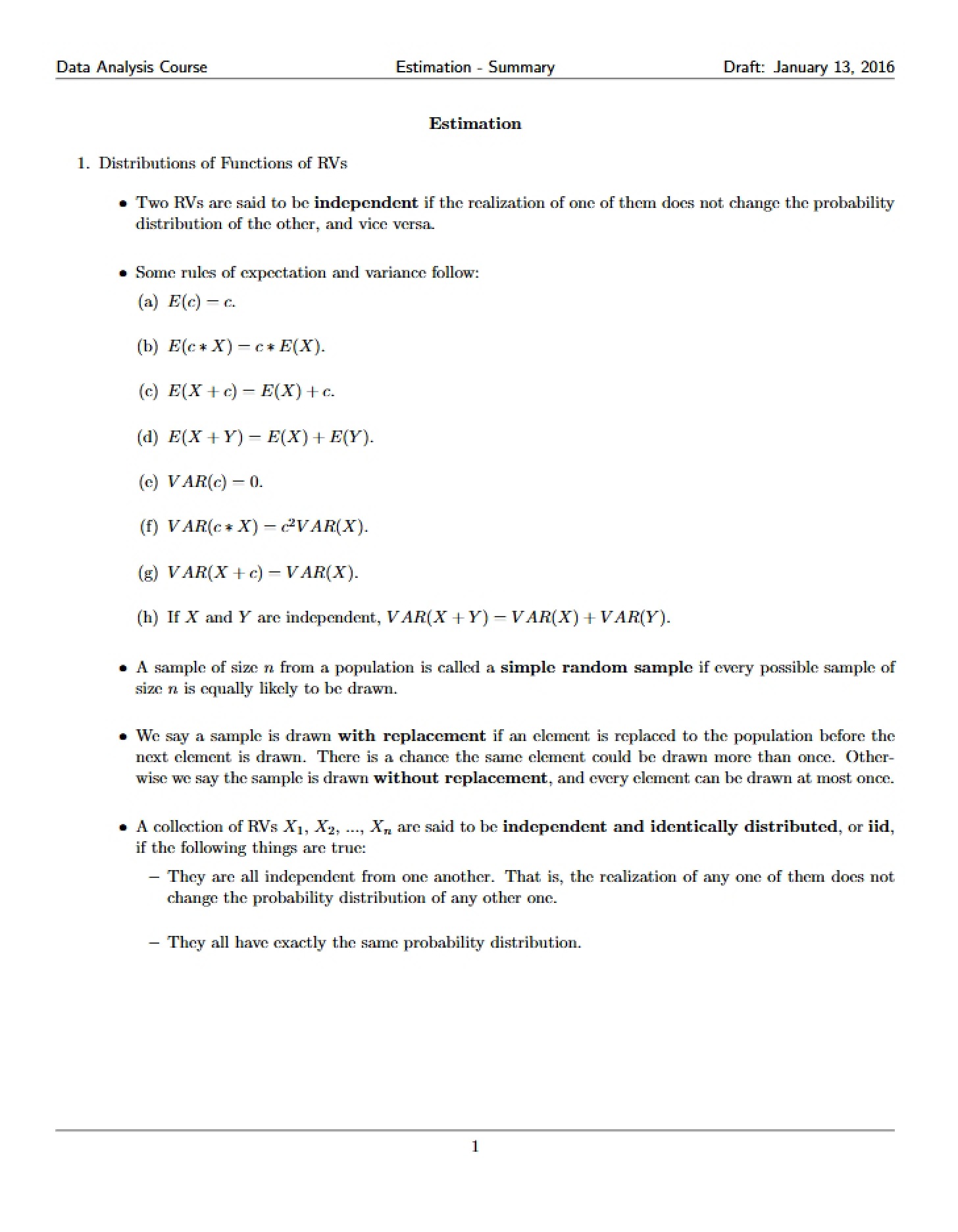
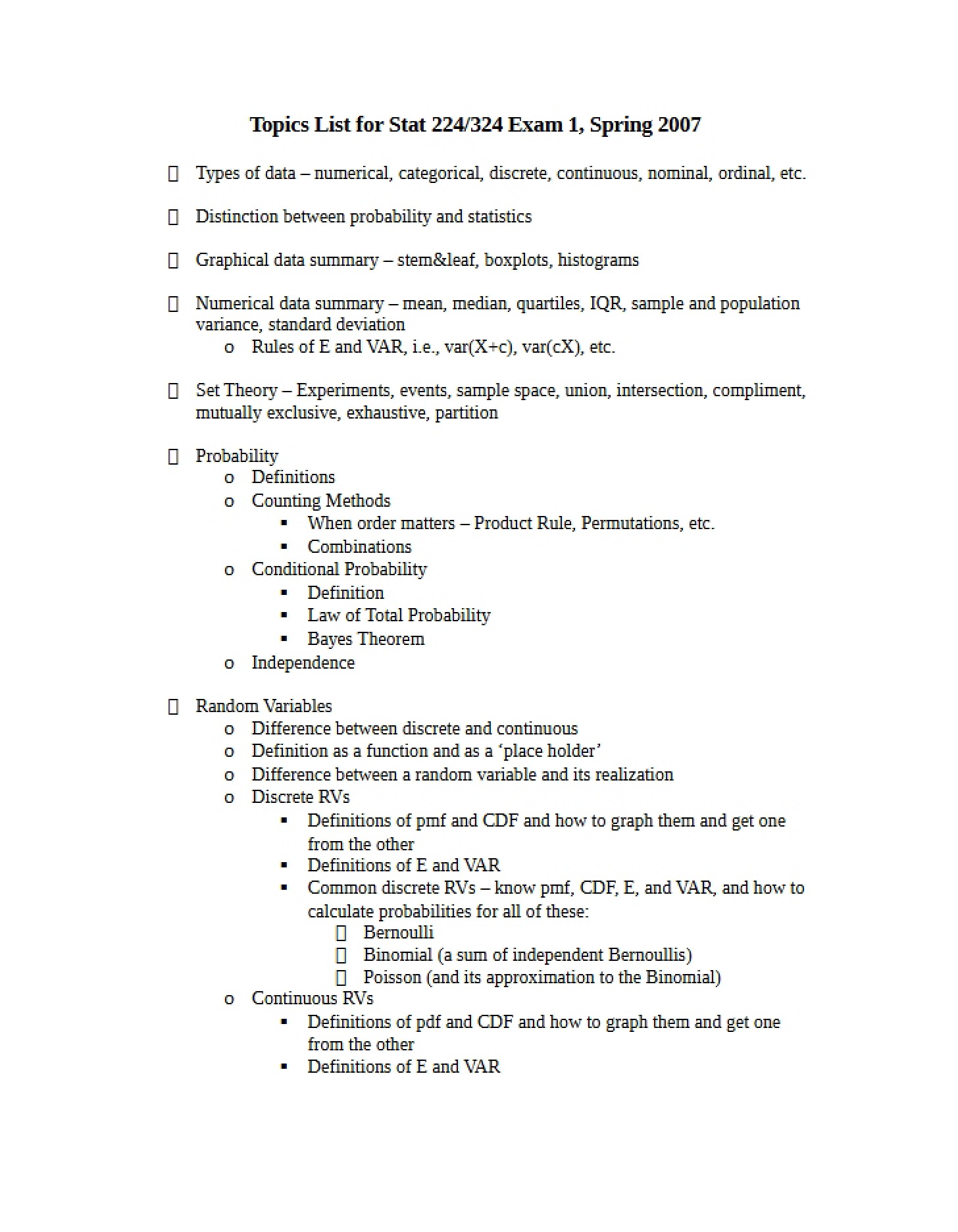
This resource is a focused summary of fundamental probability concepts, designed for students in an introductory engineering statistics course. It serves as a concentrated review of core principles and definitions essential for understanding statistical analysis. The material is presented in a structured format, aiming to clarify the theoretical underpinnings of probability as it applies to data analysis. It’s built to be a companion to lectures and textbook readings, not a replacement for them.
Why This Document Matters
Students enrolled in STAT 224 at the University of Wisconsin-Madison – and anyone beginning their study of statistics – will find this summary particularly useful. It’s ideal for clarifying the relationship between probability and statistics, and for solidifying your understanding of key terminology *before* tackling more complex calculations or applications. Use this as a refresher before exams, while working through problem sets, or when you need a quick reference for foundational concepts. It’s especially helpful for engineers who need a strong grasp of uncertainty and risk assessment.
Common Limitations or Challenges
This summary focuses on the *concepts* of probability. It does not include detailed worked examples, step-by-step calculations, or derivations of formulas. It also doesn’t cover advanced topics like conditional probability distributions or specific probability models. Think of it as a conceptual framework – you’ll still need to practice applying these ideas to solve problems and interpret data. Access to the full resource is required for a complete understanding of the subject.
What This Document Provides
* A clear distinction between the fields of probability and statistics.
* Definitions of core probability terminology, including random processes, outcomes, and events.
* An overview of different interpretations of probability.
* Fundamental properties governing probability calculations.
* An explanation of event independence and its implications.
* A foundational understanding of how probability relates to population parameters.