What This Document Is
This is a problem set designed for students enrolled in Environmental Economics (ENVECON C101) at the University of California, Berkeley. Specifically, it’s Problem Set 3 (EEP 100) from a Spring 1999 course taught by Professor D. Zilberman. This assignment challenges students to apply economic principles to real-world environmental issues, requiring analytical and quantitative skills. It’s intended to be completed independently to reinforce understanding of course material.
Why This Document Matters
This problem set is crucial for students aiming to solidify their grasp of core environmental economics concepts. It’s particularly valuable for those preparing for exams, seeking to improve their problem-solving abilities, or needing to demonstrate their understanding of applying economic models to environmental scenarios. Working through these problems will build confidence and prepare you for more advanced topics within the course. It’s best utilized *after* attending lectures and reviewing related readings.
Topics Covered
* Optimal input use in agricultural production
* Irrigation efficiency and its economic implications
* Cost-benefit analysis of technology adoption
* Consumer surplus and demand curve analysis
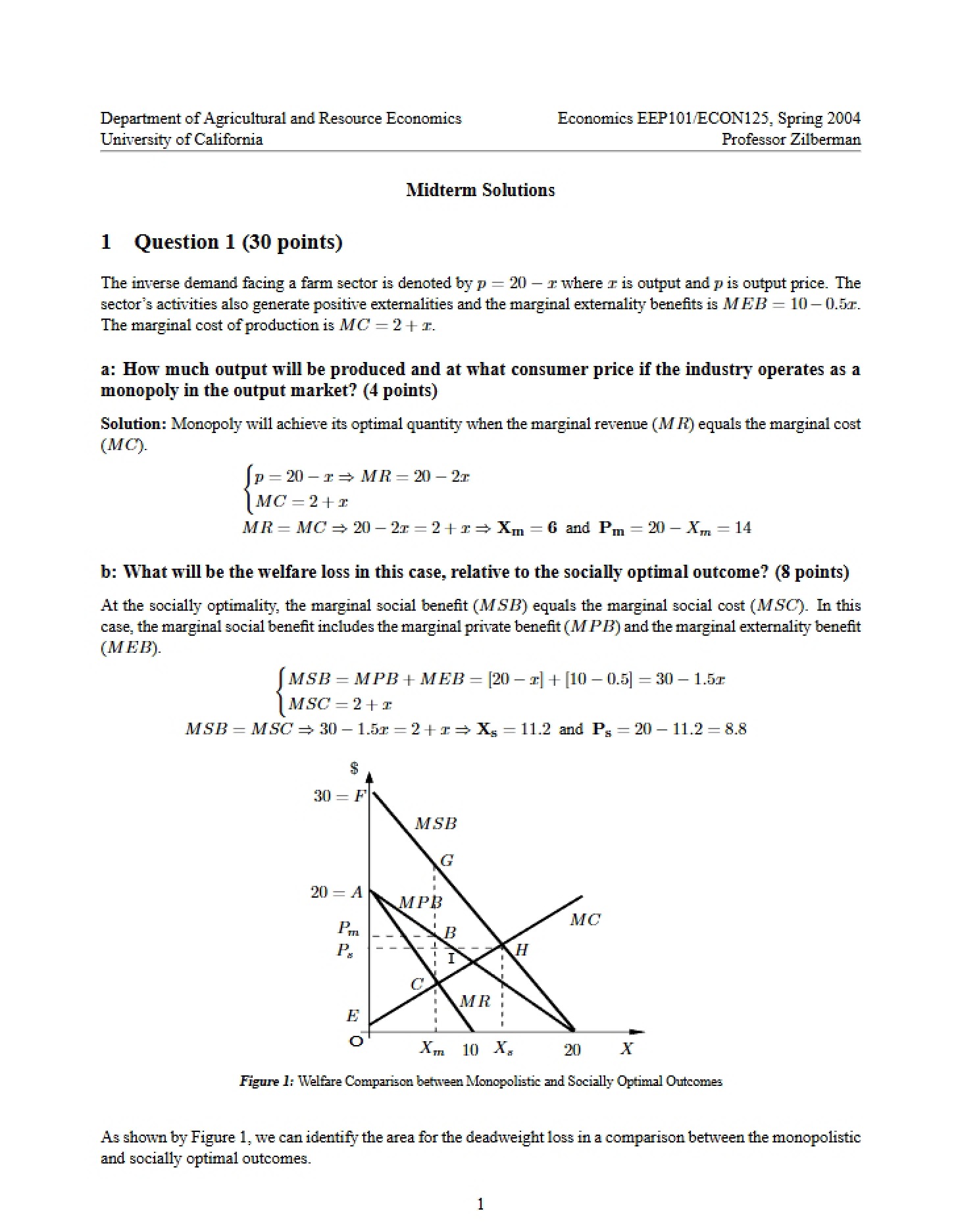
* Market structures and pricing strategies (specifically, monopoly)
* Aggregate marginal benefit and efficient resource allocation
* Profit maximization in a recreational setting
What This Document Provides
* Detailed problem statements requiring economic analysis
* Scenarios involving agricultural production and resource management
* A case study inspired by a real-world example of a Japanese Tea Garden
* Opportunities to practice applying economic models to practical situations
* A framework for evaluating the economic efficiency of resource allocation
* Exercises designed to test understanding of pricing and market power
* A chance to develop analytical and quantitative skills in environmental economics.