What This Document Is
This is a detailed exploration of the retinal circuit and visual processing, originating from a lecture delivered at the University of California, Berkeley’s Cellular and Molecular Neurobiology course (MCELLBI 160). It delves into the intricate mechanisms by which the retina transforms light into neural signals, forming the foundation of vision. The material presents a foundational understanding of how visual information is initially encoded and prepared for transmission to the brain.
Why This Document Matters
This resource is invaluable for students studying neurobiology, vision science, or related fields. It’s particularly helpful for those seeking a deeper understanding of sensory systems and neural circuitry. Use this material to supplement lectures, prepare for exams, or build a strong base for more advanced studies in visual perception. It’s designed to clarify complex concepts and provide a solid framework for understanding the biological basis of sight.
Topics Covered
* Retinal Neural Circuitry – an overview of the cells and connections involved in visual processing.
* Receptive Field Organization of Retinal Ganglion Cells (RGCs)
* The physiological basis of common vision impairments (myopia, hyperopia, astigmatism)
* Differences in retinal processing across the visual field (fovea vs. periphery)
* The roles of different cell types within the retina (photoreceptors, bipolar, ganglion, horizontal, and amacrine cells)
* Center-Surround Interactions and their impact on visual perception
* Spatial Frequency Tuning and Contrast Sensitivity
* Distinct properties of M and P RGC cells
What This Document Provides
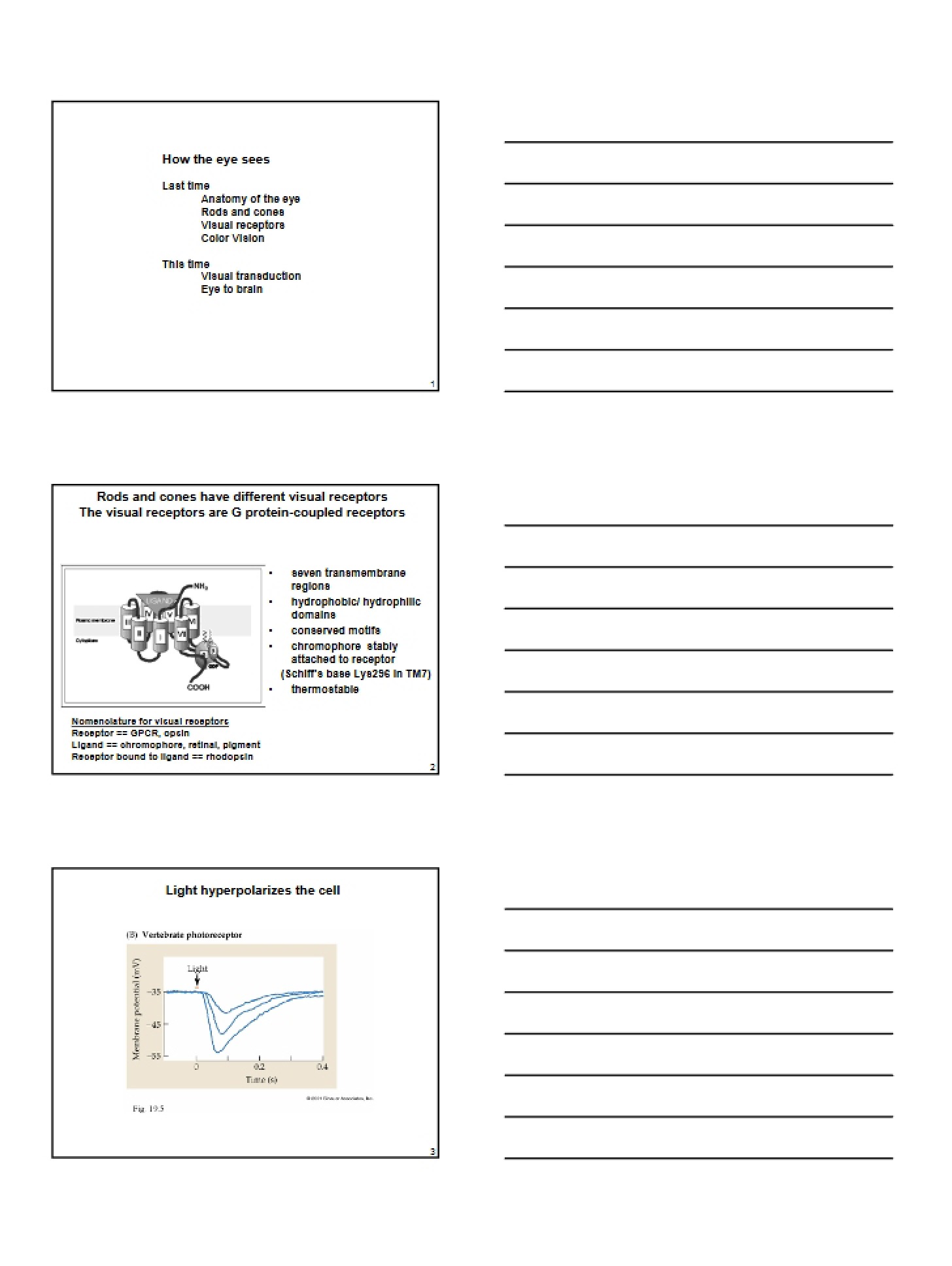
* Detailed diagrams illustrating the structure of the retina and the flow of visual information.
* Explanations of key concepts like receptive fields, convergence, and divergence of neural signals.
* Visual representations of experimental data demonstrating center-surround organization.
* Insights into how retinal circuitry contributes to visual illusions and spatial perception.
* A comparative analysis of different ganglion cell types and their specialized functions.
* References to seminal research in the field (Kuffler, Wiesel).